

This Women’s History Month, the Council on Foreign Relations is empowering educators to bring the global conversation on gender inequality into the classroom.
While progress toward equality is critical for women and girls, its impact reaches far beyond the individual. As experts have documented, gender equality comes with significant social and economic benefits.
In this newsletter, you will find:
- The new resource What is Gender Inequality
- A lesson plan and handout
- An in-class activity
- Readings and reports to dive deeper into the subject
- Plus, custom graphs that can only be found in this newsletter!
Happy learning,
Caroline Netchvolodoff
Vice President, Education
Council on Foreign Relations
What is Gender Equality?
Gender equality is the principle that everyone—regardless of gender—is entitled to equal treatment under the law, equal rights, and equal opportunities to contribute to and benefit from their societies.
The 1979 UN Convention on the Elimination of All Forms of Discrimination Against Women (CEDAW) established that women’s rights are human rights. Under the treaty, countries must extend the same civil rights and legal status to women as they do to any other person. As of 2025, 189 countries had ratified CEDAW.
The Five Indicators of Gender Inequality
There is a lot to explore in this new resource, but let’s look at one of the data sets. The UN Human Development Report publishes the Gender Inequality Index (GII) annually to assess inequality between women and men worldwide. This map shows each country’s score on a scale from 0 to 1. More equal countries have lower scores, and less equal countries have higher scores.
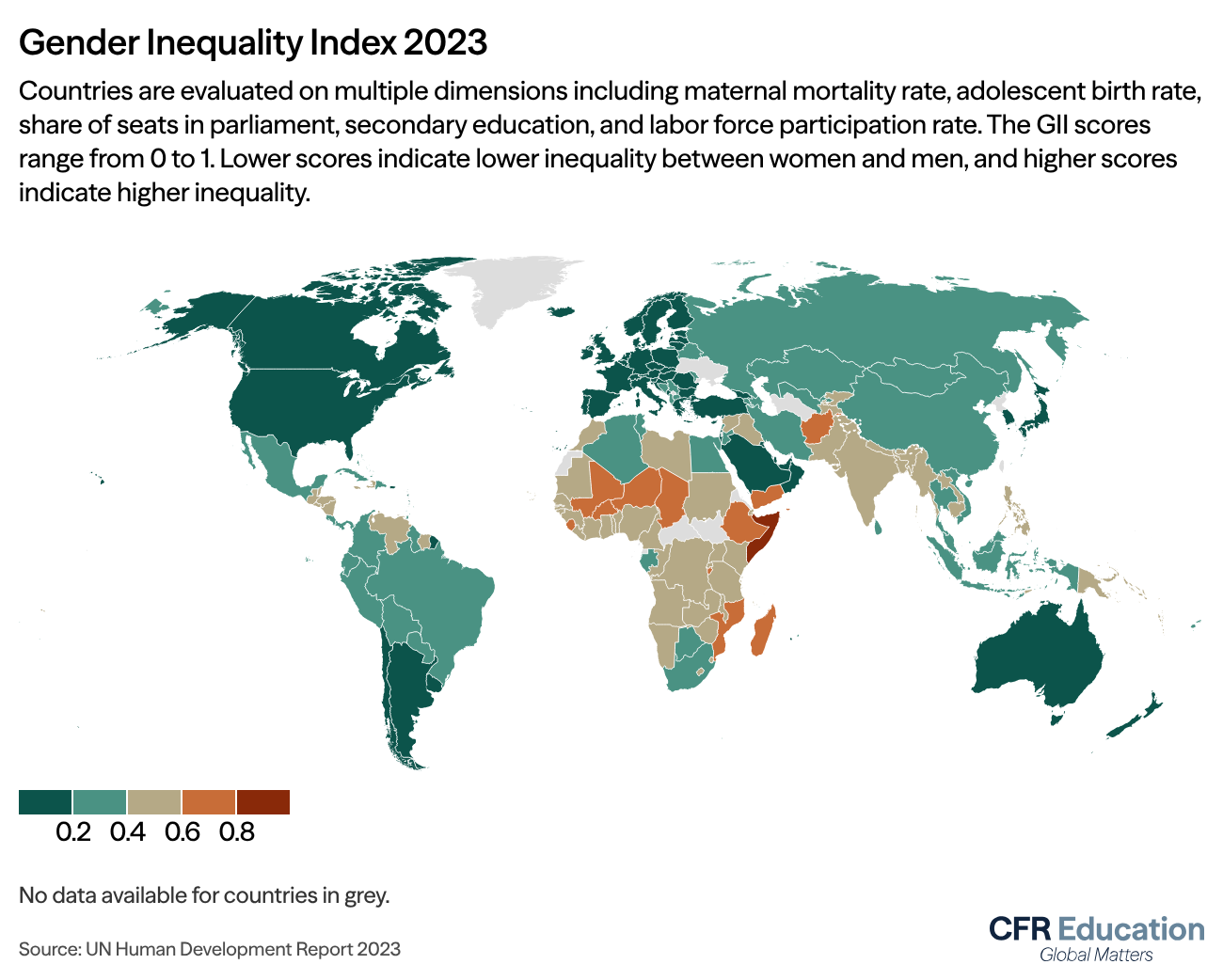
The GII is calculated using five distinct indicators: maternal mortality, adolescent birth rate, share of seats in parliament, secondary education, and labor force participation. Some countries may perform better on one indicator and worse on another. Take a look at the United States, for example. It ranked 45th most equal on the GII (with a 0.169 score), but across the indicators, the U.S.’s rank varies.
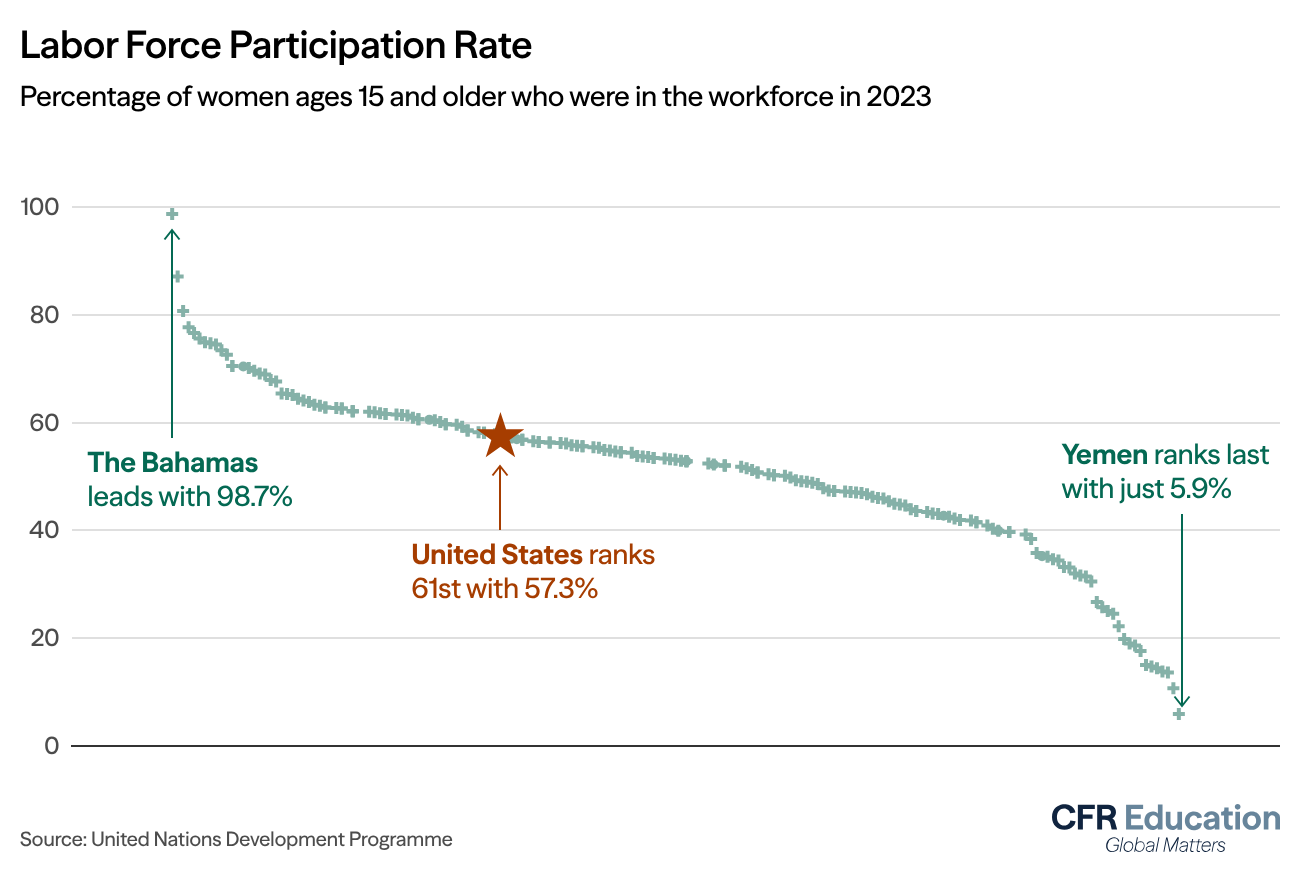
Did you know that 18 countries require women to have their husband’s permission to work outside the home? The Women’s Workplace Equality Index measures the formal legal obstacles to women’s economic participation worldwide.
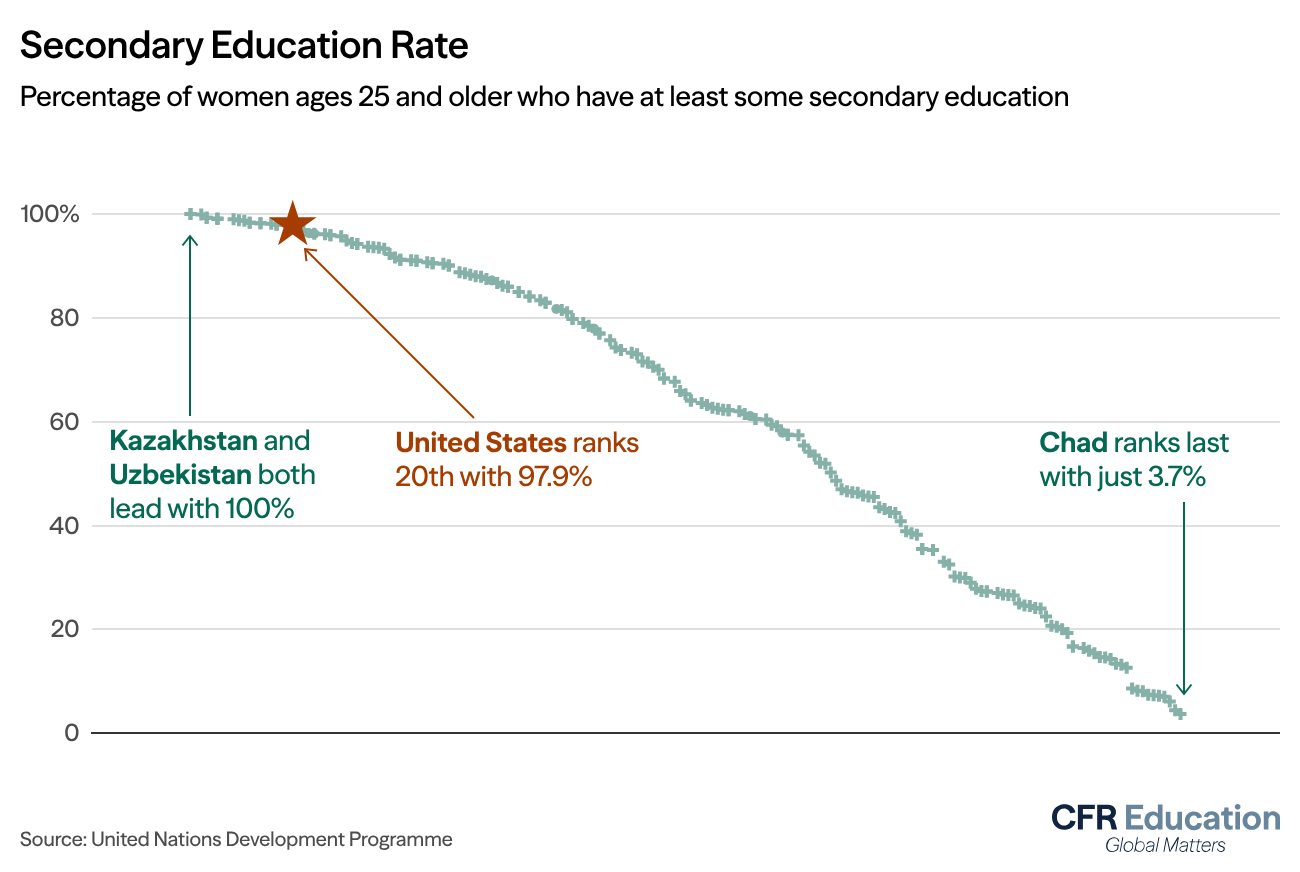
Education policies vary widely across the world. China is an example of a country whose past policies profoundly affected the status of its female population, including educational achievement. Census data from 2020 shows that the illiteracy rate of rural women is more than twice that of rural males, four times that of urban females, and eight times that of urban males.
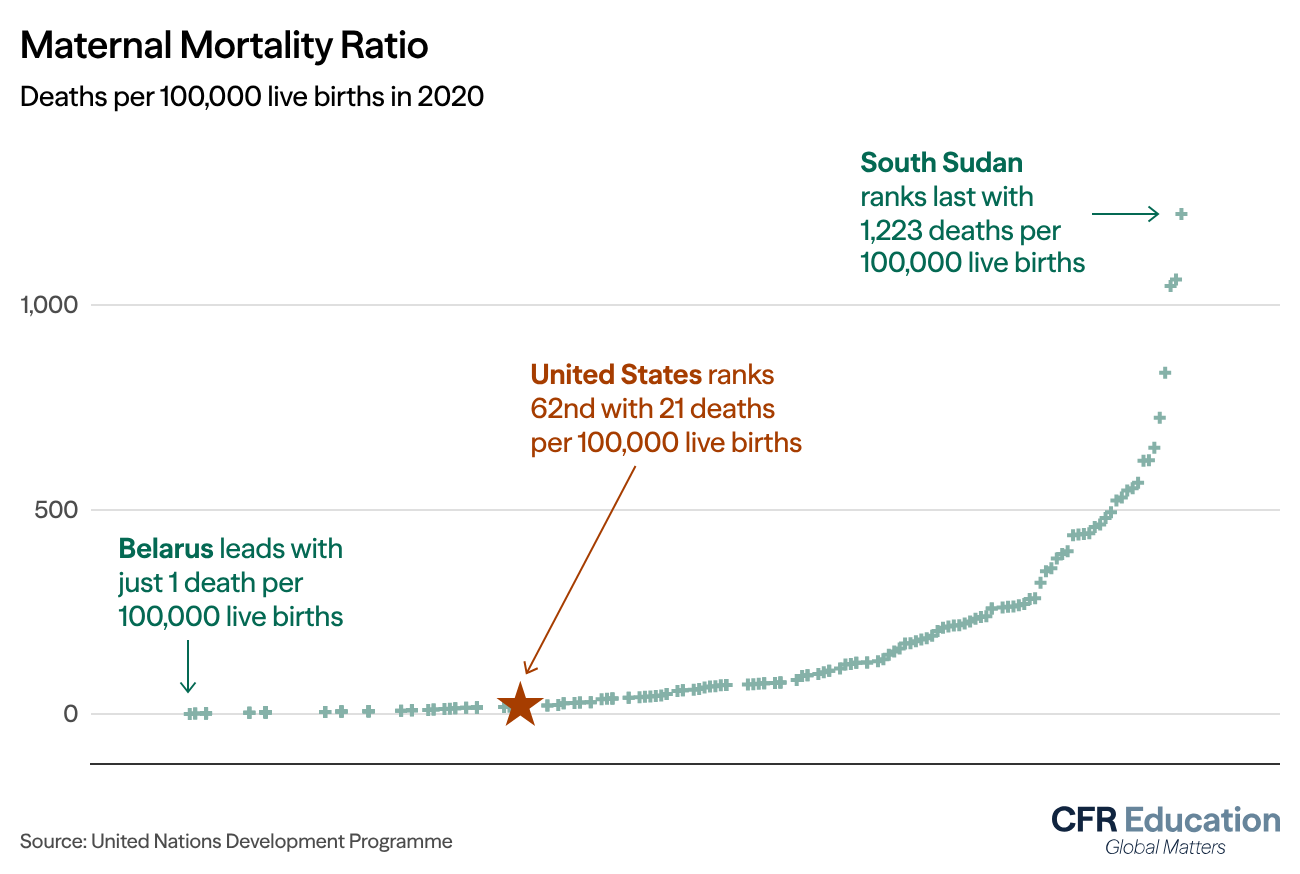
New research from the World Health Organization (WHO) and the Centers for Disease Control and Prevention (CDC) reveals high rates of maternal deaths worldwide and in the United States. Read more in this article.
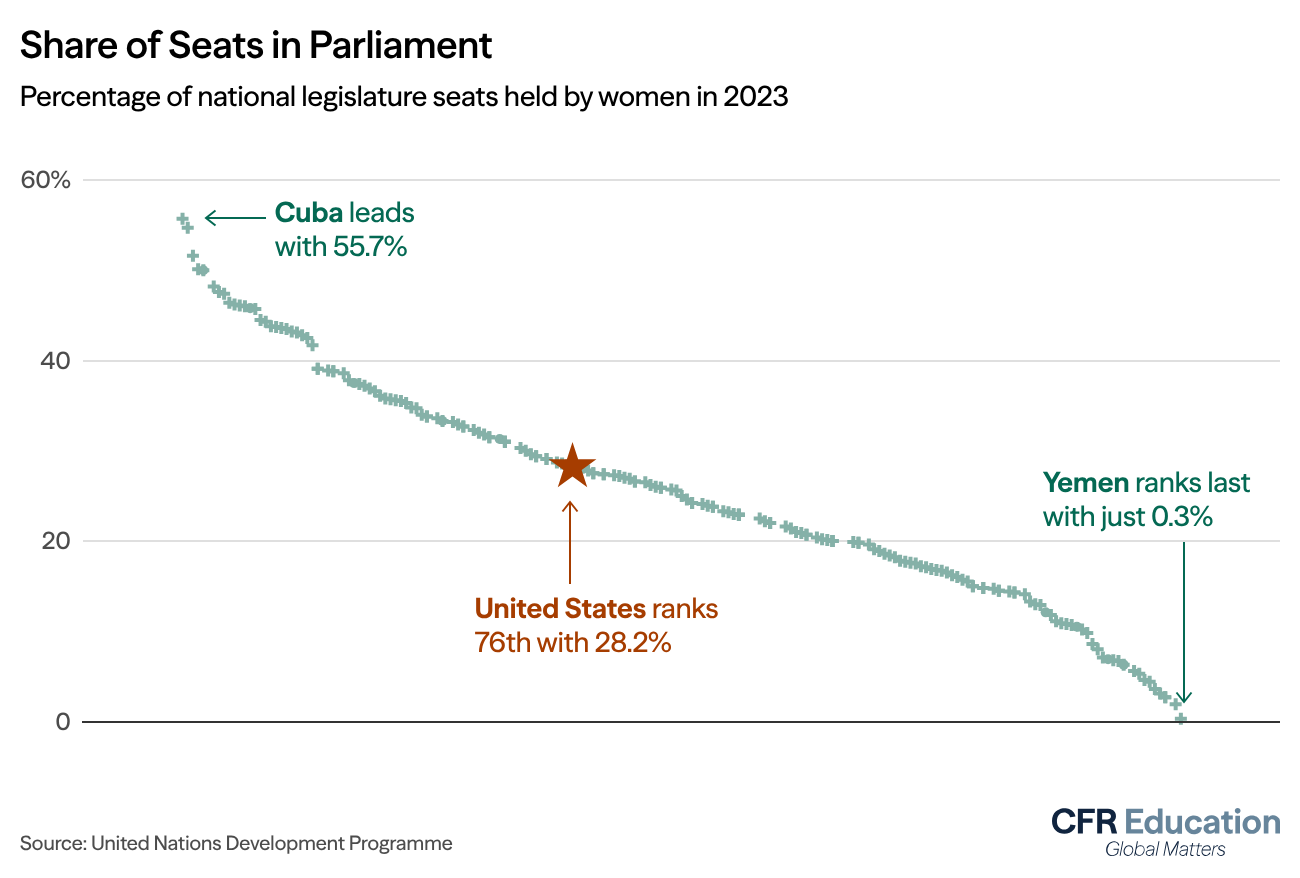
Dig deeper into this issue by exploring the Women’s Power Index, which ranks 193 UN member states on their progress toward gender parity in political participation.
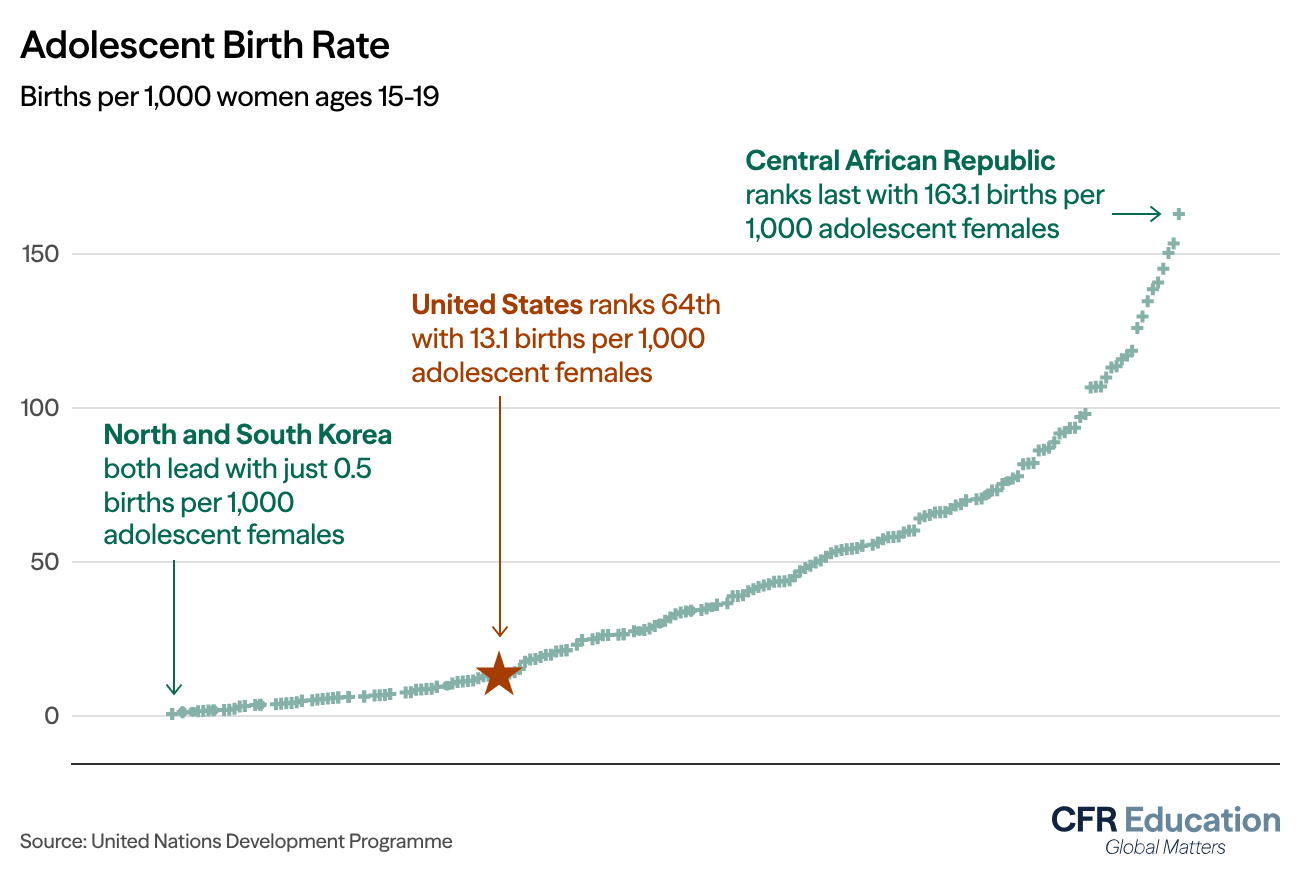
The causes of high adolescent birth rates vary. For example, in Zimbabwe, the effects of climate change drive families deeper into poverty, increasing rates of child marriage and, therefore, early pregnancy. Read more about this issue in this article from Think Global Health.
Tracking Gender Equality Activity
In this activity, students will identify the widespread costs of gender inequality and assess proposed solutions using case studies, CFR indexes, and UN data. While intended for the college classroom, this activity can be modified to fit your needs with editable slides.
Looking at Solutions
The world has made some notable strides toward increased gender equality. Several countries have adopted legal reforms to remove discriminatory laws and enshrine new gender equality principles. For instance, in 2021, Armenia and Ukraine introduced paid paternity leave policies, and Georgia introduced paid parental leave.
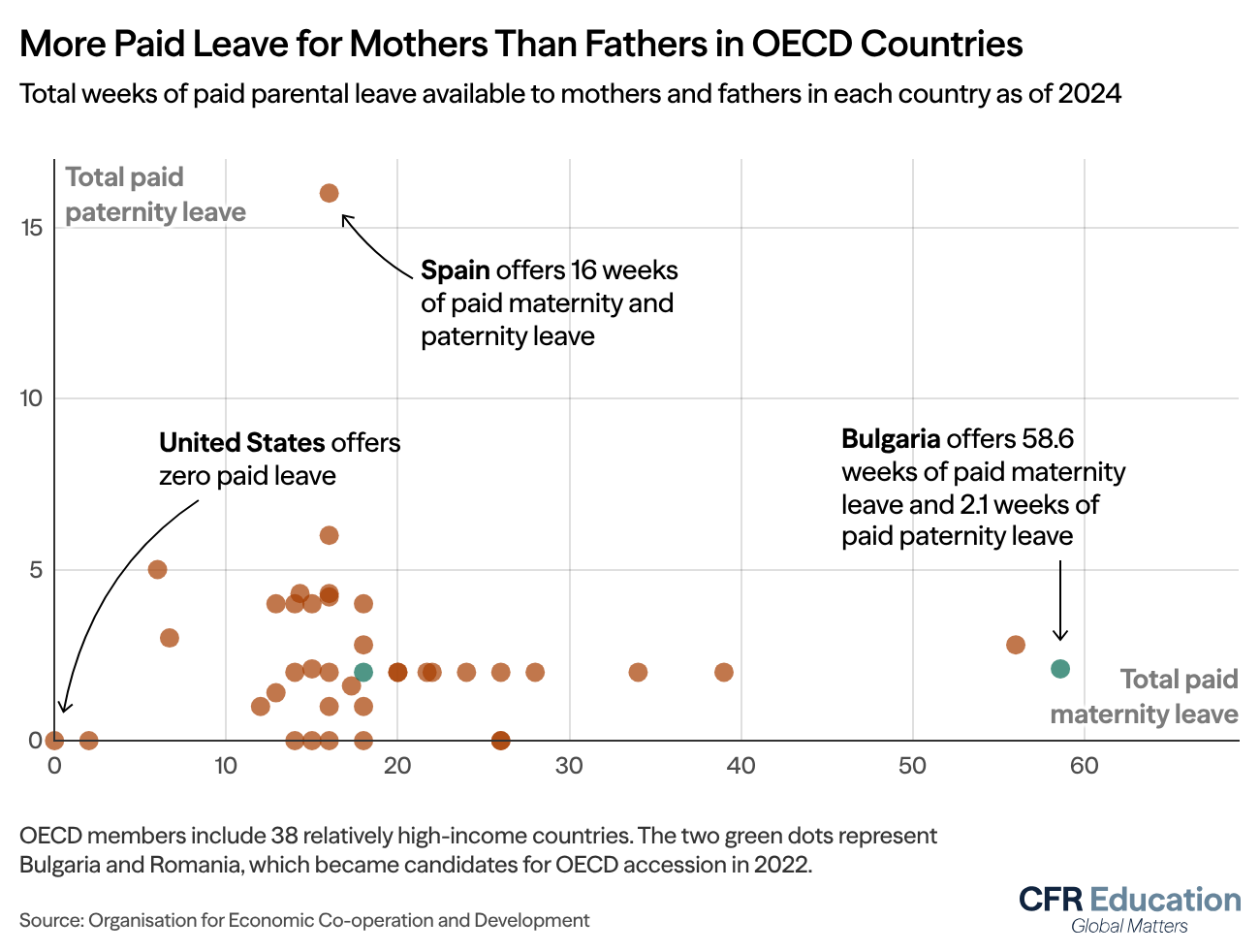
After your students make their way through the reading, ask them to consider this scenario: Imagine it’s 2040. What steps have national governments and international organizations taken to address the issue of gender inequality?
What gaps remain? Ask them to explain their predictions with examples from today’s class session, as well as evidence from reputable external sources.