Relaciones Internacionales – Comunicación Internacional

17 febrero, 2018
por Felipe Sahagún
Sin comentarios

A world of free movement would be $78 trillion richer

A world of free movement would be $78 trillion richer -Yes, it would be disruptive. But the potential gains are so vast that objectors could be bribed to let it happen  economist.com

The Economist✔@TheEconomist  A world of free movement would be $78 trillion richer http://econ.st/2Ezpp0M  

17 febrero, 2018
por Felipe Sahagún
Sin comentarios

Las exportaciones españolas aumentaron un 8% en 2017


Por Inma Benedito (17/02/2018)

Expansión

España cierra el año con un incremento del 8% en las exportaciones, que tocan un nuevo máximo, gracias al dinamismo del comercio mundial. España lidera el crecimiento de las ventas al exterior en la Eurozona. Las importaciones también alcanzan la cifra histórica de 308.216 millones de euros, reflejando la competitividad de la economía española. Pinche aquí o en la imagen para ver el gráfico completo. Continue leyendo →

17 febrero, 2018
por Felipe Sahagún
Sin comentarios

Systemic risks in 2018 and beyond (@vtchakarova)

Image Via Anton Balazh/Shutterstock.com

Interesting article by @vtchakarova – required reading on systemic risk in global financial & energy markets and economy (although I remain sceptic on resilience of ). Thought provoking @geoestratego  @clavegeopolitik  @OlgaKrasnyak https://twitter.com/vtchakarova/status/964653782717091840 …  

16 febrero, 2018
por Felipe Sahagún
Sin comentarios

Kosovo’s ten years of independence: little to celebrate

PRISTINA, Kosovo — I first arrived in Kosovo nearly 20 years ago. In 1999, NATO intervened on the side of ethnic Albanian rebels against the forces of Slobodan Milosevic’s Serbia. I came to cover the war.

As NATO bombs fell, Serbian forces opened a campaign of ethnic cleansing that drove almost a million Kosovar Albanians, predominantly Muslims, from their homes. Serbia, mostly Orthodox Christian, soon capitulated and withdrew its forces. Afterward, Kosovo spent nine years under United Nations control, an internationally supervised limbo.

…MORE

Kosovo turns 10 – but what does it still need to do?

16 febrero, 2018
por Felipe Sahagún
Sin comentarios

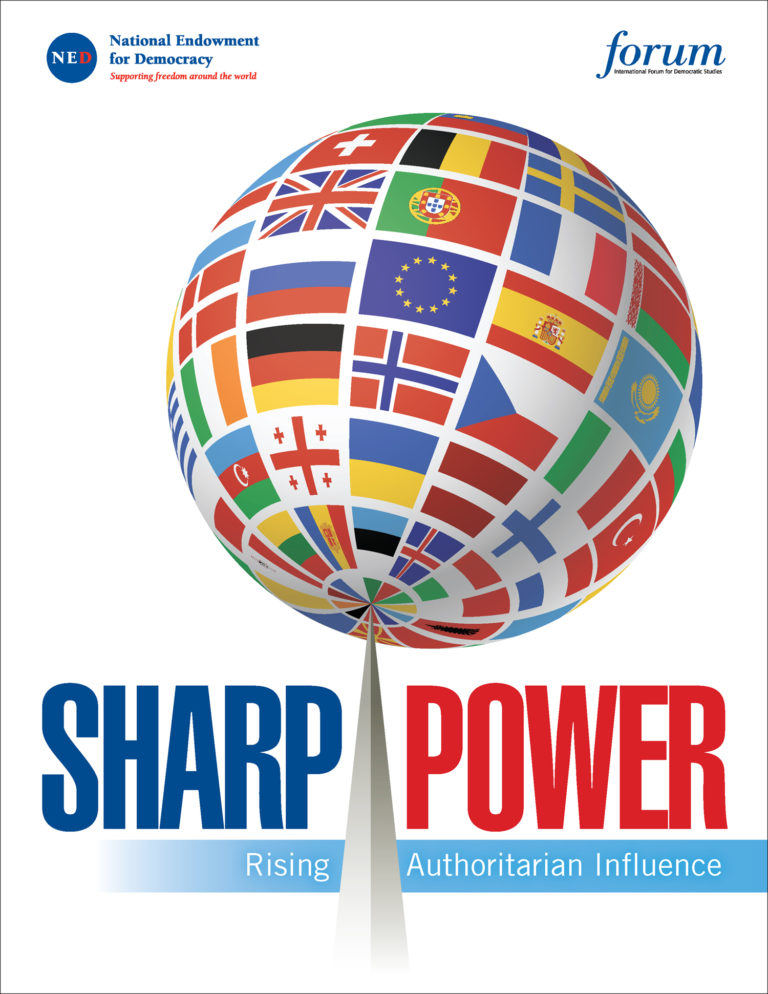
Rising authoritarian influence (el declive de la democracia)

“Sharp Power: Rising Authoritarian Influence,” a new report published by the International Forum for Democratic Studies, examines Chinese and Russian influence in four young democracies in Latin America and Central Europe.

In recent years, China and Russia have invested significant resources in media, academic, cultural, and think tank initiatives designed to shape public opinion and perceptions around the world. These authoritarian influence efforts have traditionally been viewed by the democracies through the familiar lens of “soft power,” a concept which has become a catch-all term for forms of influence that are not “hard” in the sense of military force or economic might. Yet the authoritarian influence that has gained pace and traction in recent years, while not hard in the openly coercive sense, is not really soft, either.

Rather, authoritarian influence efforts in young and vulnerable democracies are “sharp” in the sense that they pierce, penetrate, or perforate the information and political environments in the targeted countries. These regimes are not necessarily seeking to “win hearts and minds,” the common frame of reference for “soft power” efforts, but they are surely seeking to influence their target audiences by manipulating or distorting the information that reaches them.

DOWNLOAD THE FULL REPORT [PDF]

EXECUTIVE SUMMARY [PDF]

INTRODUCTION [PDF]          CHINA IN LATIN AMERICA [PDF]

ARGENTINA [PDF]                 PERU [PDF]

POLAND [PDF]                        SLOVAKIA [PDF]

…MORE

Related

China and Russia’s game of distortion