
1 julio, 2017
por Felipe Sahagún
Sin comentarios

1 julio, 2017
por Felipe Sahagún
Sin comentarios
1 julio, 2017
por Felipe Sahagún
Sin comentarios

London’s Grenfell Tower fire victims aren’t furious just with local authorities for ignoring safety concerns raised before this month’s blaze killed at least 79 residents. They’re angry with journalists too.
As reporters covered the fire at the apartment block last week, some residents turned on Jon Snow of Channel Four News, the most senior of Britain’s news presenters, and accused journalists of being vultures attracted to death and tragedy. “You didn’t come here when people were telling you that the building was unsafe!” one man told Snow. “That is not newsworthy. You come here when people die. Why?”
The Grenfell residents are hardly alone in accusing the media of not serving their needs. It’s no secret that trust in the media has declined. But the latest Reuters Institute Digital News Report, published this week, provides sobering insights into how the digital revolution has disrupted the way we gather the information we believe we need to orient ourselves in the world, or in our neighborhood.
The report shows that trust in the media varies from country to country, from over 60 percent in the Scandinavian countries to the low 20s in Greece and South Korea.
In the United States, trust in the media has risen from 33 percent during last year’s election campaign to 38 percent this year.
30 junio, 2017
por Felipe Sahagún
Sin comentarios

Global Risks in 2040: Q&A with Andrew Parasiliti
The RAND Center for Global Risk and Security exists to watch the horizon.
In recent years, the center’s research has warned of a growing link between film piracy and global terrorism; of how the changing nature of work might reshape society; and of the potential for U.S. financial problems to send shockwaves through world markets. Its most recent study looked at how artificial intelligence is reshaping our everyday lives, unnoticed and too often unquestioned.
The center’s founding director, Gregory Treverton, once described these as “threats without threateners,” the big-picture problems that cross industries and borders.
The center recently undertook an effort to envision the world in 2040, and the security challenges that will shape it: artificial intelligence, 3-D printing, the accession of the millennial generation, and the sheer speed with which our society moves and makes decisions. The lead investigators are all early-career researchers, drawn from fields as diverse as nuclear strategy, anthropology, and microeconomics.
Andrew Parasiliti directs the center and is overseeing its Security 2040 project. He came to RAND in 2014 from Al-Monitor.com, an online newspaper that describes itself as “the pulse of the Middle East” and that won the International Press Institute’s Free Media Pioneer Award. He has also served as executive director of the International Institute for Strategic Studies–U.S., director of programs at the Middle East Institute, and foreign policy adviser to former U.S. Senator Chuck Hagel—prior to Hagel’s stints as U.S. Secretary of Defense and RAND trustee.
How do you define “risk”?
We use the broadest definition of risk—a threat to the security of something. That could mean a threat to personal security, such as crime; a threat to state security, such as adversarial states or terrorism; or a threat to human security, such as climate change, natural disasters, or pandemics.
Which recent projects exemplify what you’re trying to accomplish?
Bill Welser, a senior management scientist and head of RAND’s engineering and applied sciences department, and Osonde Osoba, an engineer and specialist in machine learning, recently explored the risks of bias and errors in artificial intelligence. Bill and Osonde explain how algorithms give the illusion of being unbiased, when that’s not always the case. They document some of the problems that can result, including in criminal sentencing and other legal matters. Unless there is a greater awareness of algorithms and bias risk, and how to mitigate them, these problems will only grow.
What emerging global challenges concern you most?
There are many. We have more projects underway on artificial intelligence. We’re working on a study about how the growth in communications technology, the Internet of Things, and big data are all redefining and compromising privacy, and what that means for security. We are, in general, interested in the changing nature of power and governance in the international system, and, increasingly, how that links up with the challenge of what Michael Rich, RAND’s president and CEO, has been calling “truth decay.”
What do you see as the role of the RAND Center for Global Risk and Security?
We focus on cross-cutting, multidisciplinary research on future security trends, especially the impact of disruptive technologies. That means artificial intelligence, but also additive manufacturing, the trade-offs involved in privacy and security. We engage donors and the business community to support research and analysis in these areas, to complement RAND projects for government clients.
We look at trends rather than headlines.
How has the center’s mission evolved?
The center was founded in 2007, when former defense secretary Harold Brown—a trustee emeritus at RAND—advised us to address systemic risks to global security, to look beyond the demands of the national security inbox toward what we might call more long-lead security threats. The first center director was Greg Treverton, who went on to serve as chair of the National Intelligence Council from 2014 to 2016. His appointment to the council created the opening that allowed me to come to RAND. In many ways, the focus remains the same as it did under Harold and Greg: We look at trends rather than headlines.
What big questions are you hoping to answer with Security 2040?
This was Michael Rich’s brainchild: to seek new approaches to identify and assess the impact of several trends over the coming decades—political, technological, social, demographic—and to generate some useful guidance for policymakers. Things like, What might be the impact of artificial intelligence on nuclear security? How disruptive will additive manufacturing—3-D printing— be to our military supply chain and economy? How do millennials perceive security? What are the drivers and disruptors of “health security”? Does speed, meaning a faster society, influence our notions of security? We are just getting started.
Why the desire to have all the principal investigators be early-career researchers?
All of the projects are deeply collaborative, involving senior advisers and workshops drawing on expertise from across the organization. But we aim to develop a community of 2040 researchers—the next generation of thought leaders.
30 junio, 2017
por Felipe Sahagún
Sin comentarios

Estimado-a amigo-a: puedes volver a ver la Primera sesión del grupo de trabajo sobre «US Trends that matter (for Europe)» de la Fundación Alternativas con la ponencia de Manuel Muñiz aquí:
30 junio, 2017
por Felipe Sahagún
Sin comentarios
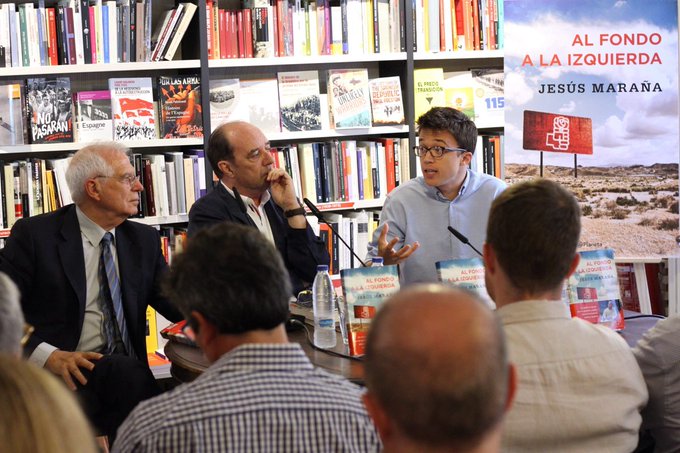

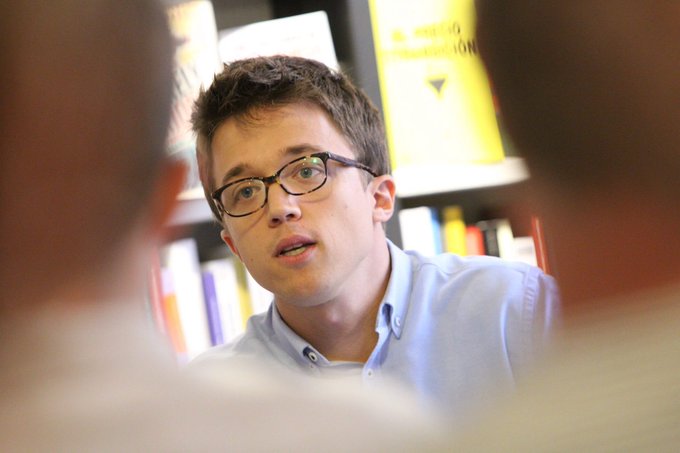
Un debate interesante que dibuja causas y salidas de la crisis política de 2016, con @jesusmarana (en la presentación de su libro) y Borrell
30 junio, 2017
por Felipe Sahagún
Sin comentarios

One of the most basic questions for map-lovers is, «How many countries are there in the world?» But anyone who replies with just a number is leaving out part of the story. It actually depends a lot on how you define a «country.»
Here are six of the most common answers, each correct in its own way:
«Country» and «nation» are casual words for what political scientists call a «sovereign state», meaning a place with its own borders and completely independent government. The question of which places count as sovereign states can be controversial, but for starters we can count all the member and observer countries of the United Nations (UN):
These countries mostly all accept each other as sovereign states, and they’re the ones you’ll see on most world maps and many lists of the world’s countries. Almost every country you’ve ever heard of is probably a member of the UN, and the two UN Observer States are Vatican City (represented by the Holy See) and Palestine. If you want to know the names of all 195, Wikipedia has a complete list.
The last addition to the list was in 2012, when Palestine became a UN Observer State, and the last time the number of full UN members changed was when South Sudan joined in 2011.
Note: Palestine’s approval as a UN Observer State was controversial, so some lists may still only include 194 countries.
Several more country candidates are left out of the UN itself, but are still officially acknowledged by at least one UN member (this kind of official acceptance is called «diplomatic recognition»). These controversial countries are usually labeled on world maps as disputed territories or special cases, if they’re on the map at all.
The six non-UN states with partial recognition are Taiwan, Western Sahara, Kosovo, South Ossetia, Abkhazia, and Northern Cyprus. All of these are claimed as parts of other countries, but aren’t actually controlled by them (at least not completely). The number of UN members recognizing them varies, from just one for Northern Cyprus to over 100 for Kosovo.
A few lists also include the Cook Islands and Niue as partially-recognized states. These two places sometimes act like independent countries, but they’ve never actually declared independence or tried to join the UN. They’re usually considered overseas territories of New Zealand
But wait, there’s more! Those six partially recognized countries aren’t the only breakaway states with full self-governance. There are at least three more self-declared countries that aren’t recognized by any UN members at all, but still operate independently from the countries that claim them. These are often called «de facto» sovereign states, a fancy Latin way of saying they’re independent countries in actual fact, even if not on paper.
The three places most often considered de facto independent countries are Nagorno-Karabakh, Transnistria, and Somaliland. And since 2014 there are three more contenders for the list: the so-called «Islamic State», the Donetsk People’s Republic, and the Lugansk People’s Republic. But because those last three are located in active war zones and have only limited government structures, there’s some debate over whether they count even as de facto countries.
Tiny «micronations» declared by individual people usually aren’t taken seriously enough to put on the list. The closest contender would be Sealand, but it’s debatable whether this tiny «nation» really counts as having a territory, population, or government, all key ingredients for a sovereign state.
There are also many rebel-held territories (and fully self-governing areas like Puntland) that aren’t controlled by any country, but are left off the list because they don’t claim to be independent. They agree in principle that they’re part of another country, even though they might disagree about who should be in charge, or how the country should be governed.
Lots of people learn about the world’s list of countries by watching the Olympic Games every two years. If you’re one of them, you might be confused at why the Olympic Parade of Nations claims over 200 members, even though your atlas only has 195.
This is because the Olympics didn’t always require applicants to be independent countries. Dependent territories with partial self-government have sometimes been approved by the International Olympic Committee (IOC), and a couple of the partially-recognized states mentioned above have also managed it.
About half of the dependent territories in the Olympics are overseas possessions of the US (like Puerto Rico) and of the UK (like Bermuda). Some nearly-independent «countries» like the Cook Islands (New Zealand) and Aruba (the Netherlands) are included too.
Every UN member country is also in the Olympics, with the latest addition, South Sudan, joining in August 2015. The one UN Observer State in the Olympics is Palestine; Vatican City apparently isn’t interested. As for the two partially-recognized countries in the games, Kosovo just became an Olympic Nation in 2014, and Taiwan has been a member for some time, but has to call itself «Chinese Taipei» after a deal struck with China in the 1980s.
211 FIFA Countries Eligible for the World Cup
Soccer – or «football» as it’s known in many countries – is the world’s most popular sport, and most international matches all the way up to the World Cup are regulated by an organization called FIFA. If you’re a soccer super-fan, you might know that until recently there were 209 member countries that compete in FIFA matches (even though most don’t make it to the World Cup). That’s already more than the number of Olympic Nations, and definitely more than the total independent countries on most world maps.
Like the Olympics, FIFA didn’t always require independence or international recognition for its members. Now it’s a bit stricter, but any team that’s already a member is allowed to stay. And since May 2016, there are now two more FIFA members: Kosovo, a partially-recognized country that was voted in after being recognized by more than half of the UN’s members; and Gibraltar, an overseas territory of the UK that recently got a court order allowing it in without being independent.
Based on European tradition, FIFA also allows England, Scotland, Wales, and Northern Ireland to compete as separate teams, even though they’re all part of the UK.
World map marking dependent territories, partially recognized sovereign states, and subnational entities that have national football (soccer) teams recognized by FIFA, making them eligible for the World Cup.
You might notice that not all of the 193 UN member states are included. That’s because several very small countries aren’t members, plus the UK is replaced by its four «constituent countries», which aren’t UN members on their own.
Ever been filling out an internet form, and had to choose from a surprisingly long list of countries? You were probably looking at the international standard «country code» list, formally known as ISO 3166-1. Lots of companies and other organizations adopt this standard list instead of spending their own time compiling one. The standard also includes convenient two-letter codes for each country, like us for the United States, de for Germany, and jp for Japan, which you might recognize from web addresses specific to those countries.
This ISO standard is based on an official list kept by the UN….but then why on Earth are there 249 country codes? That’s way more than the total number of UN member and observer countries! Well, the standard list does leave out some breakaway states not recognized by the UN, but makes up for it by listing dependent territories separately from their parent countries. So there are country codes not just for actual countries, but also for nearly-independent states, overseas territories, uninhabited islands, and even Antarctica! This is important, because organizations might need an option for every place that any person can be located, and dependent territories often aren’t technically part of the countries they belong to.
So there you have it! Next time someone tells you «There are 194 countries in the world,» remember that the real answer isn’t so simple!
