

Presentación en @casamerica del libro de Carmelo Mesa Lago Voces de Cambio en Cuba https://youtu.be/gwVpt98PFb0 vía @YouTube (
25 mayo, 2017
por Felipe Sahagún
Sin comentarios

25 mayo, 2017
por Felipe Sahagún
Sin comentarios
Presentación en @casamerica del libro de Carmelo Mesa Lago Voces de Cambio en Cuba https://youtu.be/gwVpt98PFb0 vía @YouTube (
24 mayo, 2017
por Felipe Sahagún
Sin comentarios
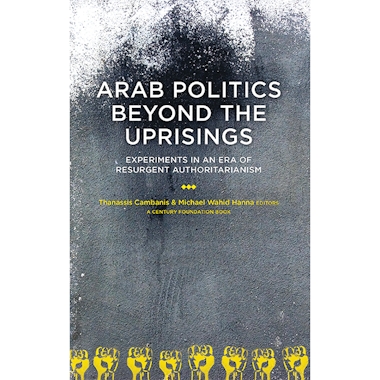
Arab Politics beyond the Uprisings: Experiments in an Era of Resurgent Authoritarianism
Political experimentation and invention survive in unlikely places years after resurgent authoritarianism interrupted the Arab revolts. Despite violent conflict and state repression, attempts to build new institutions and ideologies continue outside the confines of traditional opposition politics.
In this volume, established researchers, new scholars, and active participants explore political initiatives in other realms: media, artists’ collectives, rebel enclaves, neighborhood councils, fledgling citizen campaigns, and elsewhere.
With rich ethnographic detail, these studies pay special attention to regional dynamics, cross-border learning, and the intellectual history of ideas central to the uprisings. They reveal an unresolved struggle between resilient authoritarian structures and alternative centers of political power.

Arab Politics beyond the Uprisings: Experiments in an Era of Resurgent Authoritarianism
Political experimentation and invention survive in unlikely places years after resurgent authoritarianism interrupted the Arab revolts. Despite violent con tcf.org
 Thanassis Cambanis @tcambanisNew @tcfdotorg book “Arab Politics Beyond the Uprisings” now available for purchase from https://tcf.org/content/book/arab-politics-beyond-uprisings-experiments-era-resurgent-authoritarianism/ …
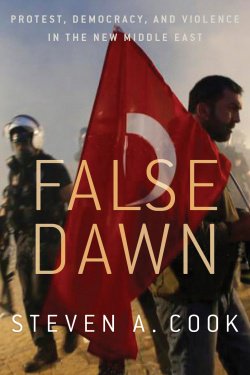
The last five years in the Middle East -how and why the Arab uprisings failed –@stevenacook‘s new book https://www.cfr.org/book/false-dawn v @CFR

‘False Dawn: Protest, Democracy, and Violence in the New Middle East’
Steven A. Cook discusses his new book, False Dawn: Protest, Democracy, and Violence in the New Middle East.
cfr.org
I will be live at 6pm ET with @RichardHaass at @CFR_org to discuss my new book, «False Dawn.» Watch live: http://on.cfr.org/2rhvu8f
24 mayo, 2017
por Felipe Sahagún
Sin comentarios
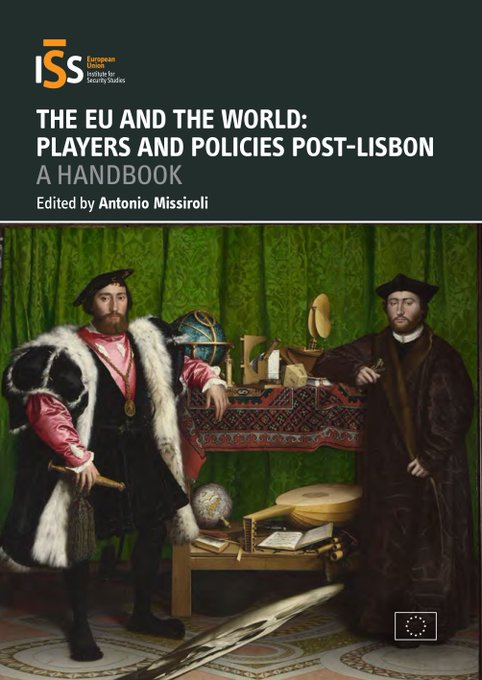
The EUISS handbook on #EU#foreignpolicy – Everything you wanted to know about the EU in the world #CFSP http://goo.gl/ThJkXj @eu_eeas
23 mayo, 2017
por Felipe Sahagún
Sin comentarios

Responding to terror in the aftermath of the Manchester attack
By David Rohde (The New Yorker, Tuesday May 23, 2017. 11:32 A.M.)
Shaky cell-phone videos of the aftermath of the attack. Wrenching images of innocent victims. Condemnation from world leaders. The pattern is grimly familiar. In the days ahead, the background of the Manchester bomber will be probed. Investigators will study how he was trained and financed. Questions will be raised about missed warning signs. The search for co-conspirators will span cities, countries, and perhaps even continents.
The bombing that killed twenty-two people and injured fifty-nine others outside an Ariana Grande concert, in Manchester, England, on Monday night, travelled the same rutted path as others before it. The Islamic State claimed responsibility. News organizations identified the bomber as a twenty-two-year-old British passport holder named Salman Abedi*. Police said that they had identified the bomber but declined to name him. But this time the targets were young, many of them teen-age girls.

Terrorism in Britain: Lone wolf or complex plot? Analysing the Manchester bombing
The use of an improvised bomb may suggest a more elaborate plan than other recent attacks
economist.com
The Economist✔@TheEconomistThe fact the Manchester attack was a bombing makes it a good deal more likely that the perpetrator had help http://econ.st/2rOMcuH

Want a new counterterrorism strategy? Be careful what you wish for
In his first speech abroad as president, Donald Trump told his audience of Muslim leaders in Saudi Arabia on Sunday that “[f]or our part, America is committed to adjusting our strategies to meet evolving threats and new facts. We will discard those strategies that have not worked—and will apply new approaches informed by experience and judgment.” If a recent draft of the White House’s much anticipated new counterterrorism strategy is any indication of an example of such an “adjustment,” the plan doesn’t comport with the president’s rhetoric.
While steering clear of the toxic term “radical Islamic terrorism,” the draft apparently highlights the “need to intensify operations against global jihadist groups” and place more burden for countering terrorist groups head-on with partner governments. However, contrary to the president’s promise in Riyadh, it fails to grasp the practical lessons that have emerged in the field of countering terrorism since the 9/11 attacks over 15 years ago.
There is a growing body of research on what drives support for terrorism and, counter to earlier conventional wisdom, it is generally not religion, ideology, or the internet that attract would-be violent extremists. Rather, military or police abuses of one’s own population are among the single largest drivers of terrorist recruitment. Corruption and the biased delivery of public services that erodes the trust between the government and its citizens are also among the key sources of grievance within communities that terrorist propaganda exploits. State Department research from 2016 confirms this. In study and after study, youth alienation, marginalization, and lack of trust between local authorities and communities have been found to fuel terrorist violence in places as diverse as France, Belgium, Iraq, Mali, Nigeria, and Tunisia.

 Espejo Público✔@EspejoPublico Hablamos con el general Ballesteros del perfil del terrorista
 http://atres.red/prwad1 #MánchesterEP

Commentary: Europe’s rising tide of attacks show diminishing political effect
It shouldn’t be a surprise that Islamic State was quick to claim responsibility for Monday’s suicide attack in Manchester that killed 22 people. As its last territory in Iraq’s second city of Mosul falls to U.S.-backed Iraqi forces and its Syrian capital Raqqa is encircled, the group is increasingly desperate for legitimacy. Attacks on the West are one of its few remaining options.
Although IS claimed the attack as revenge against «Crusaders», neither U.S. nor U.K. authorities have attributed blame to the group.
Whatever the truth, Islamic State faces another, perhaps more serious problem. Its attacks on Europe may be monstrous, but they yield a declining political return.
Islamic State wants its atrocities to foster divisions, driving a wedge between native populations and more recent Muslim migrants. That would bolster the group’s argument that only a radical Middle Eastern caliphate is capable of protecting Muslims, and potentially drive new recruits both to fight its regional wars and conduct attacks farther afield. But that doesn’t seem to be happening.

There is no correct reaction to terrorism. The cruelty, fanaticism and madness of a man who explodes a powerful bomb in a crowd of young girls inspires all kinds of feelings: horror, anger, sadness, fear, revulsion. None of those emotions is more “right” than any of the others. None of the language that people use to express them can usefully be judged. Some people cried after news of the attack in Manchester, England. Others swore and cursed. Both responses are understandable.

The path from Middle East sectarianism to European terror
Picking sides in the Sunni-Shia conflict will only ensure safe spaces for jihadis
There was no linear connection between the events in Riyadh and Manchester — no obvious pathway between US president Donald Trump’s speech to Arab leaders in the Saudi Arabian capital and the wicked act of terrorism at a pop concert in the north of England. For all that, we should feel uncomfortable with the coincidence.
The perpetrators alone bear responsibility for murderous bombings such as that in Manchester. There is no room for “ifs” or “buts” or for spurious moral equivalence in such matters. It would also be a mistake to pretend that Islamist extremism is indifferent to the policies of western governments.
At its most basic, the latest in the long line of indiscriminate attacks in European cities was a reminder that we cannot build walls against the world beyond. The murderer in this instance carried a British passport, but the inspiration for such acts is found in the raging fires of sectarian conflict in the Middle East.
Related from FT
Trump of Arabia takes sides in sectarian conflict
Manchester bomber was associate of prolific Isis recruiter
What we know so far about the bomber and the bomb
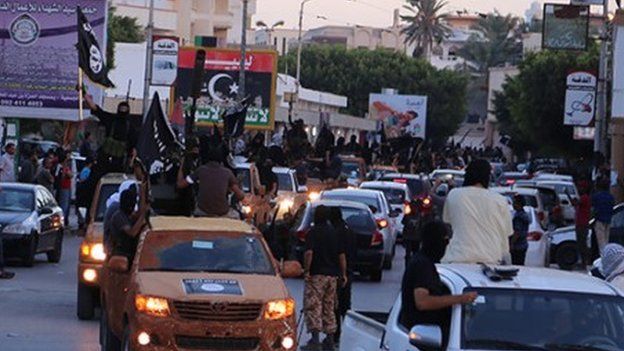
Great context piece by @azelin on #Manchester, covering #IS in #Libya and its extension into Europe http://www.washingtoninstitute.org/policy-analysis/view/manchester-attack-highlights-foreign-fighters-in-libya …
23 mayo, 2017
por Felipe Sahagún
Sin comentarios

A visualisation of how human development is distorting the planet (Chatham House)
This map shows the global connections which characterize the world of the Anthropocene, the period when human activity has been the dominant influence on the environment. In this view of the world, the most highly populated areas get the most space, reducing the sparsely populated such as central Australia to insignificance. The built-up areas are shown by the strength of the light pollution produced by cities, which are connected by shipping routes (white/blue over sea), roads (green), railway lines (orange), pipelines (red) and submarine cables (yellow over sea).
Benjamin Hennig, an Oxford University geographer who created the map, says: ‘For a large part of the world’s population the planet is far less a global village than a one-way street that channels their resources to the spaces that are the real worlds of the Anthropocene’.
23 mayo, 2017
por Felipe Sahagún
Sin comentarios


España es el 24 país más estable y el que más mejoró en el último año según Fragile States Index http://fundforpeace.org/fsi/country-data/ … via @TheEconomist


