Relaciones Internacionales – Comunicación Internacional

21 marzo, 2017
por Felipe Sahagún
Sin comentarios

Boston public schools map switch aims to amend 500 years of distortion


Gall–Peters Projection (Published on Jul 30, 2010)

When Boston public schools introduced a new standard map of the world this week, some young students’ felt their jaws drop. In an instant, their view of the world had changed.

The USA was small. Europe too had suddenly shrunk. Africa and South America appeared narrower but also much larger than usual. And what had happened to Alaska?

In an age of “fake news” and “alternative facts”, city authorities are confident their new map offers something closer to the geographical truth than that of traditional school maps, and hope it can serve an example to schools across the nation and even the world.

For almost 500 years, the Mercator projection has been the norm for maps of the world, ubiquitous in atlases, pinned on peeling school walls.

Gerardus Mercator, a renowned Flemish cartographer, devised his map in 1569, principally to aid navigation along colonial trade routes by drawing straight lines across the oceans. An exaggeration of the whole northern hemisphere, his depiction made North America and Europe bigger than South America and Africa. He also placed western Europe in the middle of his map.

…MORE


20 marzo, 2017
por Felipe Sahagún
Sin comentarios

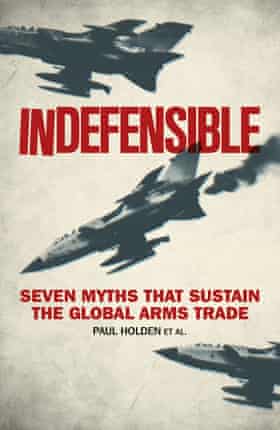
Shock tactics: how the arms industry trades on our fear of terrorism

In his book Indefensible – Seven Myths That Sustain the Global Arms Trade, Paul Holden points to the weapons industry’s role in generating today’s wars

A few years after the millennium, the world was at its most peaceable in recorded history. Nonetheless, a 2006 Gallup poll revealed that 76% of Americans believed that the world was, in that year, more dangerous than it had been any time in the recent past.

What might explain this? Some reasons lie in the psychology of threat perception. Threats that are new and unknown will figure more highly than those that are familiar – even if the latter are objectively greater. Threats that are incalculable or somehow alien will be seen as their worst possible manifestations. We are irrationally scared of sharks. Events that are on the TV news will be more salient than those we read about in the papers or in specialist articles, or which never reach the media at all. Continue leyendo →

20 marzo, 2017
por Felipe Sahagún
Sin comentarios

The seven revolutions (CSIS)

What are the Seven Revolutions? from CSIS on Vimeo.

Have you considered how a global population of 9 billion people by the middle of the century will impact your life? What are the challenges for the availability of food, water, and energy resources? How will society balance the benefits of technological innovation and advanced communication with the threat of cyber security? How will global economic integration and governance affect trade, markets, and commerce overall? Published on Sep 25, 2014 Continue leyendo →

20 marzo, 2017
por Felipe Sahagún
Sin comentarios

Quo Vadis, EU?

Thorsten Beck, Geoffrey Underhill

01 March 2017

The aim of this eBook is to focus on the post-crisis ‘socio-economic policy’ identity of the European Union in the post-crisis period.

Contents

Foreword

Introduction: Europe – quo vadis?
Thorsten Beck and Geoffrey Underhill

Part I: European identity
1 A past of plural identities: The EU as a coat of many policy colours
Geoffrey Underhill

2 Reforging EU commonality after the crisis
Maurizio Ferrera

3 European identity through European experiences?
Theresa Kuhn

4 A tale of two models
Jonathan Story

Part II: The rise of populism
5 When it comes to globalisation, not all radicalisms are created equal
Brian Burgoon

6 Is the Brexit vote disconnected from the European Union?
Sascha O. Becker, Thiemo Fetzer and Dennis Novy

7 Brussels bureaucrats and Whitehall mandarins: Taking regional identity seriously
Diane Coyle and Rob Ford

8 A future EU: An inevitably emotional party animal
Gijs Schumacher

Part III: A new governance structure for Europe
9 State capacity, populism and the EU budget
Andrew Gamble

10 Brexit, political shock absorbers, and the three Rs
Kevin H. O’Rourke

11 A Europe of national responsibility
Erik Jones

12 Revitalising Europe’s soft power
Erik Berglof

Part IV: Policy areas
13 Political economy of reforms: Lessons for the EU from postcommunist transition
Sergei Guriev

14 Patches won’t do, fiscal federalism will
Charles Wyplosz

15 Restoring trust in the arrangements for Eurozone intergovernmental debt
Patrick Honohan

16 A New Fiscal Governance for the Eurozone
Jeromin Zettelmeyer

17 European Banking Union – a qualified success
Rachel A. Epstein and Martin Rhodes

Part V: The role of social scientists
18 The role of economists in the new world order
Thorsten Beck

PDF Download


20 marzo, 2017
por Felipe Sahagún
Sin comentarios

Happiness report 2017

Norway is the happiest place on Earth, according to a United Nations agency report – toppling neighbour Denmark from the number one position.

The World Happiness Report measures «subjective well-being» – how happy the people are, and why.

Denmark, Iceland, Switzerland and and Finland round out the top five, while the Central African Republic came last.

Western Europe and North America dominated the top of table, with the US and UK at 14th and 19th, respectively.

Countries in sub-Saharan Africa and those hit by conflict have predictably low scores. Syria placed 152 of 155 countries – Yemen and South Sudan, which are facing impending famine, came in at 146 and 147.

The World Happiness Report was released to coincide with the United Nation’s International Day of Happiness on 20 March.

…MORE

  • Inside India’s first department of happiness
    30 January 2017
  • Mental health and relationships ‘key to happiness’
    12 December 2016
  • Hygge: A heart-warming lesson from Denmark
    2 October 2015

The fourth World Happiness Report

Norway Is Happiest Country in the World. What’s the Secret?