Relaciones Internacionales – Comunicación Internacional

21 enero, 2025
por Felipe Sahagún
Sin comentarios

Business and geopolitics

McKinsey's Davos Daily

Business leaders today view geopolitical tensions as the biggest risk to economic growth. With regional conflicts and trade disputes intensifying in recent years, multinational corporations face a challenging environment. Leaders acknowledge the shifting global order, yet many haven’t fully grasped a crucial implication: these geopolitical shifts create not only risks to mitigate but also significant opportunities. “Organizations must have insight, foresight, oversight, and the right capabilities—but most of all, they must have the fortitude to seize opportunities amid volatility, complexity, and uncertainty,” write McKinsey’s Cindy Levy, Shubham Singhal, and Matt Watters. As day one at Davos kicks off, check out these insights to learn why a proactive approach to geopolitics is essential—and why resilience must become a core strategic priority rather than a reactive afterthought.

A proactive approach to navigating geopolitics is essential to thrive

The Global Cooperation Barometer 2025

Building geopolitical resilience: The people agenda

Tariffs on the move? A guide for CEOs for 2025 and beyond

Can your company remain global and if so, how?


20 enero, 2025
por Felipe Sahagún
Sin comentarios

El mundo según Trump


Trump 2.0: el mundo visto como un gran Monopoly
EL MUNDO@elmundoes
«En la segunda era del republicano, el planeta deja de ser el tradicional tablero geopolítico y se convierte en una lucha por el control de la riqueza». Felipe Sahagún

De elmundo.es

20 enero, 2025
por Felipe Sahagún
Sin comentarios

Billionaires’ wealth soared in 2024 (OXFAM)

Green Oxfam sign with logo

The group’s report comes as some of the world’s political and financial elite prepare for an annual gathering in Davos, Switzerland.

20 Jan 2025

Billionaires’ wealth globally grew three times faster in 2024 than the year before, global advocacy group Oxfam International says, as some of the world’s political and financial elite prepare to attend an annual gathering in Davos, Switzerland.

In its latest assessment of global inequality timed to the opening of the World Economic Forum (WEF) meeting, Oxfam on Monday said the combined wealth of billionaires rose by $2 trillion to $15 trillion last year.

The report, titled Takers Not Makers, said there were 2,769 billionaires worldwide in 2024, an increase of 204 over the previous year. It noted that at least four new billionaires were “minted” every week during the year, and three-fifths of billionaire wealth came from inheritance, monopoly power or “crony connections”.

Oxfam predicted that at least five trillionaires will crop up over the next decade. A year ago, the group forecast that only one trillionaire would appear in that period.

…MORE


19 enero, 2025
por Felipe Sahagún
Sin comentarios

The next decade of strategic competition (Atlantic Council)

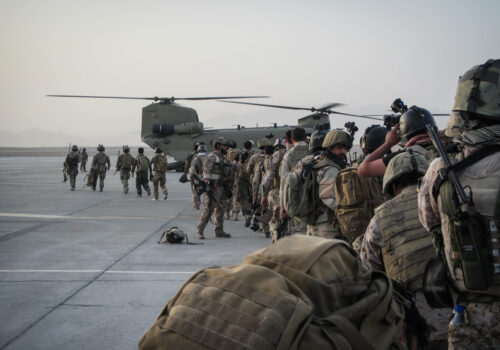
The next decade of strategic competition: How the Pentagon can use special operations forces to better compete

January 14, 2025

Strategic competition is likely to intensify over the next decade, increasing the demands on the United States to deter and defend against wide-ranging and simultaneous security challenges across multiple domains and regions worldwide. In that time frame, the Department of Defense (DOD) and the Joint Force should more effectively leverage the competencies of US Special Operations Forces (USSOF) to compete with US strategic adversaries.

Three realities facing the DOD over the next decade lend themselves toward leveraging USSOF more in strategic competition. First, the growing need to counter globally active and increasingly cooperative aggressors, while the broader Joint Force remains focused on the Indo-Pacific and Europe, underscores the value of leveraging USSOF to manage competition in other regions. Second, the desire to avoid war and manage competition below the threshold of conflict aligns with USSOF’s expertise in the irregular aspects of competition. Third, unless defense spending and recruitment dramatically increase over the next decade, the Joint Force will likely have to manage more security challenges without a commensurate increase in force size and capabilities, which underscores the need for the DOD to maximize every tool at its disposal, including the use of USSOF to help manage strategic competition.

…MORE


19 enero, 2025
por Felipe Sahagún
Sin comentarios

The Israel-Hamas cease-fire and hostage deal

Atlantic Council

Now comes the even harder part. On Wednesday, negotiators from Israel and Hamas agreed to a cease-fire in Gaza and the release of the remaining hostages taken by the terrorist group during its October 7, 2023 attack.

The deal, mediated by US, Qatari, and Egyptian officials, will take place over three phases, each slated to last six weeks. During the first phase, Hamas will release thirty-three hostages—women, children, and those over fifty years of age—and Israel will release hundreds of Palestinian prisoners, begin to withdraw from some areas, and facilitate a significant increase in humanitarian aid into Gaza. In the second phase, Hamas is slated to free the remaining male hostages while Israel withdraws from Gaza. The third phase would include the return of deceased hostages and the beginning of reconstruction.

Does this deal, which now heads to the Israeli cabinet for approval, really mark the end of the war? What’s next for Gaza’s reconstruction, Israel’s security, and wider regional efforts such as Israeli-Saudi normalization? Below, Atlantic Council experts share their answers to these and other pressing questions.

Click to jump to an expert analysis:

Jonathan Panikoff: The war has widened the gap over the prospect of a two-state solution

Shalom Lipner: The “Trump effect” will help Netanyahu sell this deal to his hard-liners

Ahmed Fouad Alkhatib: The deal risks freezing the conflict with no political horizon

Gina Abercrombie-Winstanley: Israel’s military victory has come at immeasurable cost to its global standing

Carmiel Arbit: Is this the end of the “bromance” between Trump, Netanyahu, and the Israeli far right?

Liz Cathcart: The disparities are striking, but there is never an “equal” hostage deal

Danny Citrinowicz: Now Israel needs to aim for normalization with Saudi Arabia

Thomas S. Warrick: Who governs postwar Gaza when the shooting stops?

Marc Polymeropoulos: The human cost of the war in Gaza is about to become clear—with repercussions for the region

Alex Plitsas: Now for the hard part—a long-term solution for Gaza

…MORE