Felipe Sahagun, un periodista experto en el caos internacional.

16 diciembre, 2024
por Felipe Sahagún
Sin comentarios
15 diciembre, 2024
por Felipe Sahagún
Sin comentarios
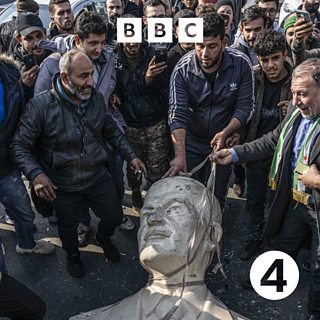
Kate Adie introduces stories from Syria, Ukraine, France, Ghana and Saudi Arabia. The speed at which President Assad was deposed was a shock to many, including the BBC’s Lina Sinjab. She had been forced to leave her home country in 2013, after being detained and threatened by Syrian security forces. This week, she finally returned home, without the looming fear of arrest, to find a changed country.
Paul Adams was in Kyiv on the first-day of Russia’s full-scale invasion, and reported from the country during much of the early months on the war. He recently returned for the first time in over a year, and found a very different country, where the desire for the war to end is growing by the day.
France has entered a period of political uncertainty, triggered by the collapse of Prime Minister Michel Barnier’s government ten days ago. On the surface, not much has changed in the country, says Andrew Harding – but what about further down the road?
Like other polls around the world this year, Ghana’s general election saw another incumbent ousted. The reasons behind this are familiar, too, says James Copnall – rising prices, rising rent and a general desire for change.
Saudi Arabia was crowned host of the 2034 World Cup this week – the pinnacle of an orchestrated campaign to bring some positive PR to the Kingdom through international sport and culture. Emily Wither recently attended a star-studded film festival, and considers the degree to which Saudi Arabia has managed to pull off its much-desired rebrand. Series Producer: Serena Tarling Production coordinators: Katie Morrison and Sophie Hill Editor: Richard Fenton-Smith
15 diciembre, 2024
por Felipe Sahagún
Sin comentarios

A haven from the civil war, Cambodia’s Hotel Le Phnom
From colonial luxury to killing fields, Le Phnom was a haven for journalists reporting on the Cambodian civil war.
From hostel to hostile – War Hotels is a documentary series exploring the stories of iconic hotels associated with recent urban warfare. From Beirut to Baghdad, Sarajevo to Kigali, this series unpicks some of the world’s dramatic geopolitical conflicts from the perspective of landmark hotels on the fighting front lines, and those that became a safe haven for reporters and civilians alike.
Related
Vietnam war journalists’ hub: Caravelle Saigon
Europe’s most bombed hotel: The Europa Hotel in Belfast
Holiday Inn Sarajevo: In the Eye of the Siege
How Beirut’s Commodore Hotel became a safe haven for world media
How the Holiday Inn became a symbol of the Lebanese Civil War
Vietnam war journalists’ hub: Caravelle Saigon
14 diciembre, 2024
por Felipe Sahagún
Sin comentarios
14 diciembre, 2024
por Felipe Sahagún
Sin comentarios
David Miliband, President and CEO of the International Rescue Committee (IRC), presents the new IRC Emergency Watchlist report, highlighting the countries at highest risk of humanitarian crises in 2025 and examining where the international community has made progress or fallen short.
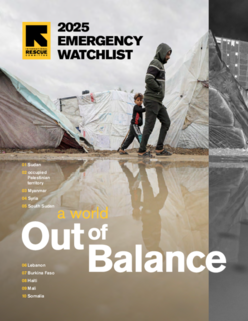
The Emergency Watchlist report is the International Rescue Committee’s (IRC) assessment of the 20 countries at greatest risk of new humanitarian emergencies each year. The report is based on an analytically rigorous process that deploys 74 quantitative and qualitative variables, as well as qualitative insights from the IRC’s experience of working in more than 40 countries, to identify which countries to include on the list and where to rank them.
For the past decade, the Emergency Watchlist has helped the IRC track humanitarian needs, driving both our decision-making to meet those challenges and our understanding of the changes in the world. One theme is especially important: Humanitarian needs are increasingly concentrated in Emergency Watchlist
14 diciembre, 2024
por Felipe Sahagún
Sin comentarios
Russian President Vladimir Putin’s war on Ukraine has brought unprecedented destruction to Ukraine and cemented Russia’s role as a revanchist and imperial actor on the international stage. To this end, the Kremlin has sought to mobilize the Russian public into the war effort both through a wide-ranging domestic and international propaganda campaign and through brutal crackdowns on anti-war dissent inside its borders. Facing growing sanctions and international ostracization, many Russians remaining in Russia nevertheless continue to tolerate—if not openly support—Putin and his government.
The latest report in the Atlantic Council’s Russia Tomorrow series, The reluctant consensus: War and Russia’s public opinion, by author Maria Snegovaya, assesses Russian society’s consolidation around Russia’s war on Ukraine, the origin of the “Putin consensus” among the Russian public, and public perceptions of the war among Russians.