Relaciones Internacionales – Comunicación Internacional

12 septiembre, 2026
por Felipe Sahagún
Sin comentarios

25 years after 9/11

Edward Luce@EdwardGLuce

The next 9/11, or far worse, is there in plain sight. Yet apparently it is communism not AI that threatens America. Me on Dallas, Trump and our unlearning species. Free to read.

The state of terrorism, 25 years after 9/11

 
 A woman takes a photograph of the two beams of light that make up the Tribute in Light as it is illuminated over lower Manhattan ahead of the 25th anniversary of the attack on the World Trade Center on September 09, 2026, in New York City.

‘Never, ever forget’ – America marks 25th anniversary of 9/11 attacks

BBC
 
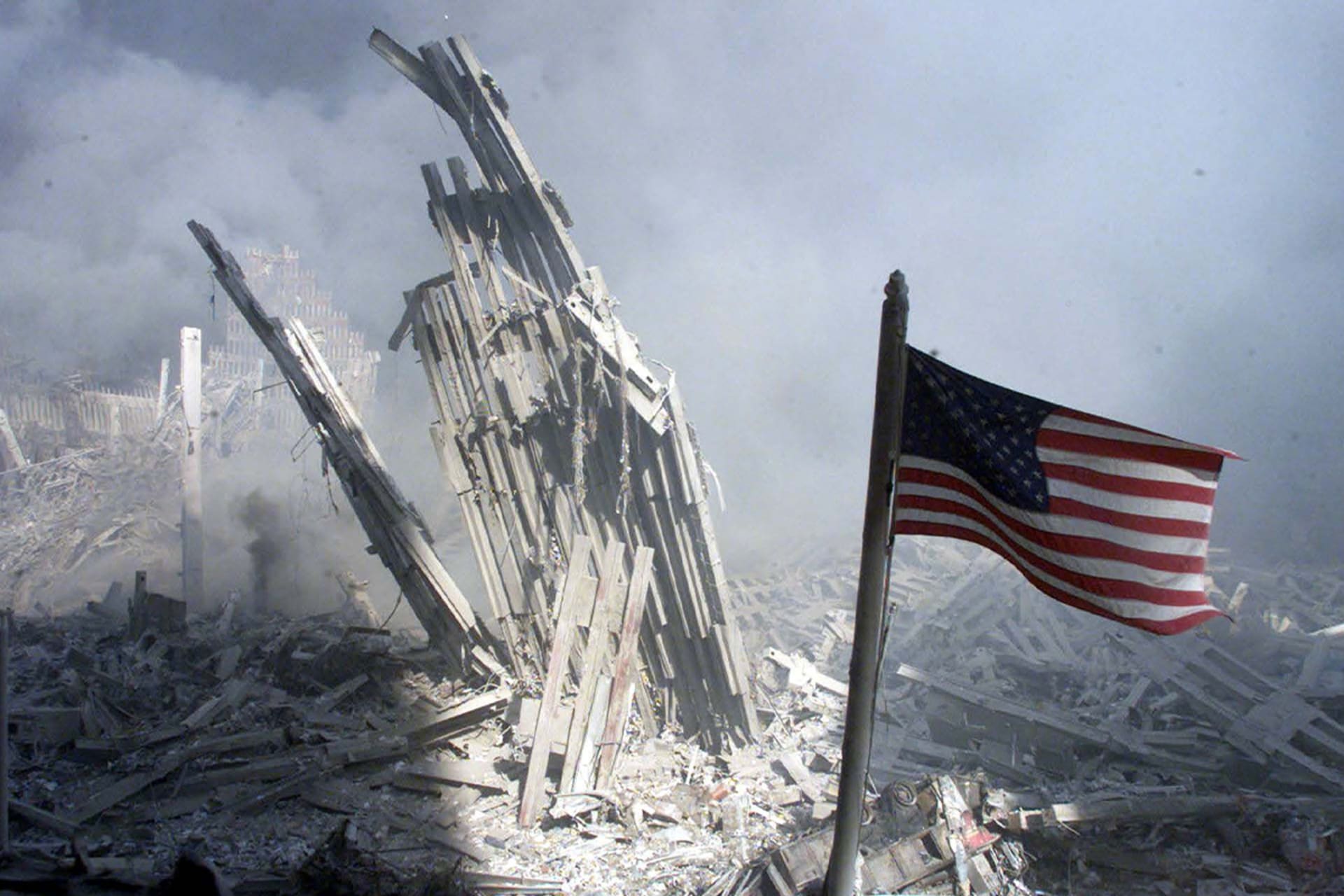
<p>An American flag flies near the base of the destroyed World Trade Center in New York City on September 11, 2001.</p>

The 9/11 terrorist attacks at 25: Assessing the legacy, addressing the future

The Global Story, Did America win the ‘war on terror’?

The rubble of the World Trade Center smolders on Sept. 12, 2001, following the previous day's terrorist attacks. (Photo by Porter Gifford/Corbis via Getty Images)

9/11, 25 Years Later: 25 Essential Documentaries & Podcasts (with Frank Gardner)

It’s been 25 years since Al Qaeda operatives carried out the deadliest terror attacks on the U.S. in the country’s history, killing nearly 3,000 people and injuring thousands more.
…MORE

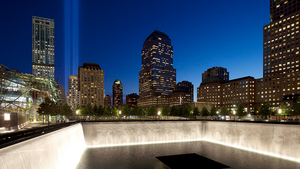
The Tribute in Light shines above a reflecting pool at the National September 11 Memorial in New York City on September 11, 2012.

Lieutenant General Frank Kearney (Ret.), Kelly Magsamen, and Ari Tabatabai reflect on how the post-9/11 era transformed American warfare and continues to shape US national security 25 years later.

September 11 and the Remaking of American National Security

The Chicago Council on Global Affairs, Sep 17, 2026
 

9 septiembre, 2026
por Felipe Sahagún
Sin comentarios

9/11, Twenty-Five Years Later: Lessons and Lingering Threats

Twenty-five years after the September 11 attacks, the war on terrorism has reshaped U.S. foreign policy, national security, and the way Americans think about safety itself. What did the United States get right—and wrong—in the decades that followed? And how did the threat evolve from al-Qaeda to ISIS to a new landscape of domestic and online vulnerabilities? I

In this conversation, CFR Senior Fellow Steven A. Cook sits down with counterterrorism experts Farah Pandith and Bruce Hoffman to revisit the day of the attacks, examine the legacy of the global war on terrorism, and explore new security challenges facing the U.S. homeland.

Related


9 septiembre, 2026
por Felipe Sahagún
Sin comentarios

Gral David Petraeus: urgent military change

General David Petraeus discusses autonomous warfare, drone technology and the military transformation driven by Ukraine. Ukraine offers the clearest evidence that warfare is changing in revolutionary ways. Unmanned systems now account for nearly 90% of Russia’s killed and wounded on the front line, with around eight million drones produced by Ukraine every year. Software is updated weekly and hardware every few weeks, a pace no Western procurement system matches.

Traditional armoured manoeuvre has effectively stopped, replaced by a dense zone of surveillance and strike drones along the front. For Gen. Petraeus, Senior Vice President of RUSI, this demands a complete institutional overhaul, covering doctrine, force structure, training, procurement and personnel, on a scale far beyond the changes he oversaw during the Iraq surge.

He argues the UK is unusually well placed to lead this shift, given its visibility into the Ukrainian battlefield, political continuity across governments, and a parliamentary system that can move fast, though entrenched interests in legacy platforms will resist the change required. This interview is featured in the latest episode of the RUSI podcast ‘Global Security Briefing’: https://www.rusi.org/publication/epis.

9 septiembre, 2026
por Felipe Sahagún
Sin comentarios

Clarissa Ward: “It’s Open Season on Journalists” (Washington Post)


By 

Each week, I’ll sit down with a new guest to explore freedom in its many forms around the world in our new video podcast, Freedom Desk with Jason Rezaian. 

For our first episode, I spoke with a fellow journalist who has spent her career covering wars from the ground, giving her a unique perspective of what’s at stake when in-the-field reporting is disrupted. CNN’s Clarissa Ward has survived a hotel bombing in Baghdad, run from gunfire in Syria, and reported from inside an apartment building under Russian bombardment in Kharkiv.

From her front-row seat chronicling the world’s deadliest conflicts for more than two decades, she sees the rising contempt for the profession as an even greater threat to journalism than bullets on the battlefield.

7 septiembre, 2026
por Felipe Sahagún
Sin comentarios

A new map of the world (BBC, Le Monde…)

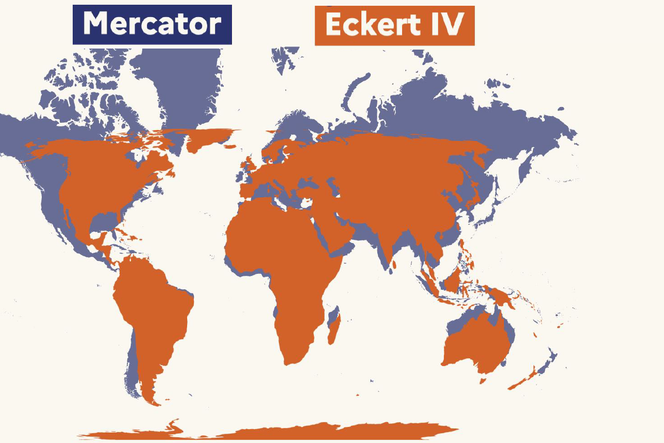
La France a changé sa représentation cartographique du monde en abandonnant la projection dite « de Mercator » au profit de celle dite « Eckert IV ».

The UN has just called for the predominant world map to be replaced with one that more accurately reflects the true size of continents such as Africa.

The «Correct the Map» resolution adopted by the General Assembly aims to fix the discrepancy with the Mercator map, in which the African continent is shown as being of similar size to Greenland – even though it is in reality about 14 times larger.

The UN adopted a new map, the Equal Earth projection, which better represents the true sizes of landmasses – but comes with problems of its own.

…MORE

RELATED

La France abandonne la projection cartographique dite « de Mercator » et demande une représentation du monde plus équitable (Le Monde)


7 septiembre, 2026
por Felipe Sahagún
Sin comentarios

Les femmes journalistes

Festival international de journalisme : les rencontres en podcast

Dans l’imaginaire collectif, l’investigateur est un homme. Courageux, fort, presque insensible, qui fait passer son travail avant tout. Un cliché mais qui a la vie dure. De leurs côtés, les femmes journalistes, elles, sont plutôt orientées vers les sujets plus intimes, sociétaux car il ne faudrait pas qu’elles prennent trop de risques, qu’elles s’éloignent trop de leur famille. Mais pourquoi cette différence de traitement et de genre ? Les femmes journalistes sont-elles invisibilisées ? Lorsqu’elles enquêtent, sont-elles exposées à des risques ou des menaces spécifiques ? Et est-ce que les choses changent ?

A l’occasion du Festival international de journalisme, les journalistes Anne Michel du Monde et Caroline Michel du Nouvel Obs, accompagné de l’étudiante en journalisme à l’IJBA Célia Lespinasse, ont donné la parole à Ksenia Bolchakova, journaliste d’investigation franco-russe et co-autrice du documentaire « Wagner, l’armée de l’ombre de Poutine », et Valentine Oberti, co-directrice de la rédaction de Mediapart.

Organisé par les rédactions du groupe Le Monde et du Nouvel Obs, le Festival international de journalisme avait lieu du 10 au 12 juillet à Couthures-sur-Garonne. Pendant trois jours, une centaine de journalistes et invités ont débattu avec les festivaliers autour de sept thématiques d’actualité. Pour en savoir plus, cliquez ici.

LINK TO PODCAST