Relaciones Internacionales – Comunicación Internacional

17 abril, 2024
por Felipe Sahagún
Sin comentarios

A short history of India in eight maps (Economist)

Mauryan Empire (Circa 297 BC the north y 260 BC the south)

Understanding the breathtaking diversity of India and Indians

In his decade in power Narendra Modi, India’s prime minister, has centralised the state to an unprecedented extent. Yet his ruling Bharatiya Janata Party has failed to attract many voters in the more prosperous south. The regional divergence is not unique to the bjp. Throughout India’s long history, rulers have tried and failed to unite the subcontinent under central authority. The chief reason is India’s diversity, summed up in clichés about dozens of cuisines, hundreds of languages and thousands of gods. The clichés may be trite, but they are also useful. A whirlwind tour through 2,500 years of Indian history helps explain why.

…MORE


16 abril, 2024
por Felipe Sahagún
Sin comentarios

US Funding of UN Peacekeeping – Analysis (Eurasia Review)

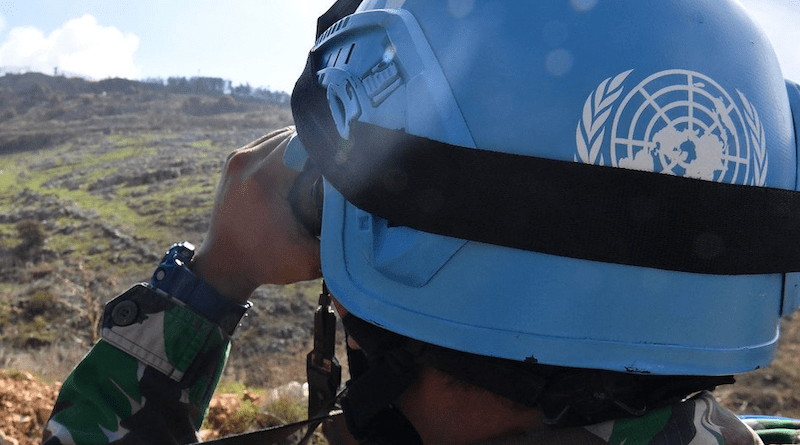
UNIFIL peacekeeper on patrol in south Lebanon. Photo Credit: UN/Haidar Fahs

By 

By Luisa Blanchfield

The United States is the single largest financial contributor to United Nations (U.N.) peacekeeping activities. Congress authorizes and appropriates U.S. contributions, and it has an ongoing interest in ensuring such funding is used as efficiently and effectively as possible.

The United States, as a permanent member of the U.N. Security Council, plays a key role in establishing, renewing, and funding U.N. peacekeeping operations. For 2024, the United Nations assessed the U.S. share of U.N. peacekeeping at 26.94%; however, since 1994 Congress has capped the U.S. payment at 25% due to concerns that U.S. assessments are too high. Congress appropriated $1.37 billion to most U.N. peacekeeping activities for FY2024 (up to the 25% cap). Due to the gap between the U.N. assessment and the 25% cap, the United States has accumulated over $1.1 billion in arrears since FY2017. President Biden’s FY2025 budget request would fund the U.N. peacekeeping operations up to the 25% cap.

…MORE


16 abril, 2024
por Felipe Sahagún
Sin comentarios

Sudan’s worst year

Sudan’s Most Horrible Year

A grim anniversary

Marc Leon Goldberg (April 15)

The single largest humanitarian crisis in the world turns one year old today.

Since a full-scale civil war erupted in Sudan exactly one year ago, some 8 million people have been displaced. This includes nearly 2 million who fled as refugees to bordering countries that can hardly handle the sudden influx of desperate people leaving their homes. The United Nations is now warning of famine in parts of Darfur, in western Sudan. According to the United Nations Office of Humanitarian Affairs, in the last two weeks alone, the number of newly displaced people increased by about 107,800 women, men, and children. Continue leyendo →

15 abril, 2024
por Felipe Sahagún
Sin comentarios

Iran delivers its message with attack on Israel

The Wall Street Journal Whats News

Iran-Israël : comprendre le déroulé de l’attaque de Téhéran en dix moments-clés (Le Monde, Dimanche 14 avril)

How the U.S. Forged a Fragile Middle Eastern Alliance to Repel Iran’s Israel Attack (WSJ, April, 15)

Will Israel retaliate against Iran, or hold back? (The Economist, April 14)

‘We’re crazier than you realise’: Iran delivers its message with attack on Israel (FT, April 15)

Análisis mío del ataque de Irán a Israel (EL MUNDO, 14 de abril)


15 abril, 2024
por Felipe Sahagún
Sin comentarios

Lessons on mitigating election interference (Brookings)

The Center for Asia Policy Studies in the Foreign Policy program at Brookings will host Valerie Wirchshafter, Mareike Ohlberg, Yang Kuang-shun, and John Lee for a virtual panel discussion moderated by Ryan Hass. The discussion will examine the current state of play of AI technology and the lessons learned from the experiences in Europe, Taiwan, and Australia on foreign election interference.