8 marzo, 2024
por Felipe Sahagún
Sin comentarios
7 marzo, 2024
por Felipe Sahagún
Sin comentarios
Mexico: Killings of journalists under state protection

New York, March 6, 2024—Eight journalists have been killed while enrolled in Mexico’s Mechanism for the Protection of Human Rights Defenders and Journalists in the last seven years, a figure that highlights the urgent need to strengthen and reform the institution, said Amnesty International and the Committee to Protect Journalists (CPJ) today upon publication of a joint investigation into the Mechanism.
The report, “’No one guarantees my safety’: The urgent need to strengthen Mexico’s federal policies for the protection of journalists,” analyzes the federal Mechanism created in 2012 to protect rights defenders and journalists in the country at extreme risk of threats and attacks due to their work. While Amnesty International has previously published research on the Mechanism’s deficiencies in protecting human rights defenders, this new report, conducted with press freedom group CPJ, specifically focuses on the Mechanism’s work to protect journalists.
“The federal Mechanism for the Protection of Human Rights Defenders and Journalists continues to be a crucial part of government efforts in Mexico to make the country a safer place for journalists but can only fulfil that role if it addresses its own failings adequately,” said Jan-Albert Hootsen, CPJ’s Mexico representative. “After years of incessant bloodshed and corrosive impunity, the time is now for the Mexican state to take action and show that it is finally willing to take its obligations towards freedom of the press seriously.”
7 marzo, 2024
por Felipe Sahagún
Sin comentarios
Bouquet satellitaire pour le journalisme indépendant en Russie (RsF)

Chers amis,
Nous vous avions parlé il y a quelques mois, de ce projet absolument sans précédent de bouquet satellitaire Svoboda, “liberté” en russe. Depuis hier, il est accessible ! Neuf chaînes de télévision et radio russophones indépendantes sont désormais diffusées par ce moyen technologique à destination de la Russie, des territoires occupés de l’Ukraine et des pays baltes.
C’est une immense avancée dans la lutte que nous menons contre la propagande russe : 4,5 millions de foyers au sein de la Fédération de Russie et environ 800 000 dans les territoires occupés de l’Ukraine pourront pour la première fois, accéder à une information libre, fiable et indépendante, depuis leur télévision, sans aucun équipement supplémentaire.
Le bouquet satellitaire Svoboda témoigne de l’engagement inébranlable de RSF en faveur du droit d’accès à une information fiable. Nous devons accroître l’audience des médias indépendants russes, actuellement consultés par 6 à 9 % de la population adulte, afin de donner aux populations russophones les outils dont elles ont besoin pour préserver leur liberté d’opinion.
7 marzo, 2024
por Felipe Sahagún
Sin comentarios
El conflicto palestino-israelí (Oscar Mijallo en INCIPE, 4 de marzo de 2024)
7 marzo, 2024
por Felipe Sahagún
Sin comentarios
25 elections in 2024 that could change the world
There are more than 50 elections affecting half the planet’s population planned for this year. From Russia to Taiwan to India and more, the presidential and legislative contests have huge implications for human rights, the economy, international relations and prospects for peace in volatile times. Here are 25 places where a change in leadership could resonate around the world. Click on each one below for more details.
7 marzo, 2024
por Felipe Sahagún
Sin comentarios
Covering Gaza in 2024 (Reuters Inst)

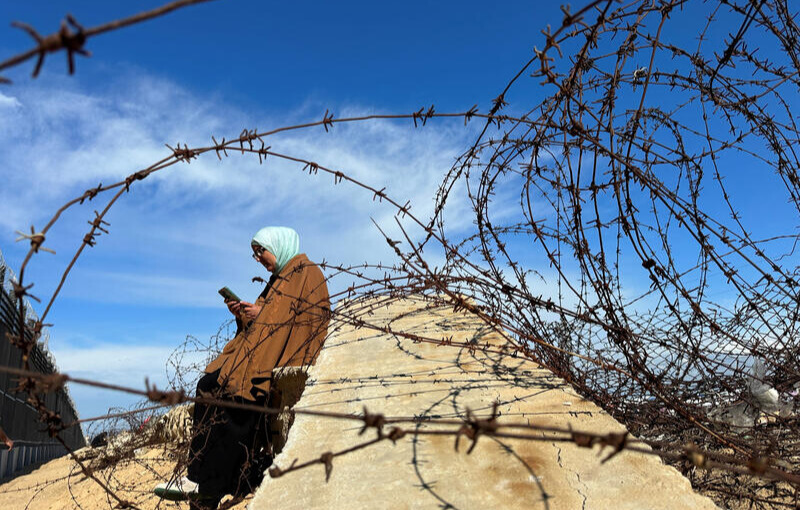
A displaced Palestinian woman tries to get internet service on her phone through the Egyptian networks to communicate with her relatives, near the border with Egypt, in Rafah in the southern Gaza Strip February 1, 2024. REUTERS/Mohammed Salem
Palestinians struggle to connect and get news amid digital shutdowns in Gaza: “Without the internet everything stops”
A few metres from Gaza’s border with Egypt, Al Jazeera journalist Maram Humaid saw an 18-year-old man on a pile of sand holding planks of wood in the air, glued to which was a mobile phone.
“This is the telecommunications company of the makeshift camp,” the young man explained. He was connecting to an Egyptian internet service provider through an eSIM – a virtual SIM card allowing connection to a mobile network without a physical SIM – so other displaced people could access a hotspot. “I can’t stay disconnected, so I strive to find a solution,” Humaid recalls the young man telling her.
Related
Jodie Ginsberg: “Gazan journalists must be protected. They are our eyes on the ground”
Breaks, grief and community: how to protect yourself when sifting through graphic visuals
These journalists from Gaza risk their lives to cover the war