WASHINGTON, D.C. — A record-low 15% of Americans view China favorably, marking a five-percentage-point, one-year decline in this rating, which Gallup has measured since 1979. China has been gradually falling in the U.S. public’s esteem in recent years and is down a total of 38 points since 2018. More than eight in 10 U.S. adults have a negative opinion of China, including 45% who view it very unfavorably and 39% mostly unfavorably. Continue leyendo →
Nicaraguan award-winning editor Carlos F. Chamorro delivered the annual Reuters Memorial Lecture on 6 March 2023. Here’s the transcript and the video of his talk. | Lee su conferencia en español
Live on the Reuters Institute: Carlos Chamorro, tje combative Nicaraguan democratic journalist, explains how Daniel Ortega’s regime declared war on freedom. And how independent journalists resist. A moral tale of resistance thru quality journalism @risj_oxford @cefeche
Reuters Institute@risj_oxford
Kicking off our #RISJMemLecture featuring Nicaraguan journalist @cefeche. He’s speaking on how to report under a dictatorship in Nicaragua and beyond followed by a panel w/@arusbridger@LuzMelyReyes@johnallannamu Watch https://youtube.com/watch?v=0MeEIA5Vh6I… Highlights in thread
In EIU’s latest global outlook video, global forecasting director, Agathe Demarais, and editor of the Democracy Index, Joan Hoey, discuss the results of EIU’s latest Democracy Index report.
Alongside an explanation of the changes in the global rankings and an in-depth regional review, the latest edition of EIU’s Democracy Index report explores why democracy failed in Russia, how this led to the current war and why democracy in Ukraine is tied to its fight for sovereignty.
Devant les diplomates français, la Ministre Catherine Colonna a affirmé cet été : «La diplomatie d’influence n’est pas qu’une diplomatie d’État à État. Elle s’affirme désormais pleinement comme une diplomatie des sociétés […] une diplomatie de proximité et, pour ainsi dire, une diplomatie de peuple à peuple.» Un discours nouveau tant la diplomatie française a longtemps été imprégnée par une culture articulée autour du prisme des relations inter-étatiques. Si la situation a beaucoup évolué en dix ans, dans la foulée des révolutions arabes notamment, la prise en compte des opinions publiques locales n’a pas toujours guidé l’action diplomatique, contrairement à l’état des relations avec les autorités. Continue leyendo →
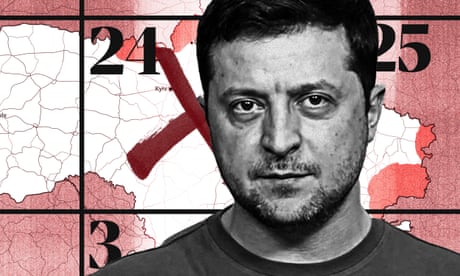
While experts differ on whether a new offensive is imminent, one year on the picture is very different to what was predicted
As the one-year anniversary of Russia’s invasion of Ukraine approaches on Friday, the picture looks very different to the first weeks of the war, when hundreds of Russian tanks poured over the border and airborne forces attempted to capture Hostomel airfield, outside Kyiv, as a springboard to take the capital. Here we look at the status of the conflict and what might happen next.
There have been contradictory assessments of Russia’s ability to conduct a significant new offensive. Although senior Ukrainian officials have warned repeatedly since before Christmas that Russia was planning a big new effort this year, evidence of preparations for a push similar to that of February 2022, involving a large-scale armoured attack, remains thin.
Recent claims, sourced to Nato officials, that Russia was amassing aircraft, were also largely discounted by the UK’s Ministry of Defence. And while Russia has greatly increased infantry numbers – some estimates suggest more than 300,000 troops are in Ukraine – there is no evidence of hundreds of tanks mustering in a region heavily surveilled by spy satellites.
The Nato secretary general, Jens Stoltenberg, has pointed to increased Russian efforts in the east as evidence that a “new offensive” has begun, but others see it as a continuation of efforts that have been going on for months. Russian shelling is less intense that it was in the summer around Sievierodonetsk, when Moscow was expending 60,000 shells a day.