
3 octubre, 2022
por Felipe Sahagún
Sin comentarios
2 octubre, 2022
por Felipe Sahagún
Sin comentarios
Washington Post’s specials on Ukraine

Database of 251 videos exposes the horrors of war in Ukraine
Updated Aug. 24 at 11:29 p.m.Originally published May 9, 2022
Russia’s invasion of Ukraine is one of the most documented wars ever. Citizens, public officials and soldiers have regularly posted videos that show the dead bodies in neighborhoods, the trails of missiles streaking through the skies and the smoldering ruins of entire towns.
Six months later, the fighting shows no sign of ending. The violence has tinged every aspect of Ukrainian life. Prosecutors in the country have identified about 26,000 possible war crimes committed by Russian forces.
The Washington Post’s visual forensics team started to verify and catalogue videos from the war the day Russia’s invasion began. This work is searchable in a database that continues to be updated. The videos have been uploaded in raw format; graphic content is clearly marked. Continue leyendo →
2 octubre, 2022
por Felipe Sahagún
Sin comentarios
Josep Borrell sobre el drama de Europa en 2022
Intervención de Josep Borrell en el Foro de la Toja (Sep. 2022)
Pol ext Cataluña 1 (EM, 2/10/202)
Pol ext Cataluña y 2 » » » «
LINK DIRECT TO THE FORO (Min 4h a 4.33)
1 octubre, 2022
por Felipe Sahagún
Sin comentarios
Reforming the UN Security Council….

September 23, 2022 2:09 pm (EST)
In his remarks to the UN General Assembly this year, President Biden embraced deep changes to the Security Council. He said this:
I also believe the time has come for this institution to become more inclusive so that it can better respond to the needs of today’s world.
Members of the U.N. Security Council, including the United States, should consistently uphold and defend the U.N. Charter and refrain — refrain from the use of the veto, except in rare, extraordinary situations, to ensure that the Council remains credible and effective.
That is also why the United States supports increasing the number of both permanent and non-permanent representatives of the Council. This includes permanent seats for those nations we’ve long supported and permanent seats for countries in Africa, Latin America, and the Caribbean.
The United States is committed to this vital work.
This a policy that will create all sorts of trouble and will undermine U.S. interests, as I explained in an article in National Review. Expansion of the Council has been thought about for decades. Why then has it never been achieved? Because no formula for expansion has been acceptable. Italy would fight adding Germany; Pakistan would fight adding India; Argentina would fight adding Brazil; Nigeria would struggle with South Africa; China would reject adding Japan; and those five countries are the most logical new additions given their size and global influence. Does the president really want some Caribbean country to be added as a permanent Council member, as his remarks suggest? Why?
Adding members will also make the Council more like the General Assembly. Is that supposed to make it more effective and efficient?
The veto is a critical tool of self-defense for the United States in the UN, and for the defense of U.S. allies. The president says we should «refrain from the use of the veto, except in rare, extraordinary situations.” Between 1973 and 2021 we used the veto 53 times to protect Israel from unfair, unbalanced, hostile resolutions. Are all those “rare” and “extraordinary” situations—or par for the course in the UN? And how does permitting the passage of bad resolutions that undermine U.S. interests make the Council “credible and effective?”
Related
Reforming the UN Security Council: Analyzing Obstacles to Reform
1 octubre, 2022
por Felipe Sahagún
Sin comentarios
The Role of the UN Secretary-General (CFR)
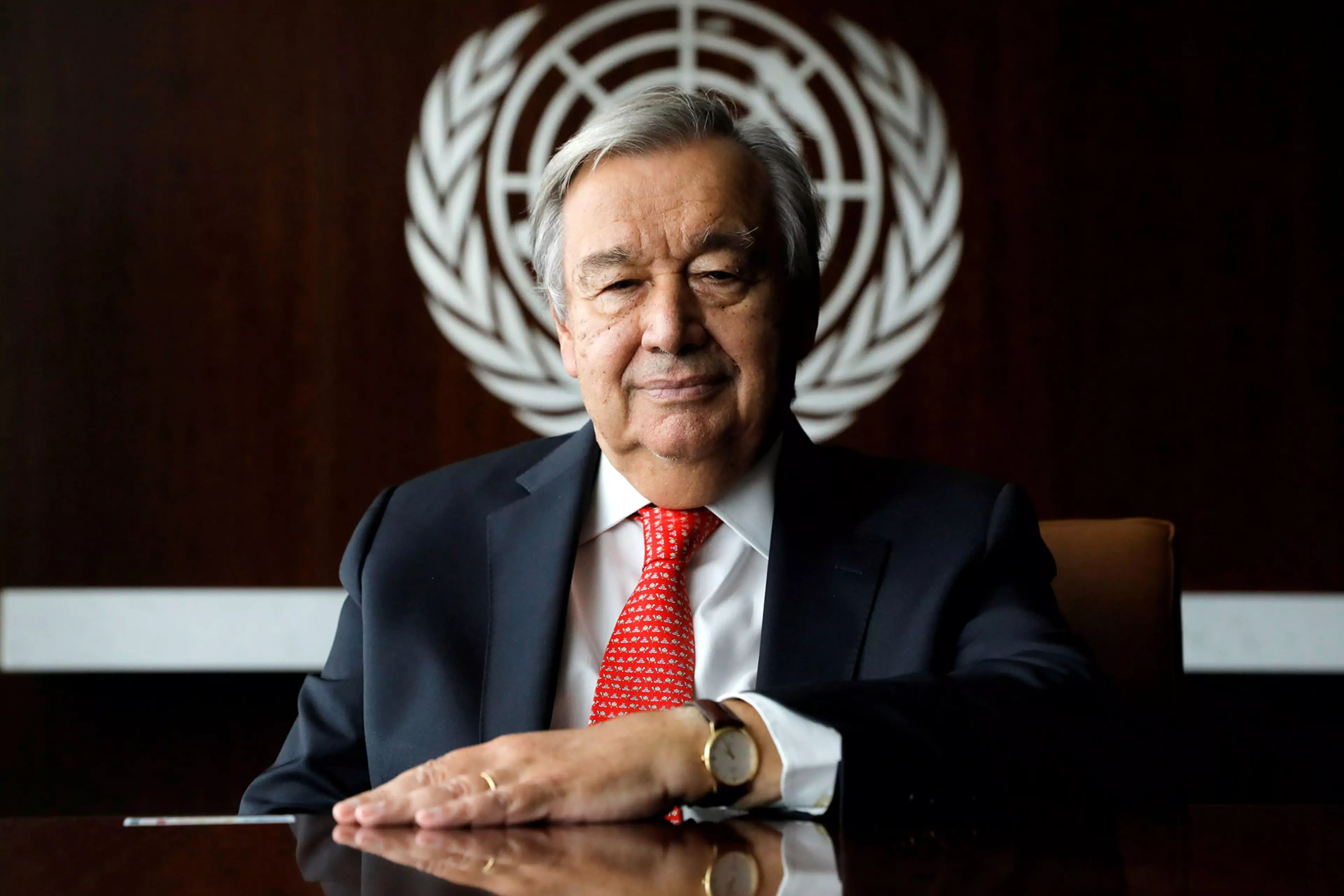
The United Nations’ top leadership position has broad authority to steer the organization’s agenda, but its impact has varied widely since 1946.
1 octubre, 2022
por Felipe Sahagún
Sin comentarios
UN Peacekeeping 2022

Our military and police personnel are first and foremost members of their own national services and are then seconded to work with the UN.
They come from nations large and small, rich and poor. They bring different cultures and experience to the job, but they are united in their determination to foster peace.
How to use this chart: You could filter the data by mission, personnel type and/or by countries. If you wish to view the data of one or multiple mission(s)/personnel type(s)/country(ies), you could deselect the all the available options (by default) by clicking on the square left to ‘(All)’, the first option listed under all filters. Click on the option windows to collapse the dropdown menu.
Related
The role of peacekeeping in Africa
Recommended Resources
The Congressional Research Service lays out the issues around U.S. funding of UN peacekeeping missions [PDF].
At this May 2020 virtual roundtable, experts discuss the pursuit of inclusivity in peacekeeping amid the COVID-19 pandemic.
For CFR’s Asia Unbound blog, Lucy Best analyzes what motivates Chinese peacekeeping.
CFR’s Global Conflict Tracker offers guides to the conflicts in the CAR, Mali, Somalia, and elsewhere.
The United Nations logs allegations of sexual exploitation and abuse by its personnel.