Relaciones Internacionales – Comunicación Internacional

19 marzo, 2022
por Felipe Sahagún
Sin comentarios

El Gobierno español cambia de posición sobre el Sáhara Occidental:

Imagen
 
Isaías Barreñada@IBarrenada
España-Sáhara Occidental: colonialismo explotación y represión (1884-1976), traición y abandono (1975-76), complicidad con la ocupación marroquí y saqueo (1976-2022), nueva traición (2022). Menudo balance.
infoLibre
 
Imagen
@_infoLibre
 
 
フ乇丂ㄩ丂 爪乇ᗪ.乇丂
@JesusMed_es
¿Qué hay detrás del cambio de postura de España sobre el Sahara? ¿Por qué justo ahora? ¿No enfadará esto a los Argelinos? Este podría ser un acuerdo histórico y quizá la primera -y posiblemente última- acción positiva de este Gobierno. Albares podría haber cuadrado el círculo.
 

Sánchez cede ante Marruecos en el Sáhara sin informar a Argelia ni a su Gobierno

El rey Mohamed VI hizo pública una carta del presidente español en la que abandona la neutralidad y apoya ofrecer una autonomía para la excolonia, como propone Rabat

Imagen

Dpto. de Derecho Internacional y RRII UGR@DIPRI_UGR
«Que prescindir de las sanciones unilaterales deje expedito el camino para algunos Estados para conculcar las bases del orden jurídico internacional es, entre todas, la peor noticia». Conferencia Inaugural, Prof. D. Javier Liñán Nogueras bit.ly/3N0SSjJ (min. 32:45)
 
ImagenRafael Bustos@Bustosrbgc
¿Por qué el acuerdo hispano-marroquí sobre el #SaharaOccidental es papel mojado? 1°, porque dos partes no pueden desposeer de sus derechos a un tercero (de ahí la Doctrina Corell de NNUU sobre la nulidad de los Ados de Madrid de 1975).
 
Francisco Carrión@carrionmolina
 
The Political Room@Political_Room
Recomendamos a cualquier figura pública leer este hilo del profesor Javier Jordán sobre el asunto marroquí y sus potenciales consecuencias: Compartan este tuit, es importante que esto se sepa. @IbaiLlanos @ristomejide @AntonioMaestre @TheGrefg @WillyrexYT @JordiWild. twitter.com/JavierJordanE/…


19 marzo, 2022
por Felipe Sahagún
Sin comentarios

Recordando la guerra de Bosnia: Hay alguien en el bosque

Quisiera haceros llegar esta invitación y que la hagáis extensiva a todos los miembros del Club Madariaga. El sábado 2 de abril a las 19:00h presento en el Teatro La Abadía de Madrid el documental «Hay alguien en el bosque», en el que he trabajado intensamente durante los últimos 4 años.

Continue leyendo →

19 marzo, 2022
por Felipe Sahagún
Sin comentarios

How Ukrainians have used social media to humiliate the Russians and rally the world

Imagen

A defiant resistance has used the Internet to counter one of the world’s most fearsome war machines, telling the invaders, ‘Welcome to hell’

17 marzo, 2022
por Felipe Sahagún
Sin comentarios

China under pressure to condemn Russian invasion of Ukraine

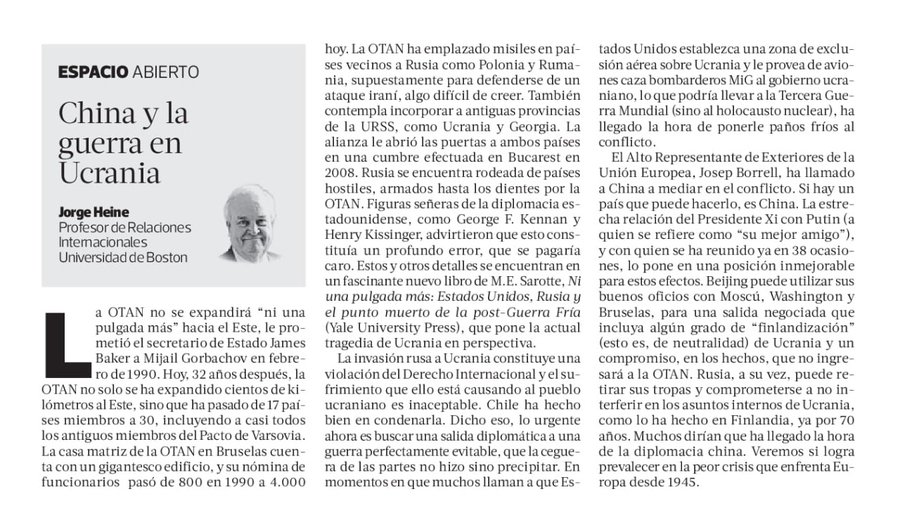
Jorge Heine@jorgeheinel
 
ian bremmer@ianbremmer
CGTN America@cgtnamerica
China state-affiliated media
Russian troops have killed at least 10 civilians standing in line for bread in Chernihiv, a city in northern Ukraine, according to a Ukrainian public broadcaster and the U.S. Embassy in Kyiv. https://twitter.com/i/status/1504510377446543362 
 
TOPSHOT - Russian President Vladimir Putin (L) and Chinese President Xi Jinping pose during their meeting in Beijing, on February 4, 2022. (Photo by Alexei Druzhinin / Sputnik / AFP) (Photo by ALEXEI DRUZHININ/Sputnik/AFP via Getty Images)


17 marzo, 2022
por Felipe Sahagún
Sin comentarios

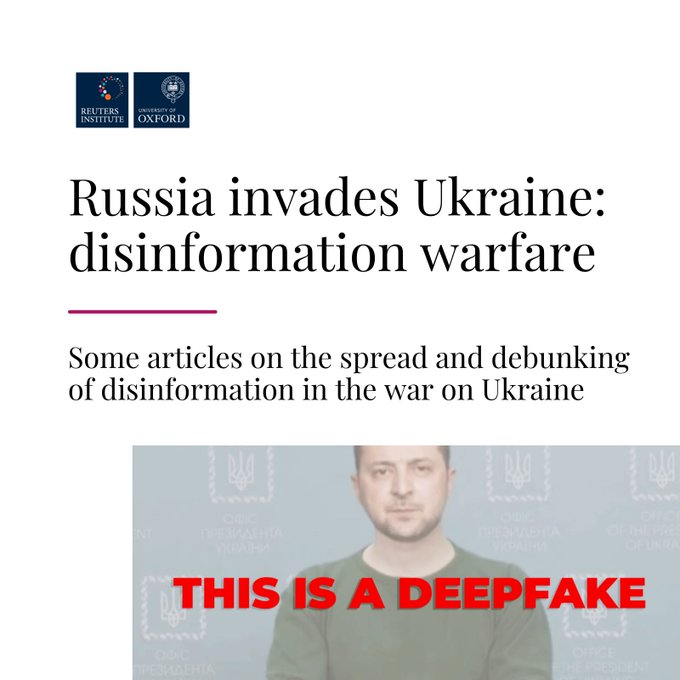
Disinformation warfare on Ukraine (Reuters Inst)

Imagen
 
Reuters Institute @risj_oxford
Today’s thread on the war in Ukraine looks at the spread of disinformation «If you’re still unsure whether what you’re seeing is real or not, just don’t share,» says @O_Rob1nson Head of a @BBCMonitoring team investigating the «wave of falsehoods» inews.co.uk/news/world/rus
 

17 marzo, 2022
por Felipe Sahagún
Sin comentarios

Timothy Snyder on the myths that blinded the West to Putin’s plans (NYT podcast)

https://www.nytimes.com/2022/03/15/opinion/ezra-klein-podcast-timothy-snyder.html

“Americans and Europeans were guided through the new century by a tale about ‘the end of history,’ by what I will call the politics of inevitability, a sense that the future is just more of the present, that the laws of progress are known, that there are no alternatives, and therefore nothing really to be done,” writes the Yale historian Timothy Snyder in his 2018 book, “The Road to Unfreedom.” Continue leyendo →