Relaciones Internacionales – Comunicación Internacional

11 marzo, 2022
por Felipe Sahagún
Sin comentarios

A short history of Russia’s war on Ukraine (The Guardian)

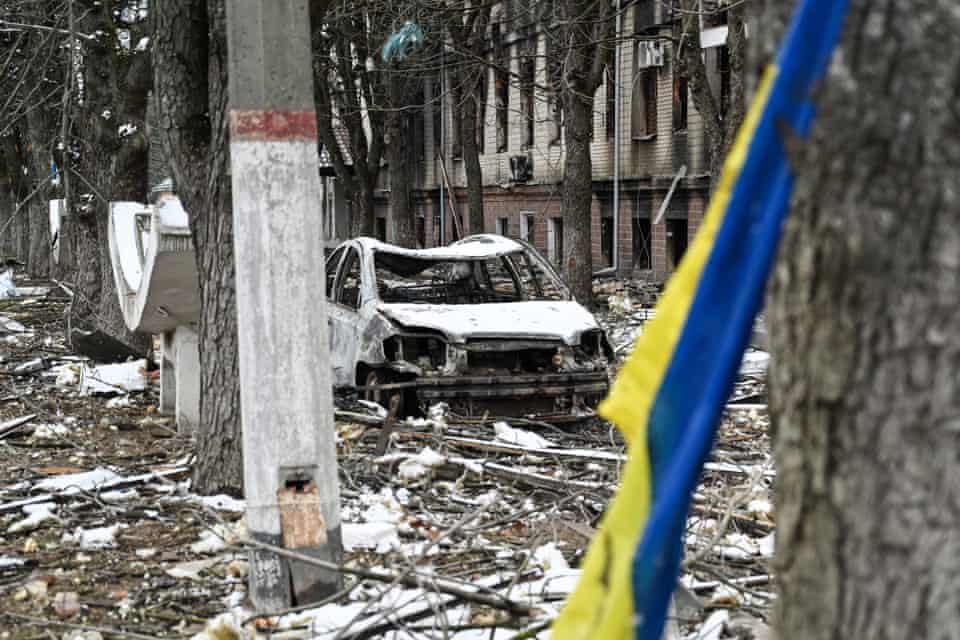
A military facility destroyed by shelling near Kyiv, 1 March 2022.

A military facility destroyed by shelling near Kyiv, 1 March 2022. Photograph: Genya Savilov/AFP/Getty Images v @guardian

To understand the tragedy of this war, it is worth going back beyond the last few weeks and months, and even beyond Vladimir Putin

 
Fri 11 Mar 2022 14.14 GMT

For three months everyone argued about whether there would be a war, whether Vladimir Putin was bluffing or serious. Some of the Russia experts who had long told people to take it easy were now telling people to get worried. Others, who had long criticised Putin, said that he was just trying to draw attention to himself, that it was all for show. Among the analysts, there was a debate between the troop watchers and the TV watchers. The troop watchers saw the massive concentration of Russian forces at the border and in Crimea and warned of invasion. The TV watchers said that Russian TV was not ramping up war hysteria, as it usually does before a Russian invasion, and that this meant there would be no war.

The question was settled, for ever, on the night of 24 February, when Russian missiles hit military installations and civilian targets inside Ukraine, and Russian armoured convoys crossed the border. Then everyone began arguing about why. Was Putin crazy? Was he genuinely concerned about Nato expansion? Was he thinking in amoral categories – as longtime Putin scholar Fiona Hill suggested – that were fundamentally historical, along timescales that made no sense to ordinary mortals? Was he trying, bit by bit, to reconstruct the Russian Empire? Was Estonia next?

I had travelled to Moscow in January to see what I could learn. The city looked beautiful. Snow lay on the ground and everyone was very calm. Yes, repressions were ramping up, the space for political expression was narrowing, and many more people had died of Covid-19 than was officially acknowledged. And yes, speaking of Covid, Putin was paranoid about it, forcing anyone who wanted to see him in person to quarantine for one week in advance in a hotel the Kremlin had for that purpose. No one thought things were going in anything like the right direction, but none of the people I spoke to, some of them fairly well connected, thought an invasion was actually going to happen.

They thought Putin was engaged in coercive diplomacy. They thought the American intelligence community had lost its mind. I visited friends, listened to their reflections, gamed out the various scenarios. Even if an invasion did happen – a big if – it would be over quickly, we all agreed. It would be like Crimea: a precision operation, the use of overwhelming technological superiority. Putin had always been so cautious – the sort of person who never started a fight he wasn’t sure to win. It would be terrible, but relatively painless. That was wrong. We were all wrong.

That everyone was wrong did not prevent everyone from immediately claiming that, in fact, they’d been right. Russia experts who had been arguing for years that Putin was a bloody tyrant rushed forth to claim vindication, for he had undoubtedly become what they had claimed he was all along. Russia experts who had been arguing for years that we needed to heed Putin’s warnings could also claim vindication (though more quietly) because Putin had finally acted on those warnings. As usual, officials from US presidential administrations of yore were trotted out on TV as talking heads, dispensing their wisdom and accepting no responsibility, as if they had not all contributed, in one way or another, to the catastrophe.

…MORE

Related

Día 19 de la invasión rusa de Ucrania @guardian
 

11 marzo, 2022
por Felipe Sahagún
Sin comentarios

Debunking fake news from the Russia-Ukraine conflict

From Ghost of Kyiv to ‘crisis actors’: Debunking fake news from the Russia-Ukraine conflict

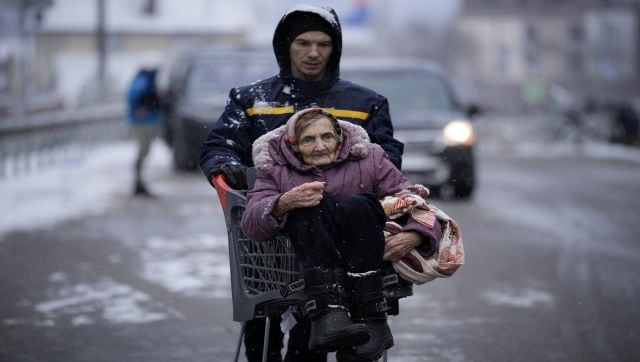
An elderly woman is carried in a shopping cart after being evacuated from Irpin, on the outskirts of Kyiv. AP

FP Explainers

March 09, 2022 14:06:22 IST

The two-week-long conflict has led to an overwhelming flow of information emanating from Russia and Ukraine; in several instances, the news has been misleading, with many sharing outlandish and bizarre claims on social media.

It’s been two weeks since Russia’s Vladimir Putin announced a “special military exercise” in certain parts of Ukraine, which later turned into a war against Ukraine. Since then, social media has been inundated with visual and most often heart-breaking images —ranging from children confronting soldiers to heavily damaged buildings.

Follow all LIVE updates from the Russia-Ukraine conflict here

However, with the war, as was the case with the coronavirus pandemic, a slew of misleading information has been put up, making it very hard to sift the real from the fake.

We examine a few of these instances and try to uncover the truth.

Ghost of Kyiv

Shortly after the offensive began in Ukraine, social media was flooded with the heroic tale of ‘The Ghost of Kyiv’ — a rogue pilot in an old fighter jet shooting down five Russian aircraft in one day.

The official Ukraine Twitter account first coined the phrase with a cartoon drawing of a pilot – who was referred to as an ‘ace’ meaning the pilot must have shot down five or more aircraft.

…MORE

Related

Fact Check: 5 times official Russian statements conflicted with intelligence and on the ground actions (CNN, March 13, 2022)


10 marzo, 2022
por Felipe Sahagún
Sin comentarios

Putin’s Long Game in Ukraine (Chicago Council… March 9, 2022)

In the wake of Russia’s massive invasion of Ukraine, multiple countries have strongly condemned Russia’s unprovoked acts, donated supplies to Ukraine, and imposed sanctions in an attempt to quell Russian aggression. Though these actions may deeply affect the Russian economy over time, President Vladimir Putin no doubt expected them and is thus far continuing his military invasion. Former Swedish Prime Minister Carl Bildt, Georgetown University’s Center for Eurasian, Russian, and East Europe Studies Director Angela Stent, and Council President Ivo Daalder join CNN’s Bianna Golodryga to discuss Putin’s ultimate goal, what the world should expect as the conflict progresses, and how Putin’s actions might shape the world order for years to come.


10 marzo, 2022
por Felipe Sahagún
Sin comentarios

Cyber in the Ukraine Invasion Monday, March 14, 2022 11:00 am – 12:00 pm (CSIS)

Cyberattacks are a part of Russia’s portfolio of coercion, as evidenced by recent attacks on the Ukrainian government and financial sector. Governments around the world are preparing for possible Russian cyberattacks. The questions are, what will Russia do in cyberspace, who will they do it to, and are we prepared for this?

Join CSIS for an event on the use of cyber in Russia’s invasion of Ukraine with Senator Mark Warner (D-VA), Chris Painter, President of the Global Forum on Cyber Expertise Foundation and former Coordinator for Cyber Issues at the U.S Department of State, and Greg Rattray, Partner and Co-Founder at Next Peak LLC and former Global Chief Information Security Officer (CISO) at JPMorgan Chase.


10 marzo, 2022
por Felipe Sahagún
Sin comentarios

China’s promotion of Russian disinformation (CNN)

Updated 1523 GMT (2323 HKT) March 10, 2022

Beijing (CNN)In public statements and at international summits, Chinese officials have attempted to stake out a seemingly neutral position on the war in Ukraine, neither condemning Russian actions nor ruling out the possibility Beijing could act as a mediator in a push for peace.

Continue leyendo →

10 marzo, 2022
por Felipe Sahagún
Sin comentarios

Cyberwar and disinformation in Ukraine (DW)

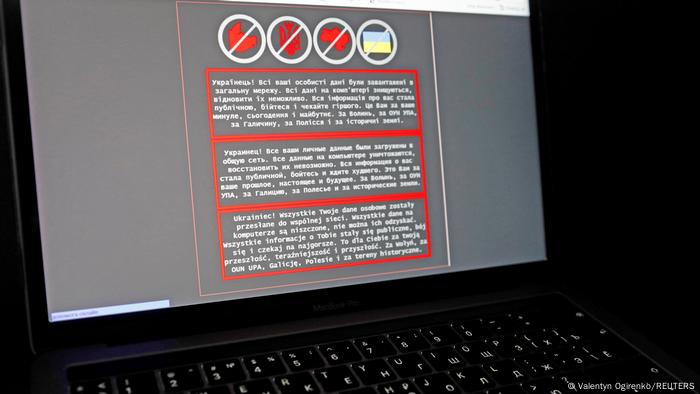
A photo of a laptop screen showing a warning message during a cyberattack in Ukraine in January 2022

There have been at least 150 cyberattacks in Ukraine since Russia’s invasion. Their effect is mainly psychological, and experts say they won’t decide the war.

Russia’s invasion of Ukraine has been a hybrid war from the start, a mix of conventional military strategy — traditional «boots on the ground» — and a slightly more unconventional, digital or cyberwar.

The global technology company Microsoft has said its Threat Intelligence Center (MSTIC) detected «destructive cyberattacks directed against Ukraine’s digital infrastructure» hours before the first launch of missiles or movement of tanks on February 24.

Those attacks, which Microsoft dubbed FoxBlade, included so-called wipers — malicious software or malware — that make their way inside computer networks and literally wipe the data from all connected devices.

…MORE

Related