Relaciones Internacionales – Comunicación Internacional

20 febrero, 2022
por Felipe Sahagún
Sin comentarios

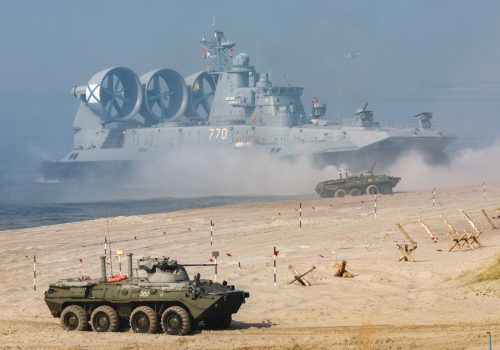
Lonely Russia (Le Monde Diplomatique, Oct 2018)


JPEG - 496.9 kb

Do you remember when western Europe hoped that one day Russia would join it, so that Europe would stretch from the Atlantic coast to the Urals? The Russians do, but they’re trying to forget it.

by Hélène Richard

The long wait in an antechamber of Russia’s upper chamber, the Federation Council, to see senator Aleksey Pushkov was a reminder of the current frosty state of relations between Russia and Europe. Pushkov, presenter of the political programme Postscriptum on the Moscow television channel TV Centre and a former president of the Duma’s foreign affairs committee, is considered one of the most fervent defenders of Vladimir Putin’s foreign policy, and has been banned from entering the US, the UK and Canada since the Ukrainian crisis of 2014. He distrusts western journalists and told me in perfect French: ‘If you’re going to cherry-pick a couple of quotations, you’ve only got 15 minutes.’ He gave me 90. Continue leyendo →

20 febrero, 2022
por Felipe Sahagún
Sin comentarios

Munich Security Report 2022

Turning the Tide – Unlearning Helplessness

A mounting tide of crises that reinforce each other threatens to overwhelm our societies and political systems. The Munich Security Report 2022 explores the emergence of a sense of «collective helplessness» in the face of a plethora of global challenges and stimulates the debate on how it can best be overcome.

2021 was clearly not a year for geopolitical optimism. Whether it was the seemingly endless coronavirus pandemic, the increasingly tangible threat of climate change, the vexing vulnerabilities of an interconnected world, or rising geopolitical tensions, all these challenges added up to a feeling of a loss of control.

As data from the Munich Security Index 2022 shows, since the last wave of research on risk perceptions in February and March 2021, concern about risk has not only grown among societies in the G7 and BRICS countries. There is also a widespread sense of helplessness in the face of present and looming threats among the twelve countries surveyed. Liberal democracies appear to feel particularly overwhelmed. The new Munich Security Report (MSR) argues that just like people can suffer from «learned helplessness» – a psychological term describing the feeling that nothing one does can effect positive change – societies, too, may come to believe that they are unable to get a grip on the challenges they are facing. This belief, the report warns, may turn into a self-fulfilling prophecy, and prevent the world from addressing the most important crises before it is too late.

The 2022 edition of the Munich Security Report covers security challenges in Afghanistan, the Sahel region, the Horn of Africa, and Eastern Europe, as well as risks posed by dependencies in the supply chains of critical technologies and by growing inequality. While the challenges are real, the report argues, the tools and resources needed to address them are, in fact, available. Transatlantic leaders need to revive the optimism and momentum palpable in the early days of the Biden administration. If they can «unlearn helplessness» and demonstrate that democracies can still deliver, they have a chance to turn the tide.

Bibliographic data: Tobias Bunde, Sophie Eisentraut, Natalie Knapp, Randolf Carr, Julia Hammelehle, Isabell Kump, Luca Miehe, and Amadée Mudie-Mantz, “Munich Security Report 2022: Turning the Tide – Unlearning Helplessness,” Munich: Munich Security Conference, February 2022, https://doi.org/10.47342/QAWU4724.

Munich Security Conference 2022 Agenda


20 febrero, 2022
por Felipe Sahagún
Sin comentarios

The Art of Diplomacy (75 views behind the scenes of world politics)

 
Un nuevo libro, concebido con motivo del 75 cumpleaños de Wolfgang Ischinger y editado por Tobias Bunde y Benedikt Franke, reúne a un grupo único de autores que se dedican al «arte de la diplomacia» de diversas formas.

¿Qué es la diplomacia? ¿Un arte, un oficio? ¿O algo intermedio? ¿Qué hace a un buen diplomático? ¿Existe tal cosa como una receta diplomática secreta? ¿Qué consejos y trucos te ayudarán a salir del callejón sin salida? ¿Cuándo ayuda el humor, cuándo sólo el farol? ¿Cómo difieren las culturas y estilos diplomáticos en diferentes países? ¿Qué tan poco diplomático puede, tal vez incluso tener que ser, un diplomático a veces? ¿En qué se diferencia el trabajo de los diplomáticos de hoy del de sus predecesores? ¿Y por qué todavía necesita diplomáticos cuando la mitad del mundo está a solo un clic de distancia?

Los profesionales experimentados informan sobre sus experiencias, éxitos y fracasos más sorprendentes en el escenario diplomático o describen sus ideas para abordar diplomáticamente desafíos no resueltos anteriormente. Un libro para cualquiera que quiera comprender mejor lo que es importante cuando se negocia la guerra y la paz y por qué la diplomacia es un arte como ningún otro.

Datos bibliográficos: Tobias Bunde y Benedikt Franke (eds.), The Art of Diplomacy: 75+ Views Behind the Scenes of World Politics, Berlin: Econ, 2022, ISBN: 9783430210775.


20 febrero, 2022
por Felipe Sahagún
Sin comentarios

Índice de seguridad de Múnich 2022

 
Frente a una marea creciente de crisis que se refuerzan mutuamente, el nuevo Índice de Seguridad de Munich (MSI) proporciona información valiosa sobre las percepciones de riesgo dentro de las sociedades de los países del G7 y BRICS. También muestra cómo ha cambiado la evaluación de riesgos desde la última publicación del índice.

¿Cómo se perciben los estados influyentes entre sí y cómo evalúan los riesgos globales centrales? Frente a una marea creciente de crisis que se refuerzan mutuamente, el nuevo Índice de Seguridad de Munich (MSI) proporciona información valiosa sobre las percepciones de riesgo dentro de las sociedades de los países del G7 y BRICS. También muestra cómo ha cambiado la evaluación de riesgos desde la última publicación del índice.

Ante las crecientes tensiones geopolíticas y un número creciente de crisis globales, desde la crisis climática y la emergencia sanitaria global hasta el debilitamiento global de la democracia, una mejor comprensión de cómo las sociedades en diferentes partes del mundo evalúan los riesgos globales y cómo estas evaluaciones el cambio con el tiempo es esencial. El MSC yGalletas CNCpor lo tanto, han creado conjuntamente un nuevo conjunto de datos de percepciones de riesgo global en 2021: el índice de seguridad de Munich. Basado en los resultados de la encuesta de 12,000 personas, el conjunto de datos muestra cómo las sociedades en los países del G7 y BRICS evalúan 31 riesgos globales y domésticos clave. El índice desglosa las percepciones de riesgo social de acuerdo con cinco métricas: el riesgo general, el posible daño causado por el riesgo, el desarrollo esperado a lo largo del tiempo, la probabilidad de ocurrencia y la evaluación de qué tan bien está preparado el propio país para el riesgo. Publicado anualmente, el MSI también ayuda a comprender cómo cambian las percepciones de riesgo con el tiempo y el papel que desempeñan las nuevas amenazas a la seguridad y los patrones de cooperación y conflicto entre estados.

La segunda edición del índice de seguridad de Munich, que se analizó en noviembre de 2021, pinta una imagen de una creciente conciencia del riesgo. Desde la última encuesta en febrero y marzo de 2021, la preocupación por el riesgo ha aumentado significativamente en general. Dentro y fuera de Europa, también existe un sentimiento de impotencia frente a las amenazas actuales y futuras.

El índice de seguridad de Munich es la última incorporación a nuestro índice anualInforme de seguridad de Múnich (MSR) . La primera edición del índice se publicó como parte del Informe de seguridad de Munich 2021.

Índice para descargar

Datos bibliográficos: Tobias Bunde, Sophie Eisentraut, Natalie Knapp, Randolf Carr, Julia Hammelehle, Isabell Kump, Luca Miehe y Amadée Mudie-Mantz, «Munich Security Report 2022: Turning the Tide – Unlearning Helplessness», Múnich: Conferencia de Seguridad de Múnich (MSC ), febrero de 2022, https://doi.org/10.47342/QAWU4724.


19 febrero, 2022
por Felipe Sahagún
Sin comentarios

What’s happening with Ukraine and Russia (The Atlantic Council)

Will there be a “Munich Moment” in the Russia-Ukraine crisis?

Twenty questions (and expert answers) about what’s happening with Ukraine and Russia

By Atlantic Council experts

As the crisis in Eastern Europe continues to unfold, we tapped our expert network to answer our burning questions about the implications for Russia, Ukraine, and the wider world.

…MORE

No consensus? No problem. Why NATO is still effective.

New Atlanticist

January 18, 2022

No consensus? No problem. Why NATO is still effective

By Christopher Skaluba and Conor Rodihan

…MORE


19 febrero, 2022
por Felipe Sahagún
Sin comentarios

20 q/a on what is happening in Ukraine (The Atlantic Council)


atlanticcouncil.org
Twenty questions (and expert answers) about what’s happening with Ukraine and Russia
As the crisis in Eastern Europe continues to unfold, we tapped our expert network to answer the burning questions about the implications for Russia,
@AtlanticCouncil
Our experts rallied together to answer burning questions about the unfolding crisis in Eastern Europe. Here’s what they want you to know via @ACScowcroft, @ACEurasia, @ACEurope, @ACGlobalEnergy, @ACMidEast, and @ACGlobalChina