Relaciones Internacionales – Comunicación Internacional

19 noviembre, 2021
por Felipe Sahagún
Sin comentarios

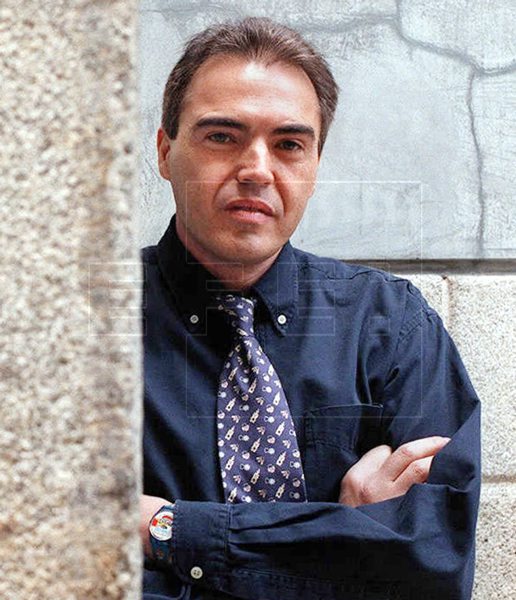
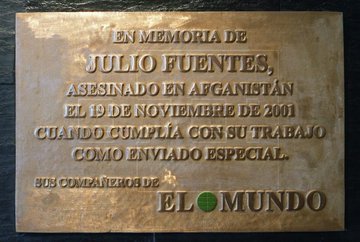
20 años sin Julio Fuentes

La última crónica de Julio Fuentes: 'El búnker químico de Al Qaeda'

20 AÑOS DE LA MUERTE DEL REPORTERO
 
La última crónica de Julio Fuentes: ‘El búnker químico de Al Qaeda’

El enviado especial de EL MUNDO se adentró en el mayor acuartelamiento de la red terrorista en Afganistán

PODCAST «El mundo al día»

Imagen

Imagen

Imagen

@EFELafototeca
Related
 
Enlace a EL ENFOQUE (22-22.30)
 

19 noviembre, 2021
por Felipe Sahagún
Sin comentarios

Information disorder, disinformation order….

At the heart of our crisis: American polarization

New York (CNN Business)«Information disorder is a crisis that exacerbates all other crises. When bad information becomes as prevalent, persuasive, and persistent as good information, it creates a chain reaction of harm.»

That’s how the Aspen Institute’s Commission on Information Disorder begins its sweeping new report on the subject.

Continue leyendo →

18 noviembre, 2021
por Felipe Sahagún
Sin comentarios

The US in a multipolar world (Cornell, Nov 2021)


Jeffrey Sachs

Prof. Jeffrey Sachs

What does the end of “The American Century” mean for U.S. foreign policy and global cooperation? How can the goals of sustainable development help move us towards a more equitable society? Jeffrey D. Sachs, a world-renowned expert on economic development, considers the failures of American exceptionalism and lays out a vision of how technological dynamism and global cooperation can secure a better future for the United States and for the world.

Join the Center for the Study of Economy & Society for the third installment of its fall lecture series, “The American State in a Multipolar World.” The series features distinguished scholars and public intellectuals: Francis Fukuyama, Jeffrey D. Sachs, Joseph Nye Jr., and Andrew J. Bacevich as they discuss the issues and choices facing the American state in a multipolar global economy and shifting world system. Does maintaining American democracy rely on American hegemony? Is a new Cold War compatible with the priorities of climate change and the Covid-19 pandemic, which require inter-state cooperation?

LINK TO VIDEO

Related

Joseph Nye

Francis Fukuyama

Adam Hanieh, Rachel Herzing, Richard Seymour, Rozina Ali, andTejasvi Nagaraja on 20 years of the Global War on Terror (Nov 30, 2021)

Sonia Nazario and Nadja Drost on Inmigration (Dic 1, 2021)


18 noviembre, 2021
por Felipe Sahagún
Sin comentarios

Duncan Watts: “Prediction and Explanation in Social Science”

Historically, social scientists have sought out explanations of human and social phenomena that provide interpretable causal mechanisms, while often ignoring their predictive accuracy. We argue that the increasingly computational nature of social science is beginning to reverse this traditional bias against prediction; however, it has also highlighted three important issues that require resolution.

First, current practices for evaluating predictions must be better standardized. Second, theoretical limits to predictive accuracy in complex social systems must be better characterized, thereby setting expectations for what can be predicted or explained. Third, predictive accuracy and interpretability must be recognized as complements, not substitutes, when evaluating explanations. Resolving these three issues will lead to better, more replicable, and more useful social science.

Oct 26, 2018

2020-2021 Lecture Series

Videos