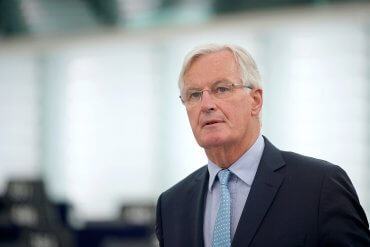
El exjefe negociador de la Unión Europea, excomisario y exministro francés, Michel Barnier, dictó la XV Lección conmemorativa Carlos de Amberes bajo el título “E pluribus unum, lecciones aprendidas negociando el Brexit en nombre de la UE”.

27 octubre, 2021
por Felipe Sahagún
Sin comentarios
26 octubre, 2021
por Felipe Sahagún
Sin comentarios

With climate change intensifying and scientists warning that humanity is running out of time to limit global warming to 1.5°C over pre-industrial levels, 2021 has been a fraught year for the planet.
The Emissions Gap Report 2021: The Heat Is On is the 12th edition in an annual series that provides an overview of the difference between where greenhouse emissions are predicted to be in 2030 and where they should be to avert the worst impacts of climate change.
What’s new in this year’s report
The Emissions Gap Report 2021 shows that new national climate pledges combined with other mitigation measures put the world on track for a global temperature rise of 2.7°C by the end of the century. That is well above the goals of the Paris climate agreement and would lead to catastrophic changes in the Earth’s climate. To keep global warming below 1.5°C this century, the aspirational goal of the Paris Agreement, the world needs to halve annual greenhouse gas emissions in the next eight years.
If implemented effectively, net-zero emissions pledges could limit warming to 2.2°C, closer to the well-below 2°C goal of the Paris Agreement. However, many national climate plans delay action until after 2030. The reduction of methane emissions from the fossil fuel, waste and agriculture sectors could help close the emissions gap and reduce warming in the short term, the report finds.
Carbon markets could also help slash emissions. But that would only happen if rules are clearly defined and target actual reductions in emissions, while being supported by arrangements to track progress and provide transparency.
Publication launch (26 Oct 2021)
 Analysis by (The New York Times, Oct 26, 2021)
WASHINGTON — The latest plans by the nations of the world to tackle climate change over the next decade fall far short of what’s needed to avert a dangerous rise in global temperatures, according to a United Nations report released Tuesday.
In the run-up to a major U.N. climate summit in Glasgow next week, a number of governments have updated their pledges under the Paris climate agreement to do more to curb their planet-warming emissions between now and 2030. They include Argentina, Britain, Canada, the European Union, South Africa and the United States.
But those new pledges, the report found, would collectively produce just one-seventh of the additional emissions cuts needed this decade to help limit total global warming to 1.5 degrees Celsius, or 2.7 degrees Fahrenheit, above preindustrial levels. That’s the threshold beyond which scientists say the dangers of global warming — such as deadly heat waves, water shortages, crop failures and ecosystem collapse — grow immensely. (The world has already warmed 1.1 degrees Celsius since preindustrial times.)
And that assumes every country actually follows through on its promises. The report found that many governments still haven’t put in place policies or laws to achieve their stated near-term goals.
“The world has to wake up to the imminent peril we face as a species,” Inger Andersen, the executive director of the United Nations Environment Program, said in a statement. “To stand a chance of limiting global warming to 1.5 degrees Celsius, we have eight years to almost halve greenhouse gas emissions: eight years to make the plans, put in place the policies, implement them and ultimately deliver the cuts. The clock is ticking loudly.”
The report estimates that even if countries achieve their newest round of near-term climate promises, known as Nationally Determined Contributions, the world would be on track to warm roughly 2.7 degrees Celsius by 2100, compared with preindustrial levels. That broadly aligns with what outside analyses have found.
26 octubre, 2021
por Felipe Sahagún
Sin comentarios

October 26, 2021
Around November each year, we at GPF begin our forecasting process for the coming year. In a real sense, we are always forecasting, as our analysis may be about current realities but always with an eye on what these events portend for the future. However, on Nov. 1, each analyst is required to state in a few lines what they believe will happen in the next year.
The brevity is what differentiates our method from others. Most geopolitical forecasts include so many caveats that success is guaranteed. Given that we have already analyzed virtually every notable event this year, on Nov. 1, we move to using declarative sentences and taking risks.
There is always the danger of the banal. History is a continuum, and in many cases the only thing we can say is that next year will be pretty much like last year and the year before. That’s also worth discussing. Sometimes we have to speak to ongoing and well-established crises, and see what turn they will take. Other times we must identify a major event in a place that had been stable. That’s what we love to do, but believing we see something that really isn’t there is the bane of our profession, as is the desire to crouch in safety by saying nothing. It’s our profession, and it beats working the loading docks.
You can find our 2021 forecast here. This is where we begin our work; arguing over whether we were correct in 2021 is the necessary preface to developing a forecast for 2022. We are reasonably satisfied with our work for this year, and with some adjustments, we have the foundation with which to build a forecast. The first step was to consider the important questions, in terms of both place and significance to the world, coming out of 2021. These were analyzed last week, and the next step is to consider the questions that need to be answered for 2022. Obviously, our list of questions indicates what we think is important and, by exclusion of certain topics, what is less important.
COVID-19
This is the biggest global topic for 2022 affecting all nations in different ways. The first major socio-economic impact of the pandemic was the effect of the cure on society and business. That has graduated now to major economic dysfunction, including an array of shortages ranging from labor to coal. The origin of each of these shortages is fairly clear. The reason for the confluence of shortages is less clear. Three questions arise: Will the medical constraints imposed in 2020 be suspended in 2022? How long will it take to deal with the shortages? What will be the global and national effects of these questions?
China
China is undergoing a major economic crisis. Solving a crisis such as this has a price, and we have to figure out not so much what the costs will be but what the social and political consequences will be. Other nations at this phase of aggressive development based on exports have had to deal with major, unexpected shifts in how they work. Is China at this stage, and can it absorb economic dysfunction without destabilizing? Our forecast was that China would not launch a war this year. With economic dysfunction, doing so could become either less likely (because the cost of defeat goes up) or more likely (because victory would make up for the economic and social stress). Obviously, China is claiming to have great confidence in everything, but what does it really think, and is it in touch with reality?
Russia
Russia in 2021 continued using soft power (economic, political and covert) rather than military power to regain strategic depth. We saw this in Belarus, the Caucasus and Central Asia. The key for Russia, however, is Ukraine. Given energy shortages, rising energy prices and European disinclination to get involved in this conflict, will Moscow see 2022 as the year when the advantages for it accumulate and it must attack before they dissipate? If not, why not? If so, what methods and countries will it use? Is this the year of Ukraine for Russia?
Europe
The Europeans appear simultaneously committed to the European Union’s current structure and unable to deal with fundamental problems. Northern Europe is trying to stabilize its economy by attempting to limit inflation, while Italy is trying to deal with inflation through a loose money strategy. European institutions cannot handle dual strategies with the euro. The EU manages its system by providing economic incentives to poorer member countries. Will the economics shift on this policy for both grantors and recipients? Is this the year when the EU will emerge from the crisis as a very different place? Will its handling of the economic fallout of COVID-19 be a breaking point?
Middle East
The Middle East seems to be a secondary region at the moment. The main question here is: What will the Abraham Accords mean for the region? The amazement over their signing is over, and we need to figure out what the substance is. More important is what Turkey, a major regional power, will do to improve its economy and build regional power. There is an assumption that nothing will happen until President Recep Tayyip Erdogan retires. Assuming that the fate of one man determines the fate of a nation runs counter to geopolitics. Ignoring the personnel issue, what might Turkey do in 2022 to reverse its fortunes?
United States
As with other countries in the world, the United States’ primary geopolitical issue is whether and when the range of shortages can be resolved, and how much damage they will do to the American economy and social stability. The U.S. is in a cyclical period of social instability and economic fragility, and the effect of these shortages could generate a major failure in 2022, depending on the damage done and when they can be resolved. Intensified unrest might change or speed up China’s or Russia’s military activities. Easing shortages of all sorts and doing so as early as possible, therefore, can affect the global balance.
Caribbean
The Caribbean is destabilizing from the northern edge of South America through the islands. The region is normally a secondary issue, but it has the possibility of becoming a primary issue if an outside power decided to challenge U.S. security by creating a foothold there. We have speculated on whether China or Russia would play that role. What is the possibility that one or both of these countries might be turned into an asset for a hostile or less-than-friendly country?
There are other secondary and tertiary issues we will not deal with. And some of the questions asked here will turn out to be the wrong ones. But this is where we begin our process for the 2022 forecast.
25 octubre, 2021
por Felipe Sahagún
Sin comentarios

Diversas instancias del gobierno de Estados Unidos emitieron informes alertando sobre las consecuencias del calentamiento global para la seguridad nacional y la estabilidad mundial
WASHINGTON — Conflictos intensificados entre diversos países y adentro de sus fronteras. Disrupción y migración al alza mientras las personas huyen de la inestabilidad impulsada por el clima. Incertidumbre y aumento de las tensiones militares. Peligros financieros.
El 21 de octubre, el gobierno de Joe Biden publicó varios informes sobre el cambio climático y la seguridad nacional, esclareciendo en términos inequívocos las formas en que el calentamiento del planeta está empezando a desafiar, en proporciones considerables, la estabilidad mundial.
Los documentos, emitidos por el Departamento de Seguridad Nacional y de Defensa, así como por el Consejo de Seguridad Nacional y el director de inteligencia nacional, constituyen la primera ocasión en que las agencias de seguridad nacional han comunicado, de manera conjunta, los riesgos climáticos que enfrentan.
Cambio climático, migrac y conflicto
25 octubre, 2021
por Felipe Sahagún
Sin comentarios
ISTANBUL, Oct 25 (Reuters) – Turkey and its Western allies climbed down from a full-blown diplomatic crisis on Monday after foreign embassies said that they abide by diplomatic conventions on non-interference, averting a threatened expulsion of 10 ambassadors.
President Tayyip Erdogan, who said at the weekend he had ordered the envoys to be declared «persona non grata» for seeking the release of a jailed philanthropist, told a news conference they had stepped back and would be more careful.
24 octubre, 2021
por Felipe Sahagún
Sin comentarios
Asked why he resigned, the US' fmr. top envoy to Afghanistan Zalmay Khalilzad tells @margbrennan: "I was asked by the former president to negotiate our withdrawal from Afghanistan and get commitments from the Taliban…That has been achieved. We are out. Our longest war is over." pic.twitter.com/7xGIVRauO3
— Face The Nation (@FaceTheNation) October 22, 2021