18 octubre, 2021
por Felipe Sahagún
Sin comentarios

18 octubre, 2021
por Felipe Sahagún
Sin comentarios
16 octubre, 2021
por Felipe Sahagún
Sin comentarios
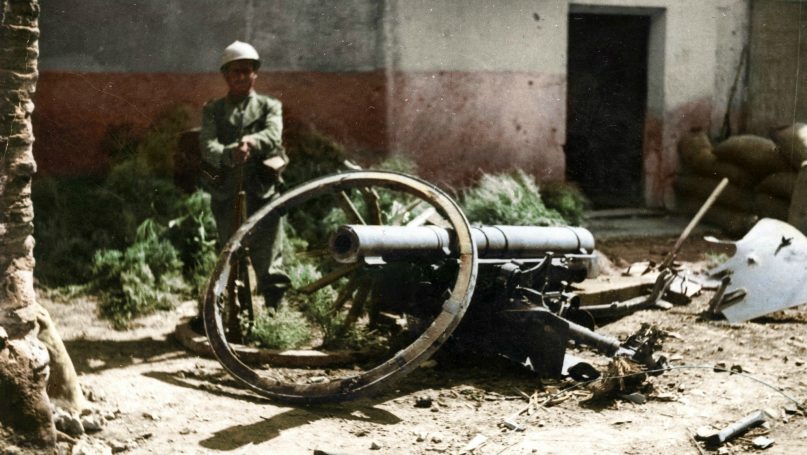
Cassowary Colorizations/Flickr, v E-Int Relations
Oct 14, 2021
This content was originally written for an undergraduate or Master’s program. It is published as part of our mission to showcase peer-leading papers written by students during their studies. This work can be used for background reading and research, but should not be cited as an expert source or used in place of scholarly articles/books.
16 octubre, 2021
por Felipe Sahagún
Sin comentarios

E-International Relations
Shifting Hegemony: China’s Challenge to U.S. Hegemony During COVID-19
Written by Lior Hamovitz
Lior Hamovitz, Sep 7 2021
The novel coronavirus’ outbreak in late December of 2019 can almost unanimously be deemed one of the most consequential events in modern history. With a death toll of over 3 million people, and more than 150 million infections,[1] the COVID-19 quickly demanded leading states to rise to the domestic and international challenges it posed. It was surprising, then, that the United States (US), whose status as the sole hegemon in the world remained practically unchallenged since the end of the Cold War, was one of the countries who struggled most with meeting the multifaceted demands of the pandemic. Continue leyendo →
16 octubre, 2021
por Felipe Sahagún
Sin comentarios
«There are facts, there are opinions, and there are lies,» says historian Deborah Lipstadt, telling the remarkable story of her research into Holocaust deniers — and their deliberate distortion of history. Lipstadt encourages us all to go on the offensive against those who assault the truth and facts. «Truth is not relative,» she says.
16 octubre, 2021
por Felipe Sahagún
Sin comentarios
Shortly after Ethiopians went to the polls on Monday, Tigray faced some of the worst fighting since war in the country’s northern region began last November. On 24 June, the Ethiopian military conducted an airstrike on a busy market in Tigray, killing 64 civilians, the Associated Press reported.
“The Tigray conflict is still creating many challenges for people and institutions,” said Argaw Fantu, director of CNEWA’s Ethiopia office.
Aid agencies claim Ethiopian officials continue to block health care and basic humanitarian aid to the region — an issue raised from the very start of the conflict.
Mr. Fantu confirmed the great need in Tigray. He said CNEWA’s initial funding of more than $75,000 helped feed thousands of children previously enrolled in a CNEWA-funded feeding program through the Catholic schools in the region. Since the conflict began, this emergency food aid has been distributed through parishes.
“However, considering the number of needy children, the problem of a lack of food — combined with a lack of security for easy movement — is still a problem,” he said.
15 octubre, 2021
por Felipe Sahagún
Sin comentarios
 Does an increasingly aggressive China mean the United States should maintain its posture of strategic ambiguity or adopt strategic clarity? (THE CHICAGO COUNCIL ON GLOBAL AFFAIRS)
More on Taiwan from The Global Council…
Ambiguity Doesn’t Work. Taiwan Needs Strategic Clarity
For First Time, Half of Americans Favor Defending Taiwan If China Invades
The Inconvenient Truth about Taiwan’s Place in the World