Relaciones Internacionales – Comunicación Internacional

10 septiembre, 2021
por Felipe Sahagún
Sin comentarios

The legacy of 9/11 (Brookings)

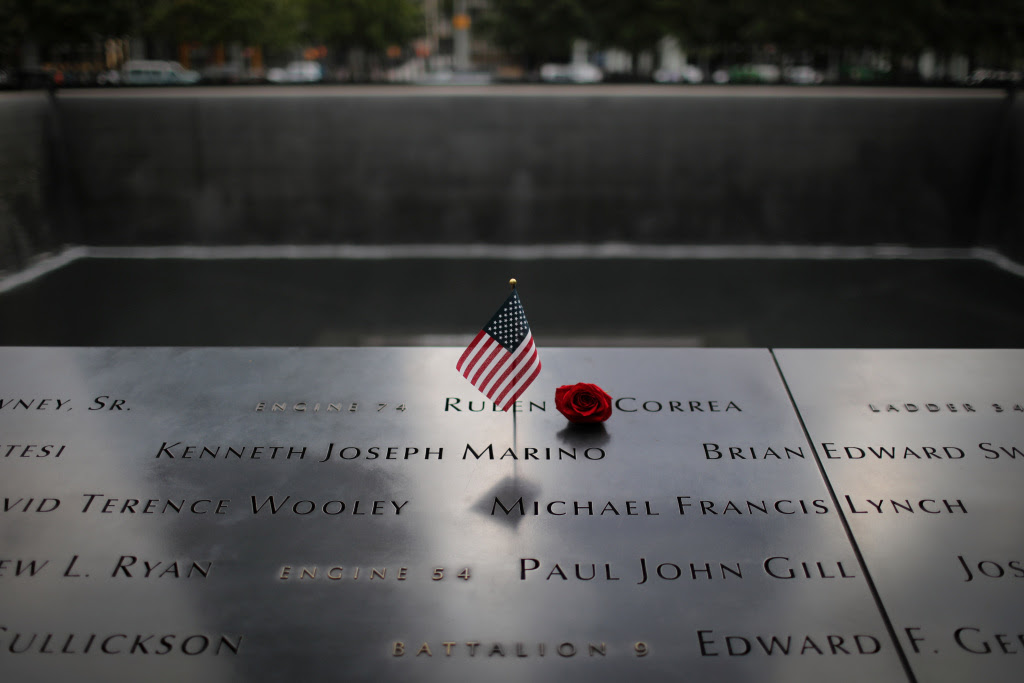
An American flag and red rose stand in the names of those lost at the edge of the south reflecting pool of the 9/11 Memorial & Museum ahead of the 20th anniversary of the 9/11 attacks in lower Manhattan in New York City, New York, U.S., September 8, 2021. REUTERS/Mike Segar

Two decades after September 11, the shocking and tragic attacks continue to shape American politics and foreign policy. In the months following the attacks, the U.S. passed the Patriot Act, checking civil liberties in the name of security; drove Al Qaida from Afghanistan and ousted the Taliban from power, launching what would become the country’s longest sustained military campaign; and enacted the Homeland Security Act, resulting in the Department of Homeland Security—now the third largest Cabinet department. In the years since, 9/11 has transformed the U.S. government and Americans’ attitudes about safety, privacy, and the nation’s role in global affairs. The impacts of the war on terror have reverberated around the world. With the United States’ withdrawal from Afghanistan this year, the Taliban have once again seized power there, with agonizing implications for Afghans and the world.

…MORE

Listen: Remembering September 11

On a special episode of the Brookings Cafeteria podcast, Madiha Afzal, Scott Anderson, John Hudak, Elaine Kamarck, Suzanne Maloney, and Bruce Riedel recall their personal experiences of the September 11 attacks and assess how 9/11 changed government and policy.

9/11, 20 years later: Legacies and lessons

Conversation

How 9/11 changed the policy world

The impact of September 11 on US-Russian relations

The period after 9/11 was the high point in U.S.-Russian relations since the Soviet collapse. Angela Stent explains why the anti-terrorism partnership between the nations ended and what the Taliban’s victory in Afghanistan might mean for future relations.

Read more

For America and the Middle East. Itamar Rabinovich reflects on the consequences of two major U.S. mistakes: staying in Afghanistan and invading Iraq. His piece also discusses the boost the 9/11 attacks gave to the jihadi movement.

For the people of the Middle East. In terms of what might have been and what was, the past two decades have been the most costly and tragic in the Middle East’s contemporary history, Shadi Hamid writes in Foreign Affairs.

In Mandela’s eyes. Former South African President Nelson Mandela’s shifts from support for the U.S. response to 9/11 to sharp criticism speak volumes about America’s squandering of global goodwill, as Shibley Telhami details.

The Tel Aviv plot. Recently declassified information about a thwarted al-Qaida plot to attack Israel shows that the FBI was getting results from interrogations without using torture as well as the linkages between al-Qaida and the Israeli-Palestinian conflict, Bruce Riedel argues.


10 septiembre, 2021
por Felipe Sahagún
Sin comentarios

How 9/11 Reshaped U.S. Foreign Policy (CFR)

Imagen

Council on Foreign Relations

The attacks of September 11 set in motion sweeping changes to U.S. intelligence, launched two major wars, and altered Americans’ daily routines. Explore the timeline of the twenty years since 9/11

Richard N. Haass

In hindsight, we can now see that 9/11 was a harbinger of what was to come: not the globalization of terrorism but the terrors of globalization. The attacks conveyed the message that distance and borders count for little in a global age. Read the column

Steven A. Cook

Members of Egypt’s jihadi movement played important roles in inspiring and plotting the 9/11 attacks, and Egypt still struggles with some of the factors that gave rise to such extremism. Read the brief

9 septiembre, 2021
por Felipe Sahagún
Sin comentarios

Las nuevas amenazas tras el 11S (Iñaki Gabilondo)

Enlace a movistar plus con suscripción

El 11 de septiembre de 2021 se cumplen 20 años del atentado contra las Torres Gemelas de Nueva York, un acontecimiento que sacudió al mundo y lo cambió para siempre. Dos décadas después, el regreso de los talibanes a Afganistán y la aparición de una nueva serie de amenazas globales reeditan una pregunta: ¿está preparado Occidente para los peligros del siglo XXI?

Iñaki y… las nuevas amenazas tras el 11S es una producción original Movistar+ en la que el periodista reflexiona sobre aquel fatídico día y sus consecuencias políticas, económicas y sociales.

Esta producción original consta de dos entregas: en la primera de ellas se analiza el impacto directo que este ataque tuvo sobre la sociedad americana y sus servicios de inteligencia, la situación actual del yihadismo, su expansión por el mundo y la huella que el terrorismo internacional dejó en nuestro país. En la segunda, Iñaki Gabilondo intenta descubrir cuáles son las nuevas amenazas: el bioterrorismo, la batalla por el agua, la ciberdelincuencia, una posible guerra espacial o las consecuencias de una guerra fría por los recursos del Ártico.

Además, Iñaki Gabilondo hablará con expertos nacionales e internacionales como Jacques Attali, político y ensayista francés; Fernando Reinares, el mayor experto de terrorismo de nuestro país; Fernando García Sánchez, ex Jefe de Estado Mayor de Defensa; Pilar Cebrián, periodista y autora del libro ‘El infiel que habita en mí’; Lawrence Right, periodista y escritor; Gonzalo de Cámara, experto en análisis económico; Bruce Hoffman, historiador y experto antiterrorista estadounidense o Manuel Navarrete, ex Jefe del Centro de Contraterrorismo de la UE.

Iñaki y… las nuevas amenazas tras el 11S, estreno el jueves 9 de septiembre en doble episodio a las 22:00h en #0 de Movistar+ (dial 7). También disponible bajo demanda.

…MORE

Las nuevas amenazas tras el 11-S (1) (Iñaki Gabilondo)

Las nuevas amenazas tras el 11-S (2) (Iñaki Gabilondo)


9 septiembre, 2021
por Felipe Sahagún
Sin comentarios

The resilient society

EVENT SUMMARY

Markus K. Brunnermeier presented his new book, The Resilient Society: Lessons from the pandemic for recovering from the next major shock, at a virtual book release held by the Peterson Institute for International Economics (PIIE). Greg Ip, chief economics commentator of the Wall Street Journal, and Gillian Tett, chair of the editorial board and editor-at-large (US) of the Financial Times, provided commentary. PIIE president Adam S. Posen moderated the Q&A and discussion with the audience.

The COVID-19 pandemic alerted us to a disheartening new reality: In the years ahead, more and more global shocks will disrupt lives and threaten societies. In his new book, Brunnermeier urges us to see that the current framework for managing shocks—by either avoiding them or emphasizing measures to withstand them—will prove inadequate. Instead, Brunnermeier calls for building resilience by investing in mechanisms that acknowledge shocks—and ultimately help societies bounce back.

Presentation: Markus K. Brunnermeier