Relaciones Internacionales – Comunicación Internacional

28 abril, 2021
por Felipe Sahagún
Sin comentarios

Biden’s 1st big speech to Congress


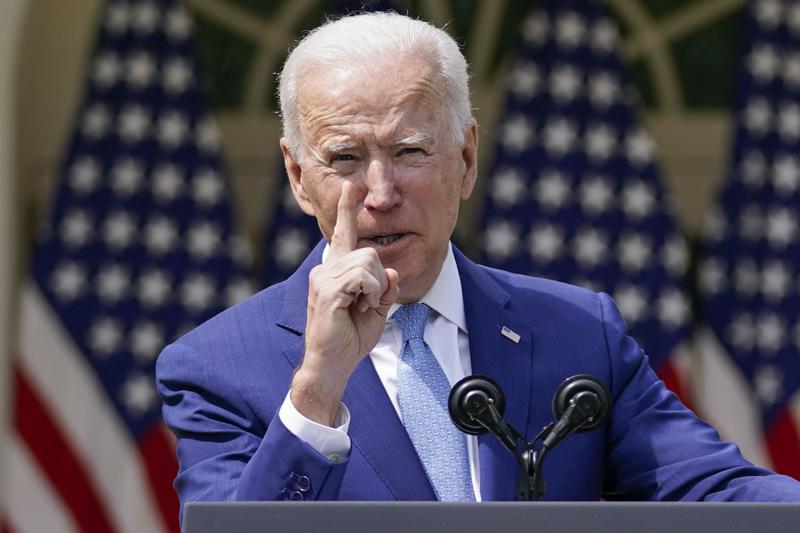
WASHINGTON (AP) — President Joe Biden is putting the finishing touches on his first address to a joint session of Congress, a prime-time speech on Wednesday night on the eve of his 100th day in office. Biden will use the speech before lawmakers and a broader viewing audience to talk about what he’s accomplished in the opening months of his presidency and to lay out his other domestic and foreign policy priorities.

WHEN AND WHERE CAN I WATCH OR LISTEN TO BIDEN?

The speech is set for 9 p.m. EDT and will be broadcast by the major networks and cable news TV channels. The White House plans to stream it at WH.gov/live, as well as on its YouTube, Facebook and Twitter pages. Live coverage will also be provided by C-SPAN, C-SPAN Radio and C-SPAN.org. NPR is streaming the speech on its website, npr.org, and on its app, in addition to offering live coverage to its member radio stations.

…MORE

Related

100 días de Biden en la Casa Blanca (BBC)

Biden 100 days: What we all got wrong about him (BBC)

Transcript: Read President Biden’s first address to a joint session of Congress

Biden’s foreign policy aims to ‘win the 21st century’

Biden’s first 100 days (Audio)

Fact-checking Biden’s 2021 address to Congress

What’s the verdict on Biden’s first 100 days?

Biden’s First Hundred Days (Ricard Haass, CFR)


27 abril, 2021
por Felipe Sahagún
Sin comentarios

The world in conflict (John Andrews)

 
Project Syndicate Logo

This week in Say More, PS talks with John Andrews, a former editor and foreign correspondent for The Economist, and the author of The World in Conflict: Understanding the World’s Troublespots.

Project Syndicate: Many observers have mined the history of prewar Europe for insights into the rise of anti-democratic political forces today. You recently highlighted a few “dispiriting lessons” from that period, including the potentially devastating consequences of “political leaders’ readiness to sacrifice their professed principles.” We see that readiness today in the US Republican Party’s embrace of former President Donald Trump, and arguably in British Prime Minister Boris Johnson’s consolidation of control over the Conservative Party. What can be done to arrest these parties’ slide toward illiberalism?

John Andrews: There is no quick or easy answer. “Strongman” politicians everywhere mislead voters by offering simplistic solutions to complex issues. Examples include Filipino President Rodrigo Duterte’s violent “war on drugs” and Turkish President Recep Tayyip Erdoğan’s ludicrous insistence that low interest rates reduce inflation.

The United States faces a combination of problems. Election campaigns are exorbitantly expensive. Cable television and talk radio have abandoned even the pretense of objectivity. 

…MORE

The complete handbook on the causes and current status of global hostilities, now in its third edition

The Earth is riven by dangerous and shifting faultlines. Since the previous edition of The World in Conflict, we have witnessed the apparent collapse of Isis in Syria and the reawakening of the Troubles in Ireland. Donald Trump first goaded and then mollified North Korea, the world’s most enigmatic nuclear power, before provoking Iran into renewing its atomic ambitions. And alongside traditional warzones, a new set of global battle lines are being drawn across cyberspace.

Join the veteran Economist journalist John Andrews on a tour of the ancient enmities and imminent collisions that define conflict in the twenty-first century. Region by region discover the causes, contexts, participants and likely outcomes of every globally significant violent struggle now underway. From drug cartels to cyber war, this is the indispensable guide for anyone who wants to understand our perilous world.

Publication date: 06/02/2020


26 abril, 2021
por Felipe Sahagún
Sin comentarios

Myanmar: coup and civil disobedience (Global Voices)

The Tatmadaw, Myanmar’s military, staged a coup on February 1. Two-plus months later, hundreds have been killed by the junta, thousands detained, and many more facing arrest warrants. What the military didn’t anticipate, however, was the resistance and defiance of Myanmar’s citizens, who continue to challenge the coup and the armed forces’ terror tactics.

Myanmar’s pro-democracy movement has devised creative and daring ways to express dissent, in spite of internet disruptions, harassment and attacks on journalists, and the forced closure of several news outlets.

As events continue to unfold, and as part of our ongoing coverage of the situation, Global Voices will host a webinar on April 22 at 1pm GMT (click on this link to calculate the equivalent time in your time zone) to explore what’s happening in Myanmar.

In conversation with our invited guests and through testimonials from people inside Myanmar, we’ll explore what it’s like to live under siege by the military—and to resist those forces, especially during a pandemic. We’ll learn more about the civil disobedience movement and how it became a potent weapon against the junta. And finally, we’ll seek to inspire solidarity and offer concrete ways for our readers and the global community to support Myanmar’s democracy movement.

speakers:

Mong Palatino Global Voices’ Southeast Asia editor, Mong has spearheaded our coverage of the events in Myanmar. In addition to hosting the session, he will provide an overview of the country’s transition to democracy over the past decade and of what has transpired since the military takeover.

Ben Crox a Hong Kong-based BarCamp curator and a trainer on new media communication technology and skills, Ben has experience doing business in Myanmar and will discuss how people there are dealing with the military crackdown, and how people from the outside can help.

Hsa Moo a member of the Karen Environmental and Social Action Network (KESAN), Hsa will discuss the situation in Karen state and other parts of Myanmar.

LINK TO VIDEO