
Foreign Affairs
The first year of #COVID-19: how did it start, how will it end and how did it change the world. Finally, will the world be able to better prepare for the next? foreignaffairs.com/lists/2021-03- v @ForeignAffairs

15 marzo, 2021
por Felipe Sahagún
Sin comentarios

Foreign Affairs
The first year of #COVID-19: how did it start, how will it end and how did it change the world. Finally, will the world be able to better prepare for the next? foreignaffairs.com/lists/2021-03- v @ForeignAffairs
15 marzo, 2021
por Felipe Sahagún
Sin comentarios

El León que llevamos dentro PdF)
Publicado en El Diario de Le´´on el 15 de marzo de 2021 en la serie por los 115 años del periódico.
14 marzo, 2021
por Felipe Sahagún
Sin comentarios

In an image from 2012’s «Syria Behind the Lines,» an early documentary on the Syrian conflict, a woman pushes her stroller away from the blast, moments after a deadly airstrike hits the Sunni village of al-Bara. vía FRONTLINE
In early March 2011, after popular uprisings swept Tunisia and Egypt, a group of young schoolboys in the small Syrian farming town of Deraa, 60 miles south of Damascus, painted messages opposing President Bashar al-Assad on a local wall. Continue leyendo →
14 marzo, 2021
por Felipe Sahagún
Sin comentarios
14 marzo, 2021
por Felipe Sahagún
Sin comentarios

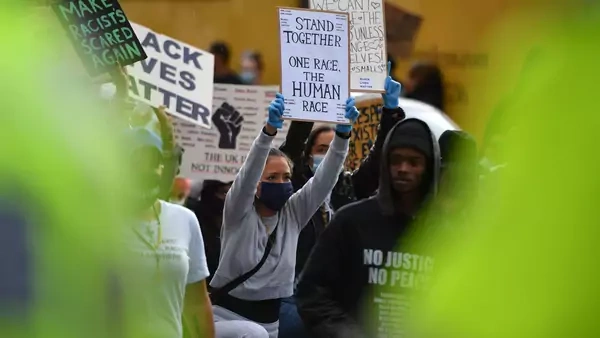
rotesters hold up placards as they “take a knee” in front of a police line at a Black Lives Matter demonstration outside the U.S. Embassy in London on June 7, 2020, during a weekend of global rallies against racism and police brutality. Justin Tallis/AFP v @CFR_org
Insufficient leadership, outdated curricula, and alienating school climates leave future foreign policy experts ill prepared to address the social forces contributing to fragility and unrest globally. Transforming U.S. foreign policy requires a comprehensive educational strategy on diversity, equity, and inclusion. Continue leyendo →
13 marzo, 2021
por Felipe Sahagún
Sin comentarios

Morning Consult Political Intelligence is currently tracking the approval rating for governmental leaders in Australia, Brazil, Canada, France, Germany, India, Italy, Japan, Mexico, South Korea, Spain, the United Kingdom, and the United States. On a weekly basis, this page will be updated with the latest data for all 13 countries, offering real-time insight into the shifting political dynamics across the globe. Approval ratings are based on a seven-day moving average of adult residents in each country, and samples sizes vary by country.
See also: @MorningConsult