Relaciones Internacionales – Comunicación Internacional

9 enero, 2021
por Felipe Sahagún
Sin comentarios

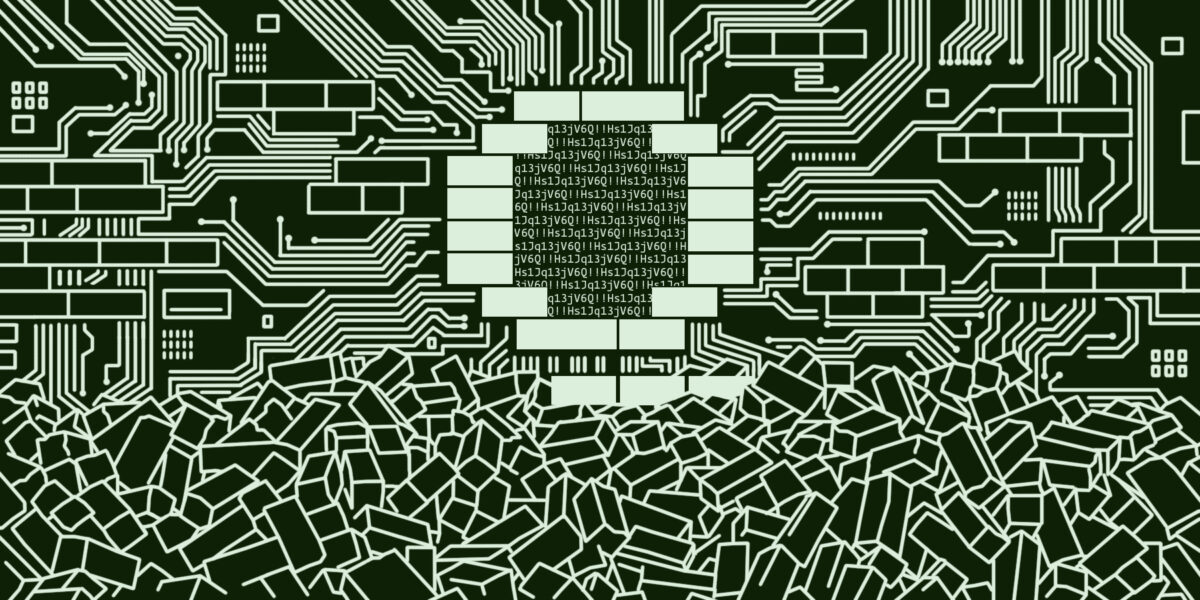
The Making of QAnon: A Crowdsourced Conspiracy (Bellingcat)

On January 6, chaos descended on Washington D.C. as supporters of President Donald Trump stormed the United States Capitol Building. Amid the melee, a longtime QAnon promoter known as “the Q Shaman” made his way onto the Senate floor and occupied the speaker’s rostrum. He was far from the only QAnon supporter on the scene that day: another led the charge into the Capitol. Continue leyendo →

9 enero, 2021
por Felipe Sahagún
Sin comentarios

Will liberty and human rights survive the age of the Internet?

by David Von Drehle (W Post)

Jan. 9, 2021 at 1:14 a.m. GMT+1

One of the great questions of our time — perhaps the greatest question — is whether liberty and human rights can survive the digital revolution. Big, abstract questions such as this can be difficult to pin down, but two events on Jan. 6, half a world apart, made the abstract painfully concrete.

In Washington, a collection of distortions, delusions and outright lies galvanized a mob of thousands to storm the Capitol in a brief but deadly insurrection. This unprecedented event was fomented inside a digitally networked community in which extraordinary claims are widely accepted on the basis of the wispiest nonsense. Selectively edited surveillance camera images become “proof” of massive election fraud. Hearsay testimony — so-and-so told me they heard such-and-such was true — becomes gospel.

No claim is too outlandish to be credited. The loser of an election can assert (and be believed) not just that he won, but that he won in “a massive landslide.” Hundreds, if not thousands, of the rioters were guided by their commitment to the proposition that American government is actually an Internet game in which an anonymous whistleblower is planting opaque clues as a means to unmask a huge conspiracy of child-murdering elected officials.

Anyone who has studied the workings of religious cults or mass manias understands that the human brain, far from being an engine of searing skepticism, is highly prone to dysfunction inside sealed and self-reinforcing information loops. Digital technology makes it exponentially easier to create such loops and to lose oneself inside them.

The lords of digital communication understood exactly what they were seeing as they watched the Trump Riot unfold. If someone as ridiculous and undisciplined as President Trump could mobilize a mob — not just of thugs, but of business executives, schoolteachers and small-town mayors — to assault the U.S. government, what could someone with focus do? Facebook’s Mark Zuckerberg took the extraordinary step of banning the president of the United States from the world’s largest social network. Twitter temporarily locked the president’s account. There will be no freedom for their platforms, and therefore no profits, if those platforms are used to kill the golden goose of open society.

Meanwhile, in Hong Kong on the same day, China dramatically underlined its answer to the question. More than 1,000 police officers fanned out across the formerly free city to arrest more than 50 pro-democracy activists. The Communist Party in Beijing has no intention of permitting anything like a freewheeling Internet to exist anywhere under its control. Digital technology is highly regulated in China, used to control the population rather than to liberate it.

…MORE

The Post’s View: Social media is finally pulling the plug on Trump. We still must fight the lies.

8 enero, 2021
por Felipe Sahagún
Sin comentarios

Is violence an inevitable part of civilization? (Margaret MacMillan)

 
After the shocking scenes in Washington DC this week, we ask war historian Margaret MacMillan if violence is an inevitable part of civilization. Professor MacMillan, author of  ‘War: How conflict shaped us’, reflects on whether the invasion of the Capitol qualifies as a coup. And she unravels the mystery of why we fight, from ancient times to the 21st century. Runtime: 27 min
play.acast.com
 

8 enero, 2021
por Felipe Sahagún
Sin comentarios

Outlook 2021: a world in transition

What a vaccine, changes in Washington D.C. and a shifting geopolitical landscape could mean for the economy and markets

In this video, experts from the Chief Investment Office and BofA Global Research share their insights on how the events of the past year could impact everything from financial markets to global politics in the year ahead.

Topic areas include:

  • What a vaccine could mean for our future
  • Priorities for the new U.S. administration and Congress
  • The outlook for the U.S. economy and the markets
  • What we should expect for trade and economic policy in the coming year
  • The ways that technology and innovation will impact these and other global trends
  • What we can all do now to prepare

This program is moderated by Chris Hyzy, Chief Investment Officer for Merrill and Bank of America Private Bank, and features a panel discussion with Michelle Meyer, Head of U.S. Economics for BofA Global Research, Joe Quinlan, Head of CIO Market Strategy for the Chief Investment Office, Merrill and Bank of America Private Bank, and Savita Subramanian, Head of U.S. Equity & Quantitative Strategy & ESG Research, BofA Global Research.

 

8 enero, 2021
por Felipe Sahagún
Sin comentarios

Terrorism in 2021: trends (Colin P. Clarke, Jan 5, 2021)

Foreign Policy Research Institute

The year 2020 was unprecedented in many ways. Just three days into the year, U.S. President Donald Trump ordered the assassination of Islamic Revolutionary Guard Corps Quds Force (IRGC-QF) commander Qasem Soleimani. That news was soon eclipsed by the worldwide spread of the novel coronavirus and the ensuing COVID-19 pandemic. Lockdowns, protests, and a bitterly contested presidential election in the United States are just a few of the factors influencing the terrorism threat heading into 2021. So, what will this upcoming year bring? Continue leyendo →