Relaciones Internacionales – Comunicación Internacional

15 octubre, 2020
por Felipe Sahagún
1 comentario

Thinking about the future (F Affairs) // Principios básicos de prospectiva estratégica

A Better Crystal Ball

The Right Way to Think About the Future

very policy is a prediction. Tax cuts will boost the economy. Sanctions will slow Iran’s nuclear program. Travel bans will limit the spread of COVID-19. These claims all posit a causal relationship between means and ends. Regardless of party, ideology, or motive, no policymaker wants his or her recommended course of action to produce unanticipated consequences. This makes every policymaker a forecaster. But forecasting is difficult, particularly when it comes to geopolitics—a domain in which the rules of the game are poorly understood, information is invariably incomplete, and expertise often confers surprisingly little advantage in predicting future events.

These challenges present practical problems for decision-makers in the U.S. government. On the one hand, the limits of imagination create blind spots that policymakers tend to fill in with past experience. They often assume that tomorrow’s dangers will look like yesterday’s, retaining the same mental map even as the territory around them changes dramatically. On the other hand, if policymakers addressed all imaginable threats, the United States would need so large and expensive a national security establishment that the country could do little else. By many measures, it is nearing this point already. The United States has military bases in more than 70 countries and territories, boasts more than four million federal employees with security clearances, and fields 1.3 million active-duty troops, with another million in reserve. According to one estimate, the United States spends $1.25 trillion annually on national security. When it comes to anticipating the future, then, the United States is getting the worst of both worlds. It spends untold sums of money preparing yet still finds itself the victim of surprise—fundamentally ill equipped for defining events, such as the emergence of COVID-19.

There is a better way, one that would allow the United States to make decisions based not on simplistic extrapolations of the past but on smart estimates of the future. It involves reconciling two approaches often seen to be at philosophical loggerheads: scenario planning and probabilistic forecasting. Each approach has a fundamentally different assumption about the future. Scenario planners maintain that there are so many possible futures that one can imagine them only in terms of plausibility, not probability. By contrast, forecasters believe it is possible to calculate the odds of possible outcomes, thereby transforming amorphous uncertainty into quantifiable risk. Because each method has its strengths, the optimal approach is to combine them. This holistic method would provide policymakers with both a range of conceivable futures and regular updates as to which one is likely to emerge. For once, they could make shrewd bets about tomorrow, today.

…MORE


Principios básicos de prospectiva estratégica | Global Strategy – Universidad de Granada
Global Strategy es una publicación especializada que tiene como propósito fomentar la reflexión y el diálogo ilustrado sobre Estudios Estratégicos, Política de Defensa y Políticas de Seguridad….  global-strategy.org


14 octubre, 2020
por Felipe Sahagún
Sin comentarios

América Latina: una agenda para la recuperación

Fundación Euroamerica

Estimad@ amig@:

En el siguiente enlace podrá seguir en directo el acto de presentación del Informe América Latina: una agenda para la recuperación – elaborado por iniciativa de la Fundación Euroamérica y FIE – que tendrá lugar mañana jueves, 15 de octubre,  a las 10:30h. Para más información del acto (presentación y programa), pulse aquí.

 Siga el evento en directo pulsando aquí

Un cordial saludo,

Fundación Euroamérica

General Arrando, 38

28010 Madrid

Tel.: +34 91 781 82 60

www.euroamerica.org

13 octubre, 2020
por Felipe Sahagún
Sin comentarios

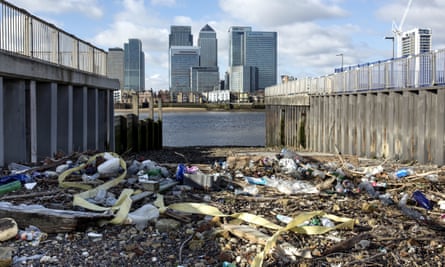
World leaders pledge to halt Earth’s destruction ahead of UN summit

 
Plastic brought by high tides litters the high water line in front of Canary Wharf in London, UK. Pollution is one area highlighted by the pledge.

The Guardian

Mon 28 Sep 2020 00.01 BST

World leaders have pledged to clamp down on pollution, embrace sustainable economic systems and eliminate the dumping of plastic waste in oceans by the middle of the century as part of “meaningful action” to halt the destruction of nature on Earth.

Emmanuel Macron, Angela Merkel, Justin Trudeau, Jacinda Ardern and Boris Johnson are among 64 leaders from five continents warning that humanity is in a state of planetary emergency due to the climate crisis and the rampant destruction of life-sustaining ecosystems. To restore the balance with nature, governments and the European Union have made a 10-point pledge to counteract the damage to systems that underpin human health and wellbeing.

The commitments include a renewed effort to reduce deforestation, halt unsustainable fishing practices, eliminate environmentally harmful subsidies and begin the transition to sustainable food production systems and a circular economy over the next decade. The leaders describe the pledge as a “turning point” by which future generations will judge their willingness to act on environmental destruction.

…MORE

Related

Leaders’ Pledge for Nature

13 octubre, 2020
por Felipe Sahagún
Sin comentarios

Revisiting US Middle East Strategy

 
Martin Indyk@Martin_Indyk
Revisiting US Middle East Strategy – a discussion hosted by the Chicago Council on Global Affairs and the Financial Times, featuring @tcwittes, @ksadjadpour and moi.
 

13 octubre, 2020
por Felipe Sahagún
Sin comentarios

Los enemigos de España: imagen del otro….

Dialnet

Los enemigos de España: imagen del otro, conflictos bélicos y disputas nacionales (siglos XVI-XX)

Imagen de portada del libro Los enemigos de España

13 octubre, 2020
por Felipe Sahagún
Sin comentarios

Cómo somos y cómo nos vemos los españoles (RNE)

24 horas¡24 horas

Con motivo de la Fiesta Nacional de España, nuestro colaborador Paco Camas, investigador de Metroscopia y profesor del Instituto de Estudios Bursátiles, nos contará a través de varios datos cómo somos y cómo nos representamos los españoles. Entre nuestros puntos fuertes destaca nuestro perfil más amable, social, creativo y trabajador, así como la autocrítica, una cualidad más presente que en otros países vecinos. ¿Nos identificamos con nuestra bandera? ¿Preferimos que el himno tenga letra? ¿Somos realmente una nación de naciones? Buscaremos arrojar luz sobre esas y otras preguntas. (12 de octubre de 2020)

Enlace

Relacionado

¿Nos sentimos orgullosos de ser españoles? (Andrés Medina, director de Metroscopia, en Onda Cero)