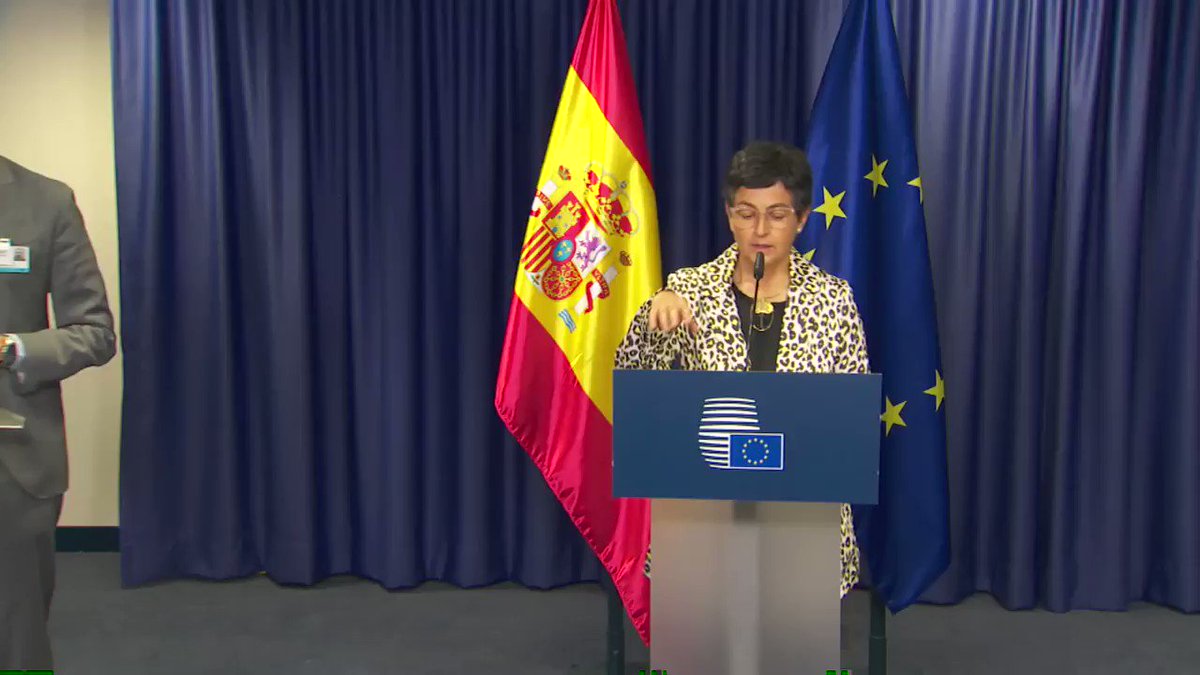
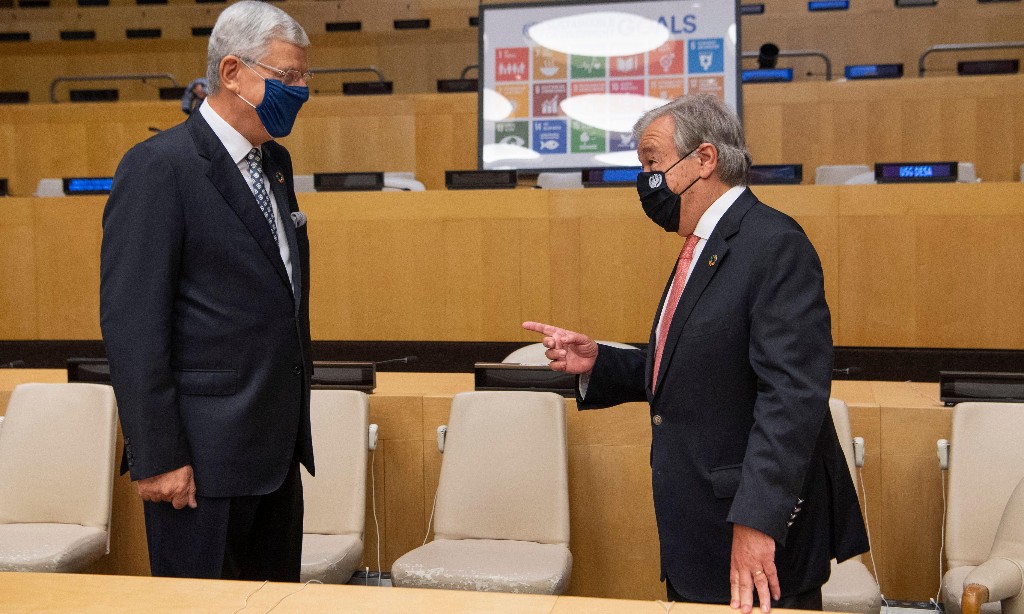
Diplomats and foreign ministers are slowly emerging from their Covid-induced hibernation, but the 75th United Nations general assembly – supposedly a display of the world’s connectedness – will largely be an exercise in remote Zoom diplomacy.
World leaders will not be at the podium in New York delivering set-piece speeches, but instead will be sending pre-recorded messages from behind their flag-festooned office desks in their capitals. Only national diplomats already in New York will be present in the UN chamber, probably about one per country.
The US told UN member states that anyone who wanted to come had to self-quarantine for 14 days upon arriving in New York. As a result it will be an general assembly like no other. The behind-the-scenes bilaterals, side events and chance encounters that turn the annual meeting into a diplomats’ playground will be absent.
There will be no repetition of the drama of last year, for instance, when Emmanuel Macron shuttled through New York hotel suites late at night in an attempt to persuade Donald Trump and the Iranian president, Hassan Rouhani, to bury their differences over the Iran nuclear deal.
The UN secretary general, António Guterres, took the decision to close the UN campus on the East River early in March, even before Broadway or the New York museums had shut their doors. “The UN politically could not afford to become a hotspot within a hotspot that New York was becoming,” said Stéphane Dujarric, the spokesperson for Guterres.
Like many organisations, the UN was put through a crash course in remote working. Many diplomats say they have felt like fish out of water over the past few months, rattling around empty embassies, reminding colleagues to unmute on video calls.
Virtual ministerial country visits to Yemen are hardly a substitute for the reality, while cultural events, such as tango lessons or wine tasting, represent an online challenge. “The way we communicate constantly changes with technology from the telex and diplomatic pouch to the mobile phone. But this is a face-to-face business,” one EU diplomat in London said.
Hreinn Pálsson, the deputy chief at Iceland’s UN mission, explained the pitfalls of zoom diplomacy during a recent Zoom seminar. “The trouble is everything is on the record,” he said. “We do not write reports back home about the political situation in the US. What we do is provide the background, and you get the background from private conversation.
…MORE

THE ECONOMIST
The UN renews its vows in a 75th-birthday general non-assembly
There is little celebration as leaders stay away
AT THIS TIME of year New York City is normally gridlocked. World leaders and their delegations, as well as hordes of consultants and folk from non-governmental organisations, flood into town for the United Nations General Assembly (UNGA). This year’s gathering was meant to be special, marking the 75th anniversary of the UN’s founding in 1945. But the constraints of covid-19 have ensured that the UNGA of 2020 will stand out in a different way: as a general non-assembly.
World leaders are not travelling to New York. Instead, they will deliver pre-recorded video messages to the session’s general debate that starts on September 22nd. Until recently it seemed that President Donald Trump might at least be an exception, coming to the UN to speak in person. But last week his chief of staff confirmed that he would stay away after all.
The formal commemoration on September 21st of the UN’s 75th anniversary will thus be a subdued affair. Even before covid-19 disrupted arrangements, it was planned to be low-key. The mood is strikingly different from the euphoria that greeted the organisation’s birth at the end of the second world war.
At the closing session of the conference in San Francisco that hammered out the UN’s charter, President Harry Truman praised the 50 founding countries for setting aside their differences “in one unshakable unity of determination—to find a way to end wars.” Since then the UN has expanded to 193 members, sprouted numerous specialised agencies and a big bureaucracy, championed efforts to save the planet from climate change (brokering the Paris Agreement) and to save humanity from poverty (producing Sustainable Development Goals), and moved into peacekeeping in a big way. Over the years more than 1m people have taken part in more than 70 UN peacekeeping missions.

Yet, given the troubled state of the world, this was not deemed to be a time for a boastful birthday bash. “We are not here to celebrate,” says the UN’s anniversary declaration, due to be approved by the General Assembly on September 21st.
…MORE