NEF Online Análisis de resultados en las Elecciones Gallegas y Vascas. Por José Juan Toharia y Andrés Medina, presidente y director general de METROSCOPIA. (NEF Nueva Economía Forum, 13 de julio de 2020)

13 julio, 2020
por Felipe Sahagún
Sin comentarios
NEF Online Análisis de resultados en las Elecciones Gallegas y Vascas. Por José Juan Toharia y Andrés Medina, presidente y director general de METROSCOPIA. (NEF Nueva Economía Forum, 13 de julio de 2020)
12 julio, 2020
por Felipe Sahagún
Sin comentarios

11 julio, 2020
por Felipe Sahagún
Sin comentarios

Let me take advantage of the fact that John Bolton’s memoir of his time as national security advisor — The Room Where It Happened — has inspired so many discussions amongst the media to skip the plot summary and naughty bits, and instead give my impressions of Bolton, his unusual approach, and his startling self-regard.
The contrast between Bolton’s book and Henry Kissinger’s memoirs is illuminating. Kissinger’s personal writings not only had wit, irony, self-deprecating if insincere humor, and vivid portraits of peers but also made a real effort to persuade readers that his behavior was honorable and that his policies were reasonable. However, our ability to now compare Kissinger’s version of his story with the documentary record reveals that he was often less than honest — for example, concerning U.S. policy toward the Allende regime in Chile, the South Asian crisis of 1971, and the American stance toward nuclear weapons and arms control. Nevertheless, he went to great lengths to show that American goals and the instruments employed to reach them made a good deal of sense. His discussion of Vietnam, although glossing over many key points, made a strong argument for Richard Nixon’s policy that gave pause even to those, like myself, who had been anti-war protestors.
11 julio, 2020
por Felipe Sahagún
Sin comentarios
Note: This page is continually updated as new transcripts become available. If you cannot find a specific segment, check back later.
10 julio, 2020
por Felipe Sahagún
Sin comentarios
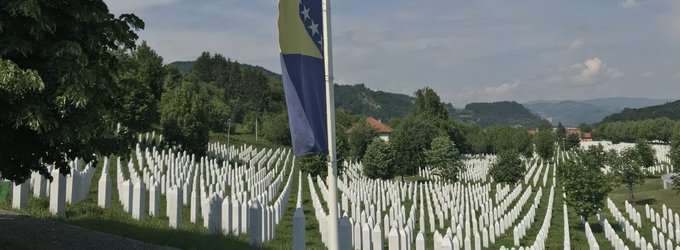


The 25th anniversary of the genocide in Srebrenica offers the international community a chance to reflect and recommit to human rights, argues
25 years later, remembering Srebrenica — So we are not condemned to repeat it. For a time, the stain of Srebrenica on the collective conscience of Western democracies translated into policy change and action. Over time, though, our attention began to wane. brookings.edu


Queridas amigas y queridos amigos:
Espero que no hayáis sido afectados por los estragos de la pandemia y tened mucho cuidado porque este virus es extremadamente contagioso. Os invito a leer esta entrevista (https://www.zendalibros.com/welcome-to-hell-memoria-de-guerra-con-gervasio-sanchez/#.Xwg6T9CoOdQ.twitter) que me han hecho en Zenda en la que se incluye al final este audiovisual (https://www.youtube.com/watch?v=snowmAobeHA&feature=youtu.be&fbclid=IwAR2swcBERmCFFMQQMCGd9_YoZGXXaeAz03NcUt7A-rFUNkHzFGtJP4g9LtY)
También os invito a ver esta galería (http://sniperalley.photo/photographers/nggallery/galleries/gervasio-sanchez/) con la que contribuyo a la web creada por Dzemil Hodzic, un niño del cerco de Sarajevo (http://sniperalley.photo/my-story/) y que se puede seguir en ocho idiomas
Ojalá podáis pasar un buen verano
Muchas gracias por vuestro interés
Un abrazo
Gervasio Sánchez
10 julio, 2020
por Felipe Sahagún
Sin comentarios
The pandemic could shape the world, much as World War II and the Great Depression did
It’s 2022, and the coronavirus has at long last been defeated. After a miserable year-and-a-half, alternating between lockdowns and new outbreaks, life can finally begin returning to normal.
But it will not be the old normal. It will be a new world, with a reshaped economy, much as war and depression reordered life for previous generations.
Thousands of stores and companies that were vulnerable before the virus arrived have disappeared. Dozens of colleges are shutting down, in the first wave of closures in the history of American higher education. People have also changed long-held patterns of behavior: Outdoor socializing is in, business trips are out.
And American politics — while still divided in many of the same ways it was before the virus — has entered a new era.
All of this, obviously, is conjecture. The future is unknowable. But the pandemic increasingly looks like one of the defining events of our time. The best-case scenarios are now out of reach, and the United States is suffering through a new virus surge that’s worse than in any other country.
With help from economists, politicians and business executives, I have tried to imagine what a post-Covid economy may look like. One message I heard is that the course of the virus itself will play the biggest role in the medium term. If scientific breakthroughs come quickly and the virus is largely defeated this year, there may not be many permanent changes to everyday life.


