Vídeo del #DebatesElcano de hoy que puedes ver en cualquier momento. Con @CharlesTPowell @IsabelRiao2 @pazguzmanc @miotei
18 junio, 2020
por Felipe Sahagún
Sin comentarios

18 junio, 2020
por Felipe Sahagún
Sin comentarios
Vídeo del #DebatesElcano de hoy que puedes ver en cualquier momento. Con @CharlesTPowell @IsabelRiao2 @pazguzmanc @miotei
18 junio, 2020
por Felipe Sahagún
Sin comentarios

Bunia, a dusty city of perhaps 650,000 in Ituri, a province of eastern Congo, has long known war. Since the start of this year, rebels have burned dozens of villages to the ground and hacked hundreds of people to death with machetes. A rebel group made up of assailants from the seed-sowing Lendu tribe has launched a series of attacks on the pastoralist Hema. The government hospital in the city is overrun with patients. “We have people wounded with machetes, with gunshots, women with amputated limbs, people with fractures,” says John Katabuku, a doctor working there. “When the displaced arrive we look after them for free—they have lost everything. But it is difficult for the hospital. We really do not have the means.”
With war comes disease. Ituri is still recovering from an outbreak of Ebola which started in 2018 and killed 2,262 people in the region before subsiding. Now it has covid-19. Though there are just two recorded cases in the province, that is surely a woeful undercount. If the disease is spreading, it would not be easy to tell. Tests have to be sent 1,800km to the capital, Kinshasa. And few people can get tested. Some 22 clinics have been burned down. One man living in the nearby war-torn area of Djugu says that there is nowhere to go if you are sick—all the clinics are either ruined or occupied by rebels. The hospital in Bunia has no working ventilators and only enough space to isolate up to ten people, in the area that was previously being used for suspected Ebola patients. “We have to hospitalise two to three displaced children per bed, so you can see that we do not have infection prevention under control,” says Dr Katabuku.
18 junio, 2020
por Felipe Sahagún
Sin comentarios


18 junio, 2020
por Felipe Sahagún
Sin comentarios
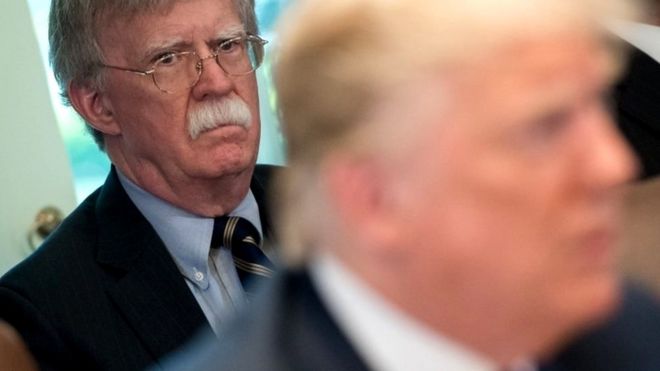
As national security adviser, John Bolton was a major figure in US foreign policy v @AFP
The Trump administration is making a last-ditch effort to stop the publication of a damaging new book by a former national security adviser.
Among several allegations, John Bolton says Donald Trump «pleaded» for help from China to win re-election in 2020. Continue leyendo →
18 junio, 2020
por Felipe Sahagún
Sin comentarios

Après la confrontation entre soldats chinois et indiens dans l’Himalaya entre les 15 et 16 juin, des militants des organisations Bajrang Dal et Vishwa Hindu Parishad (VHP) piétinent des drapeaux chinois et des affiches du président Xi Jinping, à Amritsar (Pendjab), le 17 juin 2020. NARINDER NANU / AFP v @lemondefr
Editorial du « Monde ». L’élément déclencheur de la confrontation entre soldats chinois et indiens sur les crêtes de l’Himalaya, qui a eu lieu dans la nuit du lundi 15 au mardi 16 juin, reste inconnu. Mais son contexte – la stratégie d’endiguement de la Chine par Donald Trump et la mise en cause de Pékin dans la pandémie de Covid-19 – donne à cet incident des allures inquiétantes, d’autant qu’il oppose deux puissances militaires aux mains de dirigeants nationalistes qui n’ont aucune intention de perdre la face.
Certes, ce face-à-face en plein Ladakh est l’énième d’une longue série, mais c’est le premier à faire des victimes depuis 1975 : vingt morts côté indien et un bilan tenu secret côté chinois. Le fait que le sang ait été versé sans arme à feu, en vertu d’un protocole établi précisément pour éviter une escalade incontrôlée, évoque un fort degré de violence. Ultime symbole, l’affrontement a eu pour cadre la vallée de la rivière Galwan, où les troupes chinoises ont capturé un poste de défense indien en 1962, donnant le signal de la guerre éclair qui les a alors opposés.

An image passed to the BBC by an Indian military official shows crude weapons purportedly used in the fight v @BBCWorld
Galwan Valley: Image appears to show nail-studded rods used in India-China brawl
An image has emerged showing a crude weapon purportedly used by Chinese forces in the fatal brawl along China’s disputed border with India on Monday.
The fight in the Galwan Valley left at least 20 Indian soldiers dead and raised tensions between the two powers.
China did not acknowledge any casualties among its forces. Both sides accused the other of an incursion.
The border between the two nations in the region is poorly demarcated and can shift with topographical changes.
The image that emerged on Thursday showed crude weapons that appeared to be made from iron rods studded with nails. It was passed to the BBC by a senior Indian military official on the India-China border, who said the weapons had been used by the Chinese.
17 junio, 2020
por Felipe Sahagún
Sin comentarios
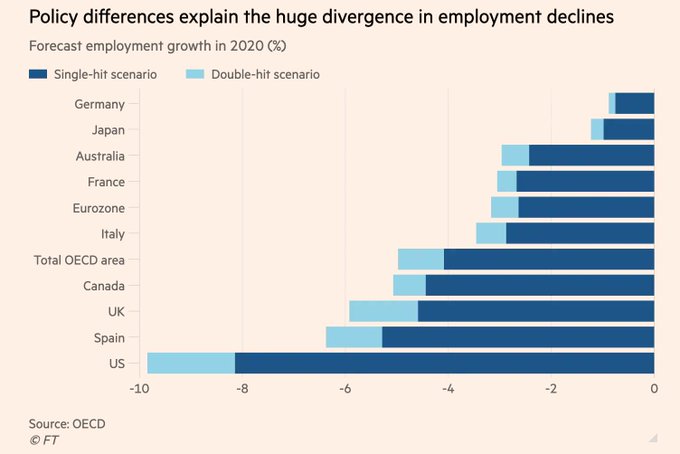

Martin Wolf: Probable developments: more virtual globalisation, accelerated adoption of technologies, more polarised politics, greater public debt, and dreadful international relationshttps://www.ft.com/content/9b8223bb-c5e4-4c11-944d-94ff5d33a909?emailId=5ee8aa8e923e140004d47ad9&segmentId=7d033110-c776-45bf-e9f2-7c3a03d2dd26 … @financialtimes