Relaciones Internacionales – Comunicación Internacional

26 mayo, 2020
por Felipe Sahagún
1 comentario

Panorama Estratégico 2020


IEEE ✔ @ieee_es
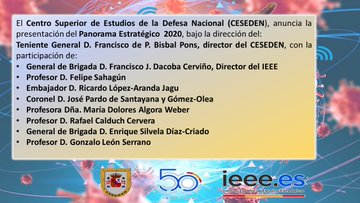
Presentación IEEE Virtual: Panorama Estratégico 2020 (enlace a video) . 26 de mayo a las 18 horas. Se retransmitirá en youtube en: https://www.youtube.com/watch?v=Jk93dpMfPnE  

Mis palabras de presentación: «El mundo en tiempos de pandemia»

Texto completo de PANORAMA ESTRATÉGICO 2020 (345 págs). Más en @IEEE_es

Related

Director de Instituto Estudios Estratégicos:Gastos militares se van a revisar


25 mayo, 2020
por Felipe Sahagún
Sin comentarios

Meanwhile in Beijing (Rana Mitter explores how China is…)

 
Rana Mitter explores how China is making the case for its model of government.

Alessio Patalano@alessionaval

This is excellent. ⁦@isabelhilton⁩ as ever nuanced, concise, and insightful. Great storyline and observations by Rana Mitter. Ironic oversimplifications about the ‘west’ by Chinese commentators seeking to counter ‘western’ deception of China. https://www.bbc.co.uk/sounds/play/m000jf70 … BBC Sounds  bbc.co.uk

The immediate implications of Covid-19 have dominated the media – and perhaps your attention – for months. But meanwhile, other stories are developing at speed, some intersecting with the virus crisis in unexpected ways. In the first of a new series of documentaries, the historian Rana Mitter invites you to turn your attention away from the virus, and to look instead at how China is combining its tech and consumer product prowess to make the case for its one-party model of government – and the impact on that of Covid-19. With contributions from: Daniel Bell, Peter Frankopan, Sophia Gaston, Isabel Hilton, Keyu Jin, Yu Jie, Zhang Weiwei


25 mayo, 2020
por Felipe Sahagún
Sin comentarios

Learning the lessons of the pandemic

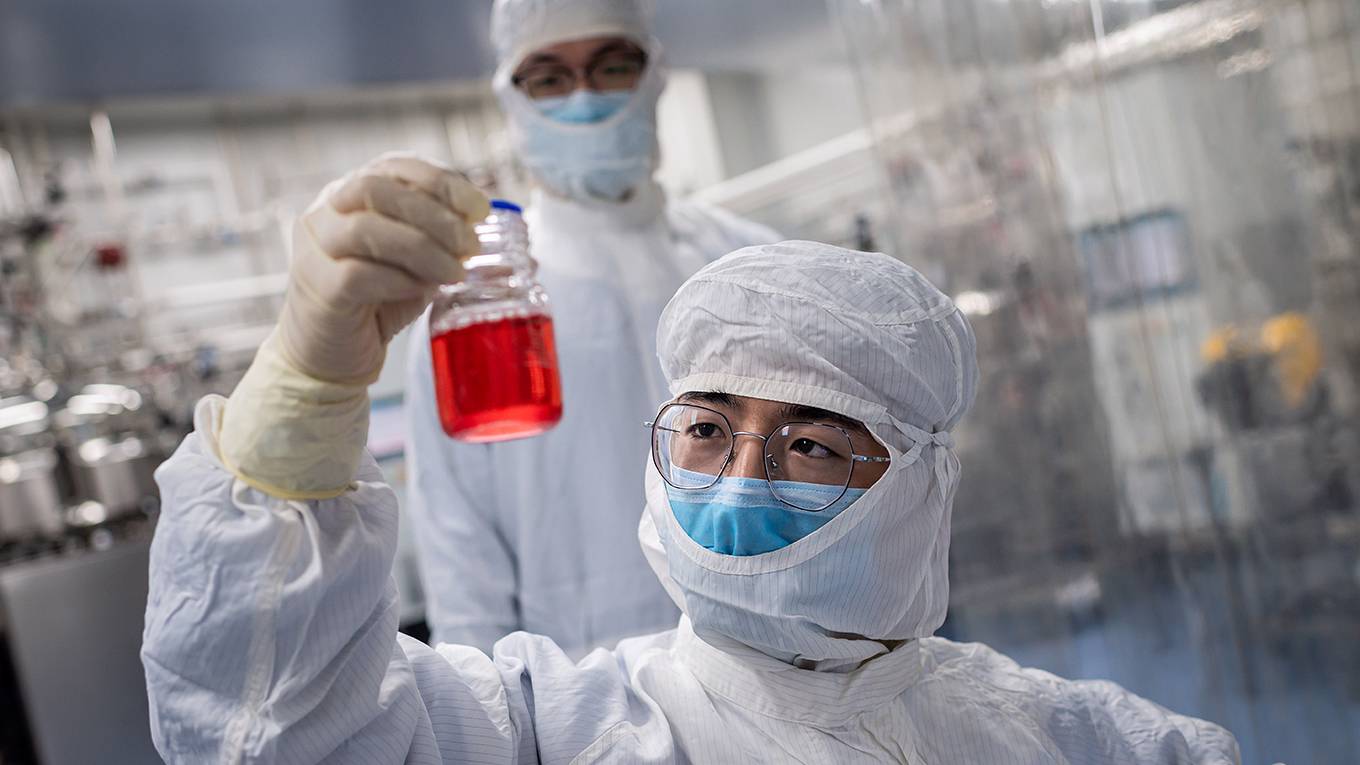
solana116_NICOLAS ASFOURIAFP via Getty Images_coronavirusscientistvaccine

Javier Solana (May 21, 2020)

PROJECT SYNDICATE

Many fear that the pandemic invites national withdrawal, but the world’s scientists are showing us a better way forward. They are not only putting their research at everyone’s disposal, but also modeling a cooperative way of working that enables them to produce more and better output.

Among its many other effects, the COVID-19 crisis has intensified the pre-existing geopolitical rivalry between China and the United States. This tension has led many to warn of the “Thucydides trap,” a term coined by Harvard’s Graham T. Allison to refer to the heightened risk of conflict when an emerging power threatens to displace an established one. Allison’s theory takes its name from the ancient Greek historian Thucydides’ chronicle of the Peloponnesian War, in which Sparta defeated the rising city-state of Athens. Continue leyendo →

25 mayo, 2020
por Felipe Sahagún
Sin comentarios

El cisne negro y la crisis del Covid-19… (Juan Leña)

Por Embajador Juan Leña, Pte de Honor de Cátedra China

22/05/2020

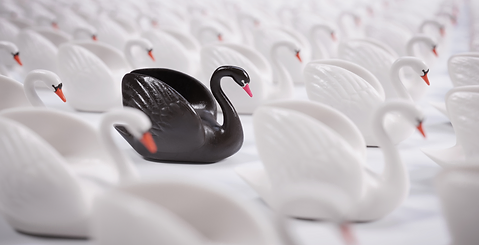
El 28 de enero de este año, el BBVA enviaba a algunos de sus clientes y accionistas una Nota Especial con un título sugestivo y brillante, pero más propio de un thriller que de un análisis de coyuntura de una entidad financiera: «Un cisne negro acaba con la complacencia”. Un cisne negro, según la formulación del profesor Nassim N. Taleb, es un acontecimiento imprevisible que tiene gran impacto y que, por su propia naturaleza, nunca está presente en los escenarios de los agentes económicos.

Así se describía en la Nota del BBVA al Covid-19: “el nuevo brote infeccioso chino, provocado por un virus, que ocasiona una enfermedad parecida a la neumonía, que ya se ha extendido a cuatro continentes y que ha matado a unas ochenta personas, entraría dentro de la definición de cisne negro, ya que estamos hablando de un factor de riesgo desconocido, cuyo impacto no había sido descontado por los mercados financieros”. Continue leyendo →

24 mayo, 2020
por Felipe Sahagún
Sin comentarios

Prophets, guessers, forecasters and analysts (NYT)

THE NEW YORK TIMES

By 

Dr. Lilla is a professor of humanities at Columbia

The best prophet, Thomas Hobbes once wrote, is the best guesser. That would seem to be the last word on our capacity to predict the future: We can’t.

But it is a truth humans have never been able to accept. People facing immediate danger want to hear an authoritative voice they can draw assurance from; they want to be told what will occur, how they should prepare, and that all will be well. We are not well designed, it seems, to live in uncertainty. Rousseau exaggerated only slightly when he said that when things are truly important, we prefer to be wrong than to believe nothing at all.

The history of humanity is the history of impatience. Not only do we want knowledge of the future, we want it when we want it. The Book of Job condemns as prideful this desire for immediate attention. Speaking out of the whirlwind, God makes it clear that he is not a vending machine. He shows his face and reveals his plans when the time is ripe, not when the mood strikes us. We must learn to wait upon the Lord, the Bible tells us. Good luck with that, Job no doubt grumbled.

When the gods are silent, human beings take things into their own hands. In religions where the divine was thought to inscribe its messages in the natural world, specialists were taught to take auspices from the disposition of stars in the sky, from decks of cards, dice, a pile of sticks, a candle flame, a bowl of oily water, or the liver of some poor sheep. With these materials, battles could be planned, plagues predicted and bad marriages avoided.

In those places where the gods were thought to communicate verbally with humans, oracles and prophets were designated to provide answers on demand. The most highly revered oracles in the ancient Greek world were the high priestesses at the Temple of Apollo at Delphi. When it came time to respond to a petitioner who had placed a question before her, the priestess would enter the inner sanctum and seat herself on a tripod erected over a crevice in the ground, out of which inebriating gases were thought to rise.

These fumes paralyzed her rational faculties and put her in a trance of receptivity that allowed the god Apollo to speak through her in cryptic remarks and riddles. These would be interpreted by a second figure, the prophet, who answered the grateful petitioner in poetry or prose. It was a very successful start-up and made Delphi a wealthy town.

Prophets today are less flamboyant. Former prime ministers do not, as a rule, sniff drugs before appearing on CNN. They sit meekly in the green room sipping mineral water before being called on to announce our fate. Augurs have given up on sheep livers and replaced them with big data and statistical modeling. The wonder is that we still cry out for their help, given that the future is full of surprises.

Professional forecasters know this about the future, which is why in the small print of their reports they lay out all the assumptions that went into the forecast and the degree of statistical confidence one might have in particular estimates, given the data and research methods used. But harried journalists and public officials don’t read or comprehend the footnotes, and with the public baying for information, they understandably pass on the most striking estimates just to get through the day.

Ancient augurs and prophets were in high-risk professions. When their predictions failed to materialize, many were executed by sovereigns or pulled apart by mobs. We see a bloodless version of this reaction today in the public’s declining confidence in both the news media and the government.

Take a banal example: snowstorms and school closings. A half century ago, when meteorological forecasting was less sophisticated, parents and children would not learn that classes were canceled until the storm began and it was announced on radio and television that very morning. We lived in harmless uncertainty, which for kids was thrilling. When snowflakes fell they even looked like manna from heaven.

Today, mayors and school superintendents, putting their faith in the meteorologists, routinely announce closings a day or more in advance. If the storm fails to arrive, though, they are sharply criticized by parents who lost a day of work or had to find day care. And if an unforeseen storm paralyzes the city, leaving streets unsalted and children stranded at school, the reaction is far worse. More than one mayor has lost a re-election bid because of failed prophecies, victim of our collective overconfidence in human foresight.

…MORE