Relaciones Internacionales – Comunicación Internacional

17 mayo, 2020
por Felipe Sahagún
Sin comentarios

Failure and future of leaders, institutions and regimes (Acemoglu)

Daron Acemoglu, autor del prestigioso ‘Por qué fracasan los países’, es entrevistado por el economista Luis Garicano, como parte del ciclo ‘Capitalismo después del coronavirus’ una serie de conversaciones del eurodiputado español con economistas y científicos sociales sobre el panorama tras el covid-19.

Acemoglu es profesor de Economía en el MIT (Instituto Tecnológico de Massachusetts) y uno de los economistas más citados en el mundo.

En la conversación, el experto turco aborda problemas como el enorme fracaso político de nuestra época,  la desigualdad, el deterioro institucional, la tentación para las democracias occidentales de copiar, aunque sea de forma suave, el modelo chino o los riesgos de que las empresas crezcan por encima de los Estados.


15 mayo, 2020
por Felipe Sahagún
Sin comentarios

Peace, conflict and COVID-19 (CFR)

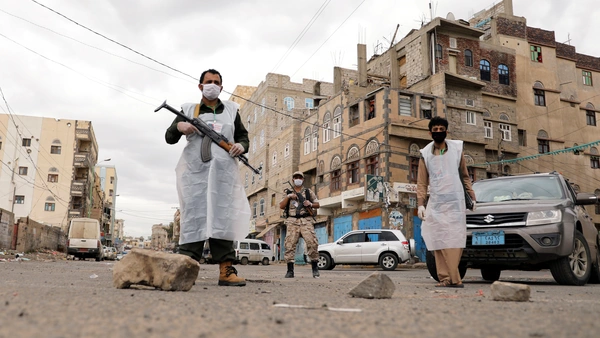
Security men wearing protective masks stand on a street during a twenty-four hour curfew that was instituted over concerns about the spread of the novel coronavirus in Sanaa, Yemen, on May 6, 2020. Khaled Abdullah/Reuters

The Center for Preventive Action has created this resource for those seeking information and analysis about the effects of COVID-19 on peace and conflict

Last updated May 15, 2020

Overview

How will the novel coronavirus pandemic affect the risk of violent conflict and prospects for peace around the world? There is no clear, easy answer—the crisis is still unfolding in surprising ways and assessments about its ramifications shift daily. To complicate matters, the impact of the virus has varied between different regions and conflict zones, making it difficult to render broad judgments about its consequences. Also, what may be relevant for gauging how the coronavirus could increase the risk of an armed confrontation between the major powers will almost certainly be different to assessing how civil unrest could worsen in vulnerable fragile states. The same uncertainty also surrounds current and prospective efforts to manage violent conflict. For every news report of a cease-fire or breakthrough in peace talks there is a corresponding story that details a deteriorating situation. And just as progress in one area can help advance the cause of peace in another, so the reverse is often true. Continue leyendo →

15 mayo, 2020
por Felipe Sahagún
Sin comentarios

Has covid-19 killed globalisation? (The Economist. Free to read)

May 14, 2020

Globalisation unwound

The flow of people, trade and capital will be slowed

Editor’s note: The Economist is making some of its most important coverage of the covid-19 pandemic freely available to readers of The Economist Today, our daily newsletter. To receive it, register here. For our coronavirus tracker and more coverage, see our hub

Even before the pandemic, globalisation was in trouble. The open system of trade that had dominated the world economy for decades had been damaged by the financial crash and the Sino-American trade war. Now it is reeling from its third body-blow in a dozen years as lockdowns have sealed borders and disrupted commerce (see Briefing). The number of passengers at Heathrow has dropped by 97% year-on-year; Mexican car exports fell by 90% in April; 21% of transpacific container-sailings in May have been cancelled. As economies reopen, activity will recover, but don’t expect a quick return to a carefree world of unfettered movement and free trade. The pandemic will politicise travel and migration and entrench a bias towards self-reliance. This inward-looking lurch will enfeeble the recovery, leave the economy vulnerable and spread geopolitical instability. Continue leyendo →

15 mayo, 2020
por Felipe Sahagún
Sin comentarios

The Covid pandemic and its geopolitical implications

The Tikvah Fund

General David Petraeus
Monday, May 18, 2020 | 7:30 PM EDT

CLICK HERE TO REGISTER

The COVID-19 crisis has turned the world upside down: national economies around the world seem headed for far-reaching unemployment and possible depression; the free flow of people and commerce between nations has been radically curtailed; medical and educational systems are under great strain or not functioning at all; and all the problems of the world that challenged us before this crisis have not magically gone away. What are the key issues that American leaders should be thinking about on the world stage? How will the current economic and social crisis affect the world’s most dangerous and unstable nation-states? Will regimes fall—or fall into tyrannical or terrorist hands? How will the balance of power among the great nations—America, China, Russia—shift? And amid this crisis, what opportunities might exist, if any, to advance democratic freedom around the globe and to develop new forms of technological and social innovation? Join us for a conversation with General David Petraeus, former Commander of U.S. Central Command and former Director of the CIA, as we assess the fault lines, threats, and opportunities of the current moment and beyond. General Petraeus will be interviewed by Vance Serchuk, Executive Director of the KKR Global Institute and former senior advisor to Senator Joe Lieberman.

Podcasts


15 mayo, 2020
por Felipe Sahagún
Sin comentarios

El coronavirus en España (La vida después, En Portada, RTVE)

‘La vida después’ es un documental dedicado a algunos de los protagonistas anónimos de la crisis del coronavirus en España.

Un equipo de ‘En Portada’ ha estado con cinco personas en plena emergencia sanitaria del Covid-19, que reflexionan sobre su experiencia.

El documental ‘La vida después’ se ha rodado en toda España entre los meses de marzo y mayo de 2020. Cuenta con la participación del actor Javier Cámara y del paleoantropólogo Juan Luis Arsuaga, entre otros, y la colaboración especial del periodista de RNE Iñigo Alfonso.

‘La vida después’ es un trabajo de ‘En Portada’, el espacio que dirige José Antonio Guardiola. El documental cuenta con realización de Ángel Barroso y Teresa Mora, redacción de Yolanda Álvarez, Marta Cáceres y Luis Pérez.


15 mayo, 2020
por Felipe Sahagún
Sin comentarios

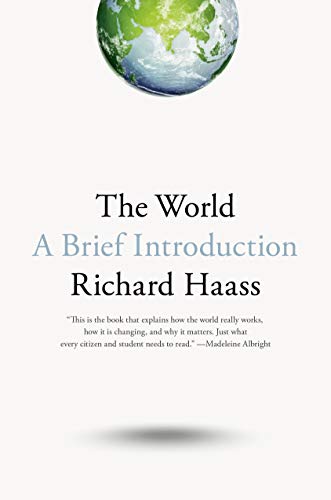
The World, by Richard Haass

The World: A Brief Introduction by [Richard Haass]
An invaluable primer from Richard Haass, president of the Council on Foreign Relations, that will help anyone, expert and non-expert alike, navigate a time in which many of our biggest challenges come from the world beyond our borders.

Like it or not, we live in a global era, in which what happens thousands of miles away has the ability to affect our lives. This time, it is a Coronavirus known as Covid-19, which originated in a Chinese city many had never heard of but has spread to the corners of the earth. Next time it could well be another infectious disease from somewhere else. Twenty years ago it was a group of terrorists trained in Afghanistan and armed with box-cutters who commandeered four airplanes and flew them into buildings (and in one case a field) and claimed nearly three thousand lives. Next time it could be terrorists who use a truck bomb or gain access to a weapon of mass destruction. In 2016 hackers in a nondescript office building in Russia traveled virtually in cyberspace to manipulate America’s elections. Now they have burrowed into our political life.

Continue leyendo →