

Tobias Buck@TobiasBuckFT
Some impressive data viz to go with Martin Wolf’s latest column. https://www.ft.com/content/ea1563e8-725f-11ea-ad98-044200cb277f … via @financialtimes
Related

1 abril, 2020
por Felipe Sahagún
Sin comentarios
1 abril, 2020
por Felipe Sahagún
Sin comentarios

China has in recent months significantly expanded its official presence on Western social media platforms and, in an apparent effort to influence public opinion about the spread of COVID-19, moved toward a «Russian style» of spreading disinformation, an independent assessment has found.
Official Chinese accounts adopted a «more confrontational posture» in their messaging on the virus beginning in late February and throughout March, as COVID-19 cases were confirmed across Europe and within the U.S., according to preliminary findings from a disinformation-tracking tool. Some of the most engaged content included criticism of the Trump administration’s handling of the outbreak.
The newly expanded tool, called Hamilton 2.0, was unveiled Monday by the Alliance for Securing Democracy (ASD), which is part of the nonpartisan, U.S.-based German Marshall Fund. Though it previously was dedicated to tracking official accounts and media outlets linked to or funded by the Russian government, it will now also examine account behaviors and trends among Chinese state-backed media, tracking content that Chinese government officials share on Twitter, Facebook, YouTube, and on state news websites.
Related
China’s Misplaced Pandemic Propaganda
31 marzo, 2020
por Felipe Sahagún
Sin comentarios

The New York Times, March 31, 2020
 Felipe Sahagún@sahagunfelipe
31 marzo, 2020
por Felipe Sahagún
Sin comentarios

Este trabajo colectivo examina las perspectivas y desafíos que afronta España en los escenarios mundial y europeo, dominados en 2020 por la irrupción del virus COVID-19. Se trata, además, de la octava edición de la serie periódica que elabora el Real Instituto Elcano para analizar la posición internacional española de cara al año y hacer balance del anterior. Continue leyendo →
30 marzo, 2020
por Felipe Sahagún
Sin comentarios
CSIS
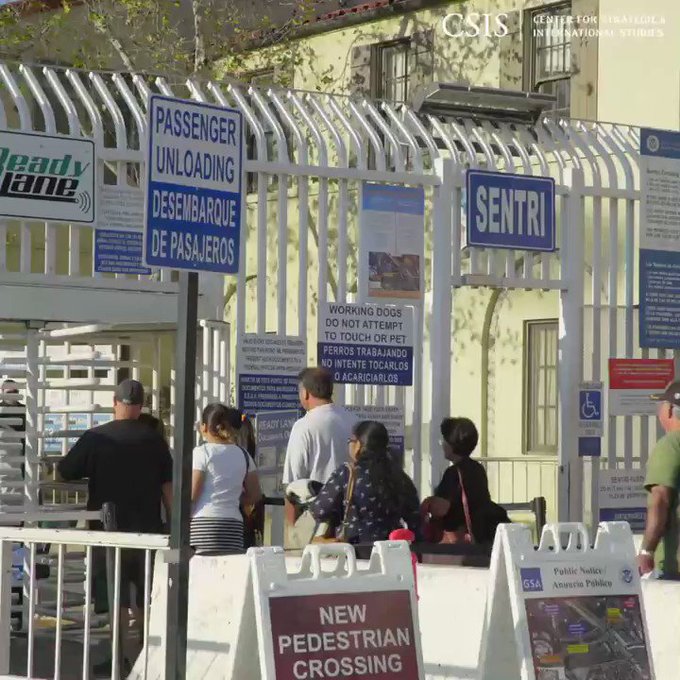
The COVID-19 crisis is profoundly changing global migration:
1. Migrant labor has ceased
2. Global inequality is increasing
3. Restrictions may become permanent
4. Forced migrants are unable to move
5. Global migration goes into the shadows
Learn more: http://cs.is/2UDx2YX
By Erol Yayboke
March 25, 2020
The COVID-19 pandemic has changed human mobility for those of us washing our hands vigorously and avoiding social contact. But in addition to these disruptions to daily life, the pandemic could be fundamentally changing the face of global migration in at least five key ways.
As I write this from a corner of my daughter’s room which has been converted into a makeshift home office, odds are you are also reading this from your home—if you are fortunate enough to have access to the internet at home and the option to work remotely. Schools and restaurants are closed. Airports and bus terminals are next. Only when people have stopped moving do we realize how much freedom of movement—the ability to visit a neighbor, to catch the train to work, to see a movie in the theater, or to fly across the world to see family—is a fundamental part of the human experience. Continue leyendo →
30 marzo, 2020
por Felipe Sahagún
Sin comentarios

The Hague Journal of Diplomacy has entered it’s 15th year of publication and we are celebrating by opening the best articles of the past years, one for each year, hand-picked by editors Jan Melissen and Paul Sharp.
Three sets of selected articles from the past volumes will be available for
free downloading during 2020, so bookmark this page to check free content!
Volume 1, No. 1 (2006)
Diplomacy’s Possible Futures
Alan K. Henrikson
Volume 2, No. 1 (2007)
Diplomatic Cultures: Comparing Russia and the West in Terms of a ‘Modern Model of Diplomacy’
Tatiana Zonova
Volume 3, No. 2 (2008)
The Emergence of International Public Opinion and the Origins of Public Diplomacy in Japan in the Inter-War Period
Tomoko Akami
Volume 4, No. 3 (2009)
‘The Summit is Dead. Long Live the European Council’: Britain and the Question of Regular Leaders’ Meetings in the European Community, 1973-1975
John Young
Volume 5, Nos. 1-2 (2010)
On the Normalization of Sub-State Diplomacy
Noé Cornago