Relaciones Internacionales – Comunicación Internacional

31 julio, 2019
por Felipe Sahagún
Sin comentarios

Abortion Law: Global Comparisons

Council on Foreign Relations✔@CFR_org

Abortion Law: Global Comparisons

A recent spate of state laws to restrict abortion services in the United States has reignited debate over the procedure. How does the United States’ regulation of abortion compare to the rest of the… cfr.org


31 julio, 2019
por Felipe Sahagún
Sin comentarios

Deepfake technology is changing fast — 5 resources to keep up

By 

June 27, 2019

The 17th-century philosopher Rene Descartes once imagined a demon that could make people experience a reality that wasn’t real. Nearly 400 years later, a user on social news platform Reddit conjured realistic pornographic videos featuring Hollywood actresses who weren’t really there.

The user’s handle: deepfake.

Since Vice first profiled that Redditor in late 2017, “deepfake” has come to mean a video that has been digitally manipulated so well that it may be difficult for the average viewer to tell it is fake.

Many deepfakes put someone in a situation that never happened, or show them saying something they never said. Here’s a video that appears to show late-night television host Matt Damon telling viewers he ran out of time for his last guest, Matt Damon:

…MORE


31 julio, 2019
por Felipe Sahagún
Sin comentarios

How do we use Journalist Resource free materials

Journalist's Resource

Can you tell good research from bad?

Dear readers,

Earlier this year, we asked for your feedback on how you use Journalist’s Resource‘s free materials and how we can help you do better work. Our main goal is to improve the quality of news coverage by helping journalists find and use peer-reviewed research and other forms of high-quality evidence.

Your responses to our annual survey offered important insights into what you need and the work we need to do. You highlighted multiple barriers that limit reporters’ ability to access, interpret and incorporate academic studies into their stories. You also shared a variety of other information — for example, how well you think you can tell good research from bad — that gave us great ideas for new tip sheets, research summaries and other materials. Take a look at our survey results, some of which might surprise you.

While you’re at it, please check out several new resources we think you’ll want to know about. This week, Chloe Reichel summarized research on how journalists’ jobs affect their mental health. A recent article by Clark Merrefield examines Reconstruction-era violence against black politicians. Clark also teamed up with a reporter from The Burlington Free Press in Vermont on a project on rural school closures.

We hope you’ll find these new materials useful. And remember that we always enjoy hearing from you, so please reach out at any time with questions, ideas and other feedback.

Sincerely,

Denise-Marie Ordway, managing editor of Journalist’s Resource

Your feedback: Our survey results

We surveyed reporters, journalism faculty and others in our audience to find out how we can help improve journalism. A few of the big takeaways: Some journalists have trouble recognizing flawed research and seldom mention academic findings in their stories. Your responses gave us ideas for new tip sheets, research roundups and training events.

THE RESULTS:

53% of journalists surveyed weren’t sure they could spot flawed research

LINK


31 julio, 2019
por Felipe Sahagún
Sin comentarios

Digital safety kit for journalists

The Committee to Protect Journalists has launched a new, updated Digital Safety Kit for journalists looking to better protect themselves, their sources, and their information. The kit, produced by CPJ’s Emergencies Response Team, combines six bite-sized safety notes on different topics in an accessible format that is easy to digest. 

Each note contains practical advice to help journalists navigate digital threats like phishing, and one for the specific scenario of crossing borders. 

In the ever-changing world of digital security, the new format will allow CPJ to expand the kit to reflect the latest information. The date of any update or detailed review will appear in the text. 

The kit is available in French, Spanish, and Russian and the text is licensed under Creative Commons (images are not covered). Journalists and media organizations are free to use and share the text of the kit under the terms of the license (CC BY-NC-ND 4.0).  Continue leyendo →

31 julio, 2019
por Felipe Sahagún
Sin comentarios

Robert Mueller’s report (Lawfare Podcast Series)

Last week, we released the first episode of a narrative audio documentary, The Report, which tells the story Robert S. Mueller lays out in his famous 448 page document. This week, Mueller testified before the House of Representatives in what many people hoped would be hearings that brought the document to life. Whatever role Mueller’s testimony may or may not have played in that regard, we are pleased to bring you Episode 2 of our effort to bring the Mueller Report into narrative form.

LINK 

RELATED ARTICLES


31 julio, 2019
por Felipe Sahagún
Sin comentarios

Novedades en la Red de Elcano (31 de julio 2019)

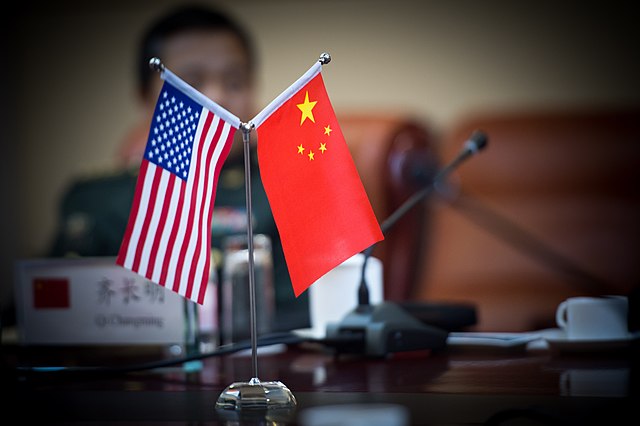
Banderas de EEUU y China. Foto: Sgt. Mikki Sprenkle (Wikimedia Commons / Dominio público)

Banderas de EEUU y China. Foto: Sgt. Mikki Sprenkle (Wikimedia Commons / Dominio público)

Real Instituto Elcano

Washington y Pekín se vuelven a sentar en la mesa de negociaciones con el objetivo de alcanzar un acuerdo que ponga fin a la guerra comercial. Liu He, viceprimer ministro chino y máxima autoridad en política económica, y Steven Mnuchin, secretario del Tesoro, y Robert Lighthizer, representante de Comercio, por parte estadounidense retoman las conversaciones en Shanghái tras haberse roto en mayo. No se esperan avances significativos.

Continue leyendo →