

Arancha Gonzalez✔@AranchaGlezLaya
¿Que en #España no hay mujeres economistas capaces de hablar d pensiones mercado laboral y déficits?@expansioncom#TantoXHacer@TradeExperettes @cristinagallach

5 mayo, 2019
por Felipe Sahagún
Sin comentarios
5 mayo, 2019
por Felipe Sahagún
Sin comentarios

4 mayo, 2019
por Felipe Sahagún
Sin comentarios


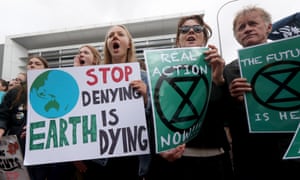
Students protest in Adelaide. UN experts warned people alive today are at risk unless urgent action is taken. Photograph: Kelly Barnes/EPA- v @guardian
The world’s leading scientists will warn the planet’s life-support systems are approaching a danger zone for humanity when they release the results of the most comprehensive study of life on Earth ever undertaken.
Up to 1m species are at risk of annihilation, many within decades, according to a leaked draft of the global assessment report, which has been compiled over three years by the UN’s leading research body on nature.
The 1,800-page study will show people living today, as well as wildlife and future generations, are at risk unless urgent action is taken to reverse the loss of plants, insects and other creatures on which humanity depends for food, pollination, clean water and a stable climate. Continue leyendo →
3 mayo, 2019
por Felipe Sahagún
Sin comentarios
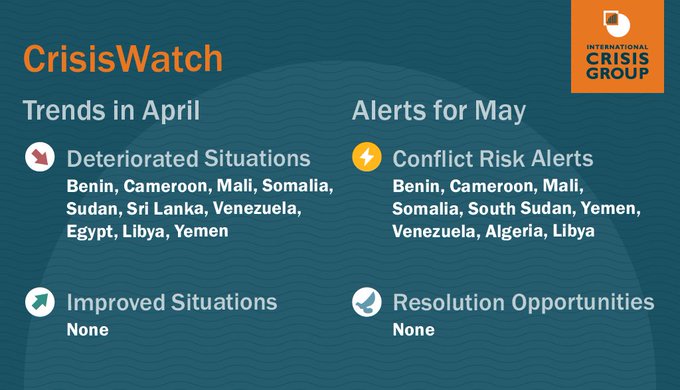

Crisis Group@CrisisGroup

3 mayo, 2019
por Felipe Sahagún
Sin comentarios
Top candidates from the EU’s biggest political parties locked horns on Thursday for their first joint debate in the race to become the next European Commission president. The EPP’s Manfred Weber, socialist candidate Frans Timmermans, Ska Keller for the greens and Guy Verhofstadt of the liberals met in Florence to cross verbal swords on everything from environmental taxes to European armies. (You can watch the debate here.) (May 2, 2019 @FT)
No one knows if any of them will in fact claim the prize of succeeding Jean-Claude Juncker as the head of the EU’s executive arm in Brussels. The concept of Spitzenkandidaten — top candidates picked by pan-EU parties — has tepid backing from national governments, whose leaders are legally in the driving seat when it comes to nominating the commission’s leadership.
But the debate, jointly hosted by the FT and the European University Institute, laid bare the priorities of the four political families from which the next majority coalition in the European Parliament is almost certain to be drawn.
Polls indicate that it could require all four of the groups working together to regularly muster a majority in parliament after elections where the main centre-right and centre-left parties will lose ground and Eurosceptics will again perform well.
Related
3 mayo, 2019
por Felipe Sahagún
Sin comentarios

