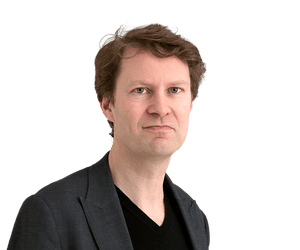
Guardian foreign correspondent Luke Harding on holding power to account and challenging the rise of fake news

15 octubre, 2018
por Felipe Sahagún
Sin comentarios
Guardian foreign correspondent Luke Harding on holding power to account and challenging the rise of fake news
15 octubre, 2018
por Felipe Sahagún
Sin comentarios

Les temps ont changé depuis l’ « invention » du métier de correspondant de guerre par l’envoyé spécial du Times en Crimée en 1854. Les nouvelles technologies et les réseaux sociaux ont révolutionné l’écosystème médiatique. Pourtant, pour le journaliste, l’essence de sa mission reste la même : aller sur le terrain, au plus près des lignes de front; vérifier, valider ; contester la censure et contrer la propagande; ouvrir le grand angle sur le contexte social, culturel, géopolitique et historique des conflits ; « dire la vérité au pouvoir » et prendre, s’il le faut, l’opinion, souvent chauvine et suiviste, à rebrousse-poil.
L’histoire du journalisme de guerre offre des exemples exceptionnels de courage et d’excellence, d’erreurs et de dérives aussi. Ce livre dépasse le portrait complice des bang bang clubs pour soulever les grandes questions auxquelles ces « baroudeurs de l’info » ne peuvent se soustraire : comment préserver son indépendance alors que tout pousse au parti pris ? Comment gérer la peur et les risques? Comment dire l’horreur? Comment oser aller à contre-courant de l’actualité, pour prévenir des nuages qui s’accumulent, couvrir les « conflits oubliés » du bout du monde, revenir sur les guerres passées ?
Jean-Paul Marthoz a couvert l’Amérique centrale en guerre, le Pérou à l’heure du Sentier lumineux, la Colombie lors des croisades contre la drogue. Il a pris part à des missions lors des années de plomb en Algérie, en Afrique du Sud, en Turquie. Observateur du monde des médias, il se fait ici l’historien de cette « étrange cohorte d’individus » qui vont là où d’autres cherchent à fuir.


Athens 1944: Britain’s dirty secret
When 28 civilians were killed in Athens, it wasn’t the Nazis who were to blame, it was the British. Ed Vulliamy and Helena Smith reveal how Churchill’s shameful decision to turn on the partisans who.. theguardian.com
15 octubre, 2018
por Felipe Sahagún
Sin comentarios
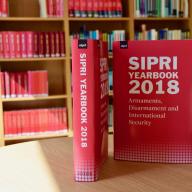
SIPRI today launches the findings of SIPRI Yearbook 2018, which assesses the current state of armaments, disarmament and international security. ()
15 octubre, 2018
por Felipe Sahagún
Sin comentarios
15 October 2018
More journalists have been killed in Afghanistan this year than in any other country.
And although the race to be the first at the scene remains competitive, the pressure is on media organisations to do more to ensure their reporters stay safe, reports the BBC’s Najiba Feroz.
On 5 September, Tolo News journalist Samim Faramarz was reporting live on a suicide attack in the capital, Kabul. A few minutes later, a second attack at the scene killed him and his cameraman.
A car bomber had targeted emergency services responding to the first incident. In total, 26 people died and 70 were injured, including five more journalists.
Twenty-six-year-old Aman Farhang, who was covering the news for 1TV, was among them.
«I was close to the scene of the first explosion and was trying to speak to witnesses,» he says. «Suddenly I heard a loud noise and I collapsed. I tried to stand up but couldn’t and saw lots of people struggling to move. Next, I found myself at the hospital.»
This was the second attack in four months using the same tactic – a follow-up blast that targets first responders, journalists among them.
On 30 April in Kabul, some 26 people, including nine journalists, were killed in twin blasts. One of those who died was renowned photographer, Shah Marai.
Related
Kabul bombings: Journalists targeted in blast which killed 26
BBC reporter’s terrifying days amid Taliban assault on Ghazni
15 octubre, 2018
por Felipe Sahagún
Sin comentarios

With fewer than 200 days to Brexit in March 2019, one question is never far from the headlines – how do you solve a problem like the Irish border?
The UK and the EU both want to avoid a «hard border» – physical checks or infrastructure between Northern Ireland and Ireland – but cannot agree how.
A key part of the negotiation is the controversial border «backstop».
Related
Brexit talks hit ‘real problem’ over Northern Ireland border
15 octubre, 2018
por Felipe Sahagún
Sin comentarios


Luis de la Corte Ibáñez, profesor de Psicología Social en la UAM y máximo experto en el estudio del yihadismo internacional, repasa algunos de sus aspectos fundamentales: naturaleza, origen, trayec…canal.uned.es