

Humans could become extinct by the year 2100 due to malicious use of AI or nuclear conflict, according to a new global risk assessment.
They top a list of 17 major threats to human health over the next 75 years, which also includes cuts to aid spending by wealthy countries, the climate crisis and childhood malnutrition.
The experts behind The Lancet Commission on 21st Century Global Threats to Health said all the threats interact, meaning they must be addressed together – but stressed that there was “a realistic route to act” on each.
“Decisions made by leaders today will shape the health and wellbeing of the next generation,” said Prof Christopher Murray, commission co-chair and the director of the Institute for Health Metrics and Evaluation, University of Washington.
Related
Once secret, France’s practice nuclear raids send a message to Putin (POLITICO)
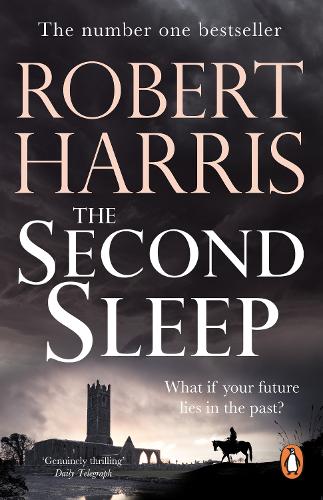 ‘Wonderful, compulsive reading. Buy it tomorrow. Tonight if possible.’ STEPHEN KING’
‘A thoroughly absorbing, page-turning narrative.’ SUNDAY TIMES
‘Genuinely thrilling.’ DAILY TELEGRAPH
Dusk is gathering as a young priest, Christopher Fairfax, rides across a silent land.
He must arrive at a remote village in the wilds of Exmoor before night falls. He’s lost and he’s becoming anxious as he slowly picks his way across a countryside strewn with the ancient artefacts of a civilisation that seems to have ended in cataclysm.
What Fairfax cannot know is that, in the days and weeks to come, everything he believes in will be tested as he uncovers a secret that is as dangerous as it is terrifying . . .
‘[Harris] takes us on a thrilling ride while serving up serious food for thought.’ SUNDAY EXPRESS
‘A truly surprising future-history thriller. Fabulous, really.’ EVENING STANDARD
‘The book’s real power lies in its between-the-lines warning that our embrace of the internet represents some kind of sleepwalk into oblivion. It’s a provocative, tub-thumping sci-fi of which H. G. Wells might have been proud.’ DAILY MAIL
‘Harris’ latest work intelligently warps historical fiction and tackles issues of religion, science and the apocalypse in the process. As he flexes his imagination, you will be left pondering as often as you are page-turning.’ HERALD
‘A brilliantly imaginative thriller’ READER’S DIGEST
Robert Harris, Sunday Times bestselling author, May 2024
Host Seth Jones sits down with General Sir Nick Carter, who served as Chief of the Defence Staff and Chief of the General Staff in the UK military, for an assessment of the changing character of warfare. Drawing on decades of military leadership and firsthand experience commanding U.S. forces in Afghanistan, Carter offers insight into the operational lessons emerging from the wars in Iran and Ukraine, the risks of strategic hubris, the evolving role of drones and autonomy on the battlefield, and the growing danger of escalation toward a broader, multi-theater conflict.
The problem with telling people the world is ending (Guardian)
For Clues About How A.I. Will Change Work, Look to the Past (NYTimes, Oct 22, 2026)
Nearly 200 Economists and Tech Leaders Warn of A.I. Threats NYTimes, July 13, 2026)