Relaciones Internacionales – Comunicación Internacional

18 julio, 2017
por Felipe Sahagún
Sin comentarios

More than 20 million risk starving to death (W Post)

More than 20 million people are at risk of starving to death. Will the world step up?

 July 17 at 7:23 PM

MORE THAN 20 million people in four countries are at risk of starvation in the coming months, in what the United Nations has called the worst humanitarian crisis since World War II. But the global response to the emergency has been lacking, both from governments and from private citizens. As of Monday, the U.N. Office for the Coordination of Humanitarian Affairs was reporting that only 43 percent of the $6.27 billion needed to head off famine this year in Yemen, Somalia, South Sudan and Nigeria had been raised. A poll by the International Rescue Committee showed that 85 percent of Americans are largely uninformed about the food shortages. The IRC calls it “likely the least reported but most important major issue of our time.”

Accounts by the United Nations, the U.S. government and private aid groups more than back up that claim. More than half the populations of Somalia and South Sudan are in need of emergency food assistance, according to the U.S. Agency for International Development. Civil wars in those countries have combined with meager spring rains to drastically reduce food supplies. In Nigeria, some 5 million people are at risk in the northeastern provinces where the terrorist group Boko Haram is active.

The most harrowing reports come from Yemen, where the United Nations saysa staggering 20 million people need humanitarian aid. In addition to millions who lack food, more than 330,000 people have been afflicted by a cholera epidemic since late April, with one person dying nearly every hour on average. Donors have supplied less than 40 percent of the aid Yemen needs to prevent starvation, and officials have recently been forced to divert some of that assistance to fight cholera. In all four countries, children are disproportionately affected: Aid groups say 1.4 million severely malnourished children could die in the next few months if more help is not forthcoming.

…more


18 julio, 2017
por Felipe Sahagún
Sin comentarios

The Future of News: Journalism in a Post-Truth Era

Published on Feb 1, 2017

Tuesday, January 31, 4–6 pm., Sanders Theatre, Harvard University, Cambridge, Mass.

Co-sponsored by the Office of the President, the Nieman Foundation for Journalism, and the Shorenstein Center on Media, Politics, and Public Policy

Welcoming remarks Drew Gilpin Faust
President and Lincoln Professor of History, Harvard University

Remarks William Kristol
Editor at large, The Weekly Standard

Story Kathleen Kingsbury
Managing editor, Digital, The Boston Globe

Conversation
Ann Marie Lipinski, Moderator
Curator, Nieman Foundation for Journalism

Gerard Baker
Editor in chief, The Wall Street Journal

Lydia Polgreen
Editor in chief, The Huffington Post

David Leonhardt
Op-ed columnist, The New York Times

Story Lolly Bowean
Reporter, Chicago Tribune

Remarks Brian Stelter
Senior media correspondent, CNN


18 julio, 2017
por Felipe Sahagún
Sin comentarios

A World in Disarray (Richard Haass)

The Aspen Institute (Streamed live on Feb 21, 2017)

Council on Foreign Relations President Richard Haass discusses his recent book, A World in Disarray: American Foreign Policy and the Crisis of the Old Order. The discussion was moderated by Aspen Institute President and CEO Walter Isaacson as part of the Alma and Joseph Gildenhorn Book Series.

Dr. Richard Haass is president of the non-partisan Council on Foreign Relations. He served as the senior Middle East advisor to President George H.W. Bush and as Director of the Policy Planning Staff under Secretary of State Colin Powell. A recipient of the Presidential Citizens Medal, the State Department’s Distinguished Honor Award, and the Tipperary International Peace Award, he is also the author or editor of twelve books on foreign policy and international relations. Dr. Haass lives in New York.


18 julio, 2017
por Felipe Sahagún
Sin comentarios

Spain and the IMF: 2017 concluding statement

Spain: IMF Staff Concluding Statement of the 2017 Article IV Mission

July 18, 2017

Spain’s economic recovery remains strong, with consumption, investment, and net exports all contributing to a more balanced growth pattern. A shift in resources toward Spain’s competitive export sector, with the services sector creating most new jobs, has played an important part in the rebound. Banking sector balance sheets are stronger, private sector debt is coming down, and credit availability is improving. As the recovery is maturing, it is time to tackle the remaining vulnerabilities related to elevated public debt and complete the still-ongoing post-crisis banking sector adjustment. At the same time, reducing structural unemployment and fostering productivity growth remain priorities. Without farther determined progress on structural reforms and rebuilding of fiscal buffers, the economy would remain vulnerable to shocks and risk leaving some segments of the population behind. Continue leyendo →

17 julio, 2017
por Felipe Sahagún
Sin comentarios

The war in Iraq

The Iraq War –The Documentary  (BBC) 

Country Profile (BBC)

Iraq Headlines (Reuters)

Afghanistan, Iraq, Syria, ISIS, and Iran: Is «Half» a Strategy Better than None? (CSIS)

After ISIS: Creating Strategic Stability in Iraq (CSIS)

Afghanistan, Iraq, Syria, ISIS, and Iran: Is «Half» a Strategy Better than None? (CSIS)

The Middle East 2017 (Brookings)

Tony Blair: a pretty straight sort of guy on the Iraq war? (Guardian)

Iraq profile – timeline (BBC News)

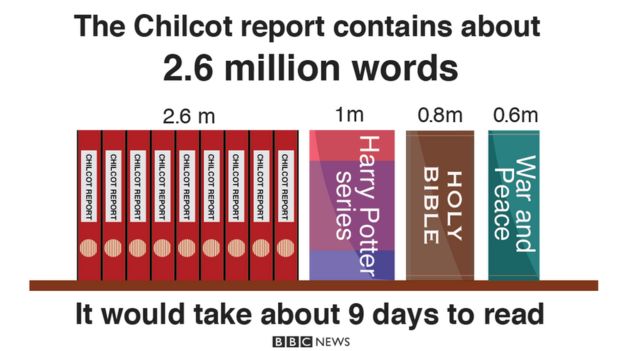
Chilcot Report (BBC)

Iraq and Syria face further instability as Isis influence wanes (FTimes)

Iraq in The New York Times 

Iraq in Stratfor

Stratfor forecasts

Endgame in Iraq (Foreign Affairs) Timeline

War Against Islamic State in Iraq (CFR Global Conflict Tracker)

Five facts on Iraq’s future  (Live Stories)

Future of Iraq Task Force (The Atlantic Council, May 2017)

Iraq’s population at risk (Global Center for the Responsibility to Protect) 15 July 2017 Issue 34 

Iraq (UNHCR)

3-year Iraq conflict drives internal displacement to ‘nearly unprecedented’ level (NRC and IDMC)