
Francis Scarr@francis_scarr
On day 555 of the war in Ukraine, here’s a reminder of some of the complacency voiced in Russia (and Belarus) prior to the invasion

1 septiembre, 2023
por Felipe Sahagún
Sin comentarios
1 septiembre, 2023
por Felipe Sahagún
Sin comentarios
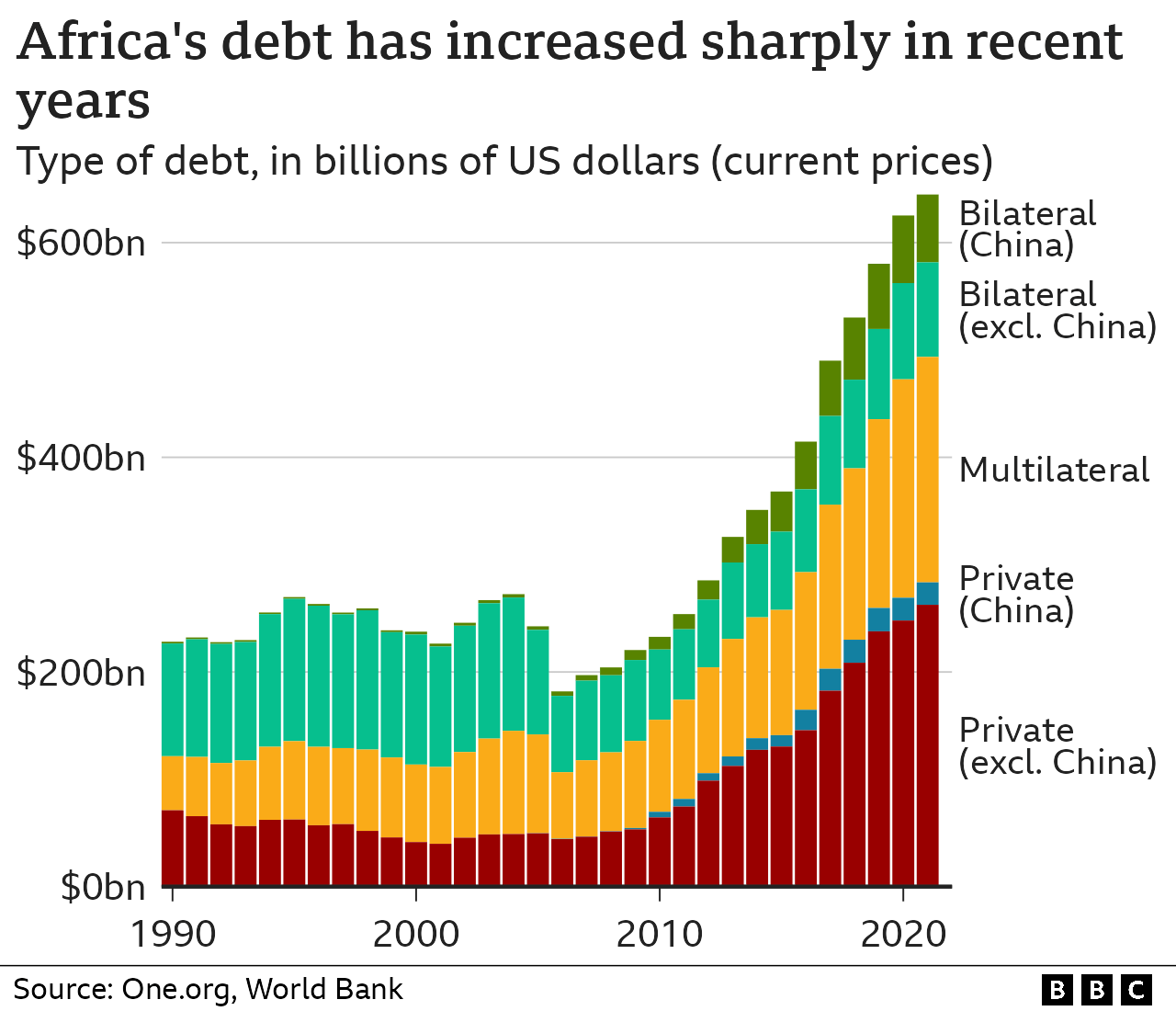
Friends of a doctor who died in Nigeria because the lift in her hospital accommodation fell nine floors with her inside are not surprised by a new study that reveals the country spends twice as much money on debt repayments as on health and education combined.
The major new report from the One Campaign, an anti-poverty group, focuses on the staggering amount of private loans that African countries have to service, often to the detriment of development.
It is not possible to draw a direct causal link between Nigeria’s debt crisis and the death last month of Dr Vwaere Diaso, but every dollar spent servicing debt is one that cannot go into vital infrastructure.
Dr Diaso was just two weeks away from finishing her training at Lagos General Hospital when she died.
1 septiembre, 2023
por Felipe Sahagún
Sin comentarios

By Asociación de la Prensa de Madrid
Conducido por José Antonio Piñero, sus protagonistas son Luis M.ª Anson, José María Carrascal, Juan Luis Cebrián, Iñaki Gabilondo, Luis del Olmo, Fernando Ónega, Victoria Prego, José María García, Carmen Sarmiento, Rosa M.ª Calaf, Maruja Torres, Rosa Montero o Pedro J. Ramírez, entre otros.
29 agosto, 2023
por Felipe Sahagún
Sin comentarios

If you are interested in #China and you would like to have access to interesting data, please check out our China Economic Data provided by
24 agosto, 2023
por Felipe Sahagún
Sin comentarios

Raül Gallego és videoperiodista i director de documentals. Ha narrat les principals guerres, cops d’estat, desastres naturals, revoltes i conflictes socials dels últims 20 anys. Ha treballat per a TVE, TV3, The Associated Press, Al-Jazeera, The Washington Post, South China Morning o amb l’artista i dissident xinès Ai Weiwei. Pels seus reportages i documentals ha estat nominat als Emmys i ha rebut nombrosos premis internacionals, com l’Edward Murrow Award, el Royal Television Society, el Miguel Gil o el FotoPres.
Coincidint amb el 20è aniversari de la mort de José Couso, Raül Gallego ens parla d’aquell fatídic episodi que ell va viure en primera persona. Estava allotjat amb altres reporters a l’Hotel Palestina de Bagdad quan un projectil d’un tanc de l’exèrcit americà va disparar contra l’hotel. El càmera de l’agència Reuters, l’ucraïnès Taras Protsyuk, va morir a l’acte, i José Couso, càmera de Telecinco, va morir unes hores després en un hospital de Bagdad. Amb Gallego parlem d’aquest tràgic assassinat i dels perills, els riscos i les conseqüències de l’ofici de reporter de guerra que porta fent arreu del món i havent viscut tres anys al Pròxim Orient i 12 a l’Àsia.
Related


19 agosto, 2023
por Felipe Sahagún
Sin comentarios

Ascending Order: Rising Powers and the Politics of Status in International Institutions
The most dangerous moments in international affairs occur when rising states emerge to challenge the dominance of a reigning great power. In this excellent study, Mukherjee shows that these power transitions do not inevitably culminate in great-power conflict or hegemonic war. He argues that what drives the choice of rising states to either cooperate or seek to overturn the existing order hinges on perceptions of status. As the United States grew powerful in the late nineteenth century, Washington rejected maritime and commercial agreements that relegated it to the status of a secondary power while embracing international law that gave it equal standing among Atlantic powers. By contrast, imperial Japan’s struggles to secure peer status alongside Western great powers, coupled with the U.S. ban on Japanese immigration, turned Tokyo against the existing order, setting the stage for the Pacific War. Mukherjee also looks at India’s post-independence nuclear diplomacy, attributing its refusal to join the 1968 nonproliferation treaty to the treaty’s failure to accord New Delhi symbolic equality as a great power. Looking at China today, the book argues that Beijing is also aggressively engaged in the search for status, driven by a sense that Western powers have not granted it the recognition it deserves.
