Related

19 abril, 2026
por Felipe Sahagún
Sin comentarios
19 abril, 2026
por Felipe Sahagún
Sin comentarios
En 2019, el profesor del MIT, Patrick Winston dió una conferencia magistral de 1 hora llamada «Cómo hablar».
Tiene más de 18 millones de vistas por una razón.
Sus conceptos clave:
– Tus ideas son como tus hijos
– La regla de los 5 minutos para conferencias de trabajo
– Por qué… pic.twitter.com/jlZVb1dkkE— hormonemoon (@hormonemoon) April 18, 2026
19 abril, 2026
por Felipe Sahagún
Sin comentarios

NEW: Islamic Revolutionary Guards Corps (IRGC) Commander Major General Ahmad Vahidi and members of his inner circle have likely secured at least temporary control over not only Iran’s military response in this conflict but also Iran’s negotiating position and approach within the past 48 hours. The IRGC Navy attacked several commercial vessels on April 18 and declared that no vessel of “any type or nationality” is permitted passage through the strait, a reversal of Iranian Foreign Affairs Minister Abbas Araghchi’s announcement on April 17 that the strait was “completely open” to commercial traffic. IRGC-affiliated media also announced on April 18 that Iran has not agreed to participate in another round of negotiations with the United States due to “excessive” US demands.
Related
BCA’s Iran Conflict Daily Dashboard
19 abril, 2026
por Felipe Sahagún
Sin comentarios

Robert A. Pape @ProfessorPape · 15h US is preparing for major escalation, engaging US troops directly with ships with Iran’s oil for the first time. We are at a fork in the road, either US backs down and Iran emerges as the 4th center of world power in the near term — or, escalation to prevent that from happening. Trump is heading to escalation https://wsj.com/world/middle-east/u-s-military-prepares-to-board-iran-linked-ships-in-coming-days-officials-say-4dc0a718?st=spsWzi via @WSJ
A fragile ceasefire between the US and Iran holds – but the information war intensifies. At the centre: the Strait of Hormuz, where competing US and Iranian narratives have collided.
During any truce, even when the bombs stop falling, the information war goes on. Moments like this test journalism. Because the job is not just to report on the messaging coming from all sides – but to decode and debunk it if necessary.
Contributors:
Abeer Al Najjar – Professor of Media & Journalism, American University of Sharjah
Andrew Arsan – Professor of Arab & Global History, University of Cambridge
Alireza Doostdar – Associate Professor of Islamic Studies, University of Chicago
Nazila Fathi – Former Tehran Correspondent, New York Times
18 abril, 2026
por Felipe Sahagún
Sin comentarios
18 abril, 2026
por Felipe Sahagún
Sin comentarios

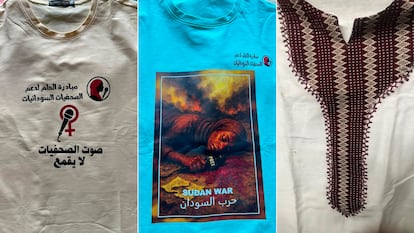
BBC. The communications blackout felt ‘suffocating’, says Mohamed, as he was unable to get out news of what was happening in El-Fasher. Credit: Mohamed Suleiman
While trapped in the besieged city of El-Fasher for 18 months, journalist and academic Mohamed Suleiman was unable to convey fully the horrors he was witnessing, call for help or warn others of dangers due to a communications blackout. After the city fell in October, he made his way to the relative safety of Port Sudan, where for the first time in almost three years he was able to get signal on his mobile phone, only to be inundated with an inventory of loss.
Related