Relaciones Internacionales – Comunicación Internacional

19 abril, 2022
por Felipe Sahagún
Sin comentarios

The New Cold War: Nuclear Weapons Are Back (ART)

LINK TO VIDEO

After the collapse of the USSR, thousands of nuclear weapons were dismantled in Europe. The threat of the Cold War seemed to be over as nuclear bunkers were converted into rave-party venues. But today the arms race is back. Nuclear powers are rebuilding their arsenal and with the Russian invasion of Ukraine, fear of nuclear fallout has returned. This documentary takes stock of the current global nuclear arsenal and attempts to estimate the current level of risk.

19 abril, 2022
por Felipe Sahagún
Sin comentarios

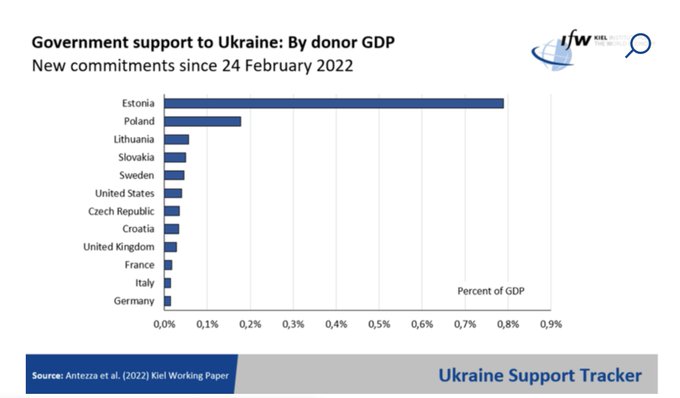
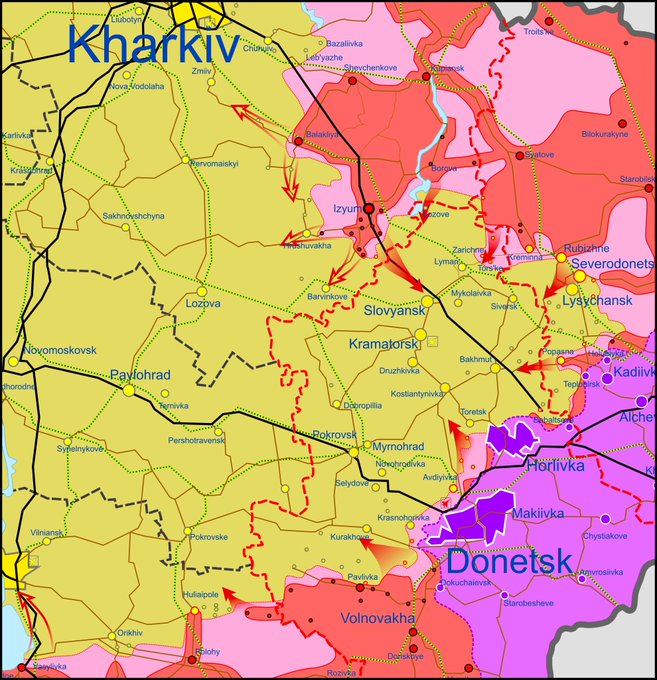
Ayuda a Ucrania y mapa de combates (19 de abril)


Imagen

The U.S. has provided the equivalent of 7.6 billion euros ($8.2 billion) to Ukraine since the Russian invasion, making it the country’s biggest supporter, according to the Kiel Institute for the World Economy (Bloomeberg)

Imagen

Imagen

Franz-Stefan Gady@HoansSolo

18 abril, 2022
por Felipe Sahagún
Sin comentarios

France’s presidential election and the war in Ukraine (Ian Bremmer)

Amid the war in Ukraine, the world has its eye on the French presidential election, which may have a big impact on the geopolitical landscape of Europe and Russia’s war. Ian Bremmer, president and founder of Eurasia Group, joined CBS News’ Robert Costa on «Red and Blue» to discuss.

CBS News, April 15, 2022

18 abril, 2022
por Felipe Sahagún
Sin comentarios

Who will intervene in the world’s hot spots? (WPR, APRIL 8, 2022)

As conflicts and crises persist around the world, there is growing uncertainty about how—or if—they will be resolved. The international order is fraying, generating uncertainty about who will intervene and how these interventions might be funded.

There are interminable conflicts, like the situations in Syria, Yemen and Afghanistan, which have produced years of violence, countless thousands of deaths and even more refugees. Then there are the emerging hot spots, including northern Mozambique and the China-India frontier, and any number of potential flashpoints, like the Eastern Mediterranean. Even in situations where there is some tenuous hope of reconciliation, there is also uncertainty—such as South Sudan, where a 2018 peace deal that put an end to years of civil war is for now holding, even as widespread violence continues to plague the country. And the Russian invasion of Ukraine has now brought high-intensity, interstate warfare to the heart of Europe for the first time since the end of World War II.

At the same time, the nature of terrorism is also changing. After a period of recalibration following the loss of its caliphate in western Iraq and Syria and the subsequent death of its leader, Abu Bakr al-Baghdadi, the Islamic State has once again become more active in the two countries, even as it shifts its attention to new theaters of operation, like the Sahel, Afghanistan and Southeast Asia. In so doing, the group and its affiliates are taking advantage of dwindling international interest in mounting the kinds of counterinsurgency campaigns needed to meet these new challenges. And a recent spate of seemingly lone-wolf attacks in Europe show that the threat terrorism poses there has faded, but not disappeared.

These developments come at a time when Western powers have shown a flagging interest in conflict intervention, more broadly. The deteriorating security situation in the Sahel, a region that has been battered by attacks from Islamist groups and fighting among local militias, is one of the few conflicts to rouse European efforts to restore stability—and prevent a potential surge of migrants. But even there, European leaders have stopped short of backing the kind of large-scale military engagement required to turn back the militant groups, and they are now making plans to wind down their involvement, which has failed to accomplish any of its stated goals.

U.N. peacekeeping operations, which might traditionally have played a role in mitigating these conflicts, are in need of significant reforms. Sexual abuse scandals and a mounting reputation for becoming ensnared in difficult, unwieldy missions in places like the Democratic Republic of Congo and South Sudan have curbed the global appetite for peacekeepers. Now funding constraints due to the economic fallout of the coronavirus pandemic could further jeopardize the U.N.’s peacekeeping capabilities. The resulting vacuum has opened up opportunities for regional organizations, including the African Union, to fill the gaps, both in terms of stemming conflict and responding to disasters. But it is not yet clear if they will.

All of this is happening against a backdrop of proliferating humanitarian emergencies due to conflict and natural disasters. Persistent fighting in eastern Congo hampered the response to the Ebola outbreak in the region and continues to slow humanitarian efforts. Meanwhile, Yemen is entering the fifth year of a cholera outbreak that has already killed nearly 4,000 people. Refugee numbers are swelling, even as climate change and the coronavirus pandemic are set to generate new crises, while further stretching the scant resources available for addressing the existing ones

WPR has covered the world’s conflicts and crises in detail and continues to examine key questions about how they will evolve. How will the war in Ukraine affect efforts to intervene in existing conflicts and prevent emerging ones? How will persisent conflicts in Syria, Yemen and the Sahel be resolved, and can more humanitarian crises be averted while the fighting lasts? As the effects of climate change accelerate, will the world address the humanitarian crises it causes? Below are some of the highlights of WPR’s coverage.

…MORE

Related

Conflict prevention: Taming the dogs of war (Chatham House, April 1, 2022)


18 abril, 2022
por Felipe Sahagún
Sin comentarios

Spain falls into line with Morocco on the Western Sahara ( I Cembrero)

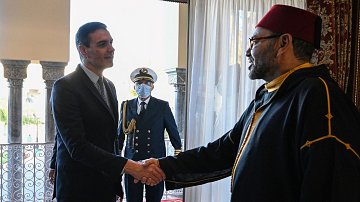
Rabat, 7 April 2022. Spanish Prime Minister Pedro Sánchez on official visit to Morocco welcomed by King Mohamed VI Borja Puig de la Bellacasa/La Moncloa/AFP Translated from French by Noël Burch. In a letter written in French to King Mohamed VI dated

Rabat has won the day. After a fifteen-month crisis with Madrid, Premier Pedro Sanchez has finally approved the Moroccan plan for the autonomy of Western Sahara. The idea is to put an end to the conflict without resorting to the self-determination referendum demanded by the Polisario Front with the backing of Algeria.

15 APRIL 2022

In a letter written in French to King Mohamed VI dated 14 March 2022, Spanish Premier Pedro Sanchez declares that “Spain considers the autonomy initiative undertaken by Morocco to be the most serious, realistic and credible basis for resolving the conflict” over Western Sahara. The Spanish people, including the members of his cabinet, learned of this new position four days later, when the Moroccan King released that letter. With it, Sanchez goes a bit further than France and Germany. The French Foreign Ministry has described the Moroccan plan as “a basis” and not as “the most serious basis “on which to hold”serious and credible talks». The nuance is an important one. Among Western democracies, only the United States have sided firmly with Morocco when they recognised, on 10 December 2020, its sovereignty over Western Sahara. Continue leyendo →

18 abril, 2022
por Felipe Sahagún
Sin comentarios

The Military Situation In Ukraine (By Jacques Baud / French Intelligence Research Center)

Petr-Krivonogov-Capitulation

Petr-Krivonogov-Capitulation. 1946

By Jacques Baud French Intelligence Research Center Jacques Baud

His long essay first appeared (in French) at the respected Centre Français de Recherche sur le Renseignement. A literal translation appeared in The Postal (April 1, 2022). 

Jacques Baud is a former colonel of the General Staff, ex-member of the Swiss strategic intelligence, specialist on Eastern countries. He was trained in the American and British intelligence services. He has served as Policy Chief for United Nations Peace Operations. As a UN expert on rule of law and security institutions, he designed and led the first multidimensional UN intelligence unit in the Sudan. He has worked for the African Union and was for 5 years responsible for the fight, at NATO, against the proliferation of small arms. He was involved in discussions with the highest Russian military and intelligence officials just after the fall of the USSR. Within NATO, he followed the 2014 Ukrainian crisis and later participated in programs to assist the Ukraine. He is the author of several books on intelligence, war and terrorism, in particular Le Détournement published by SIGEST, Gouverner par les fake news, L’affaire Navalny. His latest book is Poutine, maître du jeu? published by Max Milo.

Part One: The Road To War

For years, from Mali to Afghanistan, I have worked for peace and risked my life for it. It is therefore not a question of justifying war, but of understanding what led us to it. I notice that the “experts” who take turns on television analyze the situation on the basis of dubious information, most often hypotheses erected as facts—and then we no longer manage to understand what is happening. This is how panics are created. Continue leyendo →