Relaciones Internacionales – Comunicación Internacional

16 abril, 2022
por Felipe Sahagún
Sin comentarios

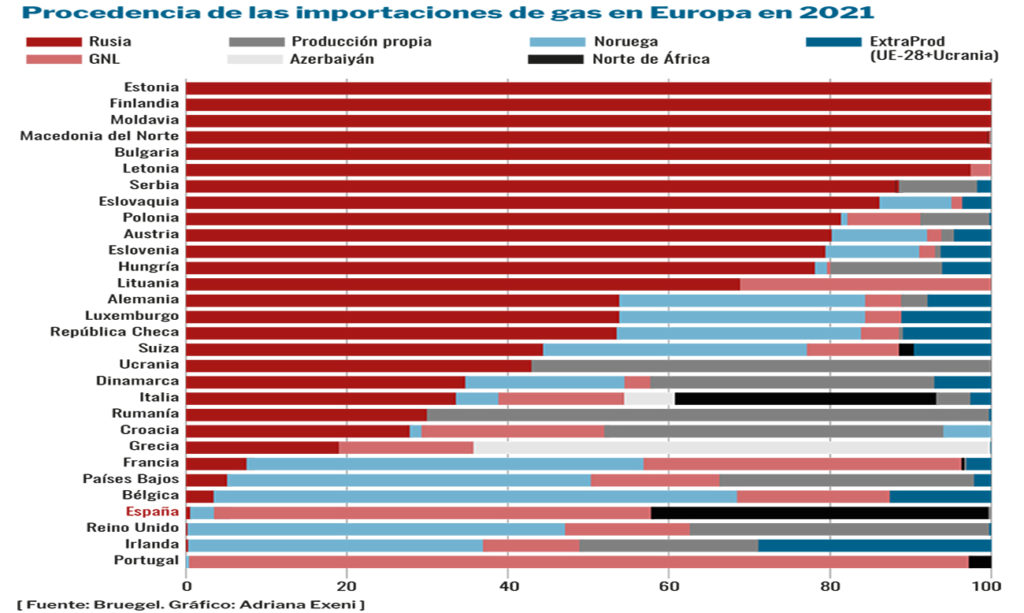
Sobrevivir sin el gas ruso (Política Exterior)

La vida es posible sin el gas de Rusia, pero obligaría a soportar un gran episodio inflacionista, así como el riesgo de cortes permanentes en el suministro. ¿Asumirían estas consecuencias países con el gas garantizado como España para ayudar a sus socios?

He aquí algunas interesantes declaraciones de altos cargos políticos en 2014 cuando Rusia se anexionó la península de Crimea, parte del territorio de Ucrania. Sirva a modo de contexto, que Estados Unidos y Europa impulsaron una serie de sanciones a Rusia, pero en ningún momento afectaron a la importación de gas y de petróleo porque la dependencia energética de Moscú era muy elevada. El entonces presidente de EEUU, Barack Obama, alertaba a los gobiernos del continente: “Europa tiene que hacer mejor uso de sus recursos naturales para no depender de nadie”.

Los presidentes europeos parecían tomar nota. José Manuel Durão Barroso, en ese momento presidente de la Comisión Europea decía: “Las discusiones sobre Ucrania también han reflejado la importancia de tener una auténtica y sólida política energética europea”. El entonces primer ministro de Reino Unido, David Cameron, comentaba: “Si algo positivo podemos sacar de esta situación es…

…MORE


16 abril, 2022
por Felipe Sahagún
Sin comentarios

The war in Ukraine and the global food crisis (The Chicago Council…)

Imagen

Chicago Council on Global Affairs


VIDEO

Distinguished Fellow Ertharin Cousin, former head of the UN World Food Programme, explains what happens when the Russia-Ukraine war puts pressure on the global food supply chain. “This is just a tipping point of challenges that had already begun,” she tells TVO’s Steve Paikin. “Without assistance, there will be famines.” 

April 8, 2022

Related

The food crisis is what happens when global chains collapse. We might need to get used to it –

El hambre provocada deliberadamente como arma de guerra.- Blanca Palacián de Inza

Delivering to deserts: New data reveals the geography of digital access to food in the U.S. (Brookings)

The banks collapsed in 2008 – and our food system is about to do the same


15 abril, 2022
por Felipe Sahagún
Sin comentarios

What is globalization? (Peterson Inst)

Peterson Institute for International Economics logo

and How Has the Global Economy Shaped the United States?

After centuries of technological progress and advances in international cooperation, the world is more connected than ever. But how much has the rise of trade and the modern global economy helped or hurt American businesses, workers, and consumers? Here is a basic guide to the economic side of this broad and much debated topic, drawn from current research.

Globalization is the word used to describe the growing interdependence of the world’s economies, cultures, and populations, brought about by cross-border trade in goods and services, technology, and flows of investment, people, and information. Countries have built economic partnerships to facilitate these movements over many centuries. But the term gained popularity after the Cold War in the early 1990s, as these cooperative arrangements shaped modern everyday life. This guide uses the term more narrowly to refer to international trade and some of the investment flows among advanced economies, mostly focusing on the United States.

The wide-ranging effects of globalization are complex and politically charged. As with major technological advances, globalization benefits society as a whole, while harming certain groups. Understanding the relative costs and benefits can pave the way for alleviating problems while sustaining the wider payoffs.

…MORE


15 abril, 2022
por Felipe Sahagún
Sin comentarios

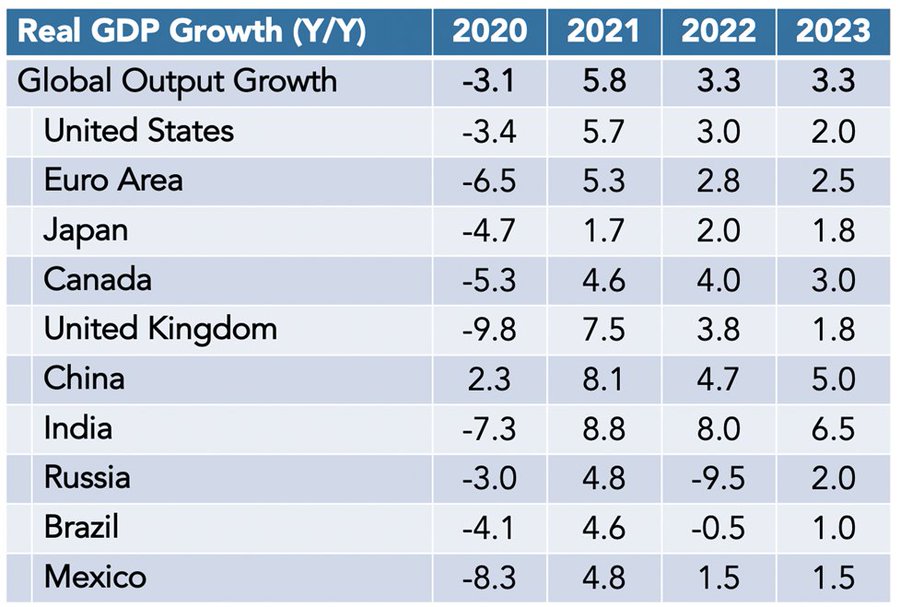
Economic outlook for large economies (Peterson Inst)