Twelve months since the Modi government announced the repeal of India’s Article 370, communications are still slow, arrests are routine, and the pandemic rages on. foreignpolicy.com 12:00 PM · Aug 6, 2020

6 agosto, 2020
por Felipe Sahagún
Sin comentarios

Twelve months since the Modi government announced the repeal of India’s Article 370, communications are still slow, arrests are routine, and the pandemic rages on. foreignpolicy.com 12:00 PM · Aug 6, 2020
6 agosto, 2020
por Felipe Sahagún
1 comentario
He Predicted Trump’s Win in 2016. Now He’s Ready to Call 2020.
Most historians just study the past. But Allan Lichtman has successfully predicted the future.
Aug. 5, 2020
Right now, polls say Joe Biden has a healthy lead over President Trump. But we’ve been here before (cue 2016), and the polls were, frankly, wrong. One man, however, was not. The historian Allan Lichtman was the lonely forecaster who predicted Mr. Trump’s victory in 2016 — and also prophesied the president would be impeached. That’s two for two. But Professor Lichtman’s record goes much deeper. In 1980, he developed a presidential prediction model that retrospectively accounted for 120 years of U.S. election history. Over the past four decades, his system has accurately called presidential victors, from Ronald Reagan in ’84 to, well, Mr. Trump in 2016.
In the video Op-Ed above, Professor Lichtman walks us through his system, which identifies 13 “keys” to winning the White House. Each key is a binary statement: true or false. And if six or more keys are false, the party in the White House is on its way out.
So what do the keys predict for 2020? To learn that, you’ll have to watch the video.
Allan Lichtman (@AllanLichtman) is a professor of history at American University.
5 agosto, 2020
por Felipe Sahagún
Sin comentarios

| Hi, After a promising start earlier this year, US-China relations have soured once again in recent weeks amid trade tensions, the coronavirus-induced global downturn, and US concerns over the situation in Hong Kong. Yet our baseline forecast is that Joe Biden will win the presidential election in November: is a détente in hostilities in sight on the US-China front? This is a reminder that «A détente in sight? US-China relations under a Biden presidency» will begin in 1 hour on: Date Time: Aug 5, 2020 03:00 PM London Join from a PC, Mac, iPad, iPhone or Android device: Click Here to Join Note: This link should not be shared with others; it is unique to you. Add to Calendar Add to Google Calendar Add to Yahoo Calendar |
5 agosto, 2020
por Felipe Sahagún
Sin comentarios
What sets the United States apart from the rest of the world is and has always been its soft power. The Soviets may have equaled the Americans in nuclear capability, but they could never rival the appeal of the “American way of life.” And even as China tries to spread its culture across the globe, its rise tends to inspire more trepidation than admiration.
Many ingredients combine to give U.S. soft power its strength and reach, but entertainment and culture have always been central to the mix. Film and television have shaped how the world sees the United States—and how it perceives the country’s adversaries. Yet that unique advantage seems to be slipping away. When it comes to some of the great questions of global power politics today, Hollywood has become remarkably timid. On some issues, it has gone silent altogether.
The most glaring example is the growing wariness of U.S. studios to do anything that might imperil their standing with the Chinese government. China’s box office is as large as the American one, and entertainment is above all a business. So Hollywood sanitizes or censors topics that Beijing doesn’t like. But the phenomenon is not limited to China, nor is it all about revenue. Studios, writers, and producers increasingly fear they will be hacked or harmed if they portray any foreign autocrats in a negative light, be it Russian President Vladimir Putin or North Korean dictator Kim Jong Un.
Hollywood teme criticar a China (PDF)
Related
Beware the Guns of August—in Asia (F Affairs)
Hollywood loses the plot. The ‘culture industry’ of Hollywood is deluding itself -by Hamid Dabashi (AJE)
Too Big to Prevail.The National Security Case for Breaking Up Big Tech (F Affairs)
5 agosto, 2020
por Felipe Sahagún
Sin comentarios
A study by Greenpeace has shown what could happen if Germany were attacked with nuclear weapons. According to a simulation, around 145,000 people would die instantly were a small nuclear bomb to strike Berlin.
A nuclear attack on Germany’s biggest cities would kill hundreds of thousands of people instantly, according to data from a Greenpeace study shared Wednesday by news agency dpa. Tens of thousands more would be plagued by long-term illnesses such as cancer.
The figures are the results of a «Nukemap,» a software simulation conducted by physicist Oda Becker on behalf of the environmental group, which calculates the aftermath of nuclear bomb attacks on certain areas in Germany.
Greenpeace commissioned the study in order to advance the «necessary discussion of a world free of nuclear weapons,» it said.
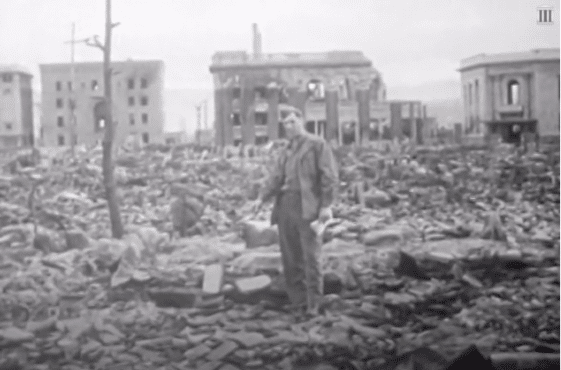
Thursday marks the 75th anniversary of the date the US dropped a nuclear bomb over the Japanese city of Hiroshima during World War II, instantly killing over 70,000 people. It was the first nuclear weapon ever used in warfare.
Can we “ban the bomb” worldwide? No. And #nuclear weapons cannot be uninvented. Our best hope is to invent a better military technology — space-based missile defenses — to make nuclear weapons obsolete and the world much safer

Why the atomic bombing of Hiroshima would be illegal today -By Katherine E. McKinney, Scott D. Sagan, Allen S. Weiner (The Bulletin of Atomic Scientists)
Felipe Sahagún@sahagunfelipeThree lists—places for launching a first strike, for testing its bombs and the list of countries that the US condemns for their aspiration to acquire nuclear weapons— help to make the racial underpinnings of the nuclear architecture unmistakable. bostonreview.net
More fron THE BULLETIN….
Memorial Days: the racial underpinnings of the Hiroshima and Nagasaki bombings
What Europeans believe about Hiroshima and Nagasaki—and why it matters
1 agosto, 2020
por Felipe Sahagún
Sin comentarios


Ana Rodríguez (28 de julio de 2020)
La pandemia provocada por la COVID-19 ha redibujado el escenario de la geopolítica global. El impacto de esta crisis sanitaria ha tenido un efecto directo en la economía y el turismo, pero también en la evolución de las organizaciones terroristas de carácter yihadista. Así lo considera el informe semestral de la actividad yihadista de 2020 elaborado por el Observatorio Internacional de Estudios sobre Terrorismo que ha sido publicado este lunes. Continue leyendo →