Relaciones Internacionales – Comunicación Internacional

15 abril, 2020
por Felipe Sahagún
Sin comentarios

Desafíos del periodismo (Fernando González Urbaneja, Foro de Foros)

 Café Con……………. Fernando González Urbaneja, que conversa de la mano de Ana Fuentes. El hecho de que los medios deban recibir ayudas estatales o no, las ruedas de prensa con preguntas filtradas por el gobierno o los modelos de pago en el periodismo son algunos de los temas tratados en la entrevista.

Puedes ver el vídeo pinchando en el enlace. Como podrás ver es “cortito pero con chicha” y seguro que será de tu interés.

Cualquier comentario o sugerencia ya sabes que Foro de Foros eres TÚ y será muy bien recibido.

Un abrazo muy fuerte y SEGUIMOS!

Margarita L


14 abril, 2020
por Felipe Sahagún
Sin comentarios

How COVID-19 is threatening press freedom (Journalist’s Resource)

Journalist's Resource

By 

April 13, 2020

As political leaders around the globe battle the coronavirus, a growing number of national governments are using the crisis to punish journalists for their critical reporting. The New York-based Committee to Protect Journalists is an independent, non-profit organization that monitors press freedom violations throughout the world. In a recent column for Columbia Journalism Review, the CPJ’s executive director, Joel Simon, warns that the news media crackdown could lead to long-term curbs on the global information system.

“Amid efforts to beat back a global pandemic of a kind unseen in more than a century, and to prop up a global economy on the brink of depression, it’s hard to focus on long-term consequences,” he writes. “But we must be mindful that when we get to the other side of the pandemic, we may be left with a narrative, being written by China, that government control over information was essential to combating the crisis.”

In an email interview with veteran journalist Ann Cooper — a former executive director of the CPJ and a fellow this spring at the Shorenstein Center on Media, Politics and Public Policy — Simon detailed some of the restrictions and noted that western political leaders have failed to speak out against them. He also discussed some of the measures journalists can take to protect themselves while reporting on the coronavirus pandemic, both in terms of physical and cyber security.

…MORE

Some key takeaways from the conversation:

  • Wash your hands. Journalists and non-journalists have heard this dozens of times, but “This is the single most important thing that journalists covering COVID-19 can do to protect themselves,” Simon says. (The CPJ’s coronavirus safety advisory is updated frequently and offers dozens of recommendations specific to reporting.)

  • Several national governments have taken legal action against journalists for their COVID-19 coverage.

  • The CPJ has yet to discover a single example of a national government pushing back against other governments that have punished journalists for their COVID-19 coverage.

  • The wave of global repression amounts to a “COVID Crackdown,” says Simon. “My greatest fear is that it will become a permanent feature of the global reality that will stay with us long after the painful memory of this pandemic has faded.”


 

13 abril, 2020
por Felipe Sahagún
Sin comentarios

Hasta que la desinformación nos separe (El Orden Mundial)

danirioboo@danirioboo

13 abril, 2020
por Felipe Sahagún
Sin comentarios

Coronavirus: tendencias y paisajes para el día después (Andrés Ortega, Elcano)

Consejos y advertencias sobre el coronavirus (COVID-19). Foto: duncan c (CC BY-NC 2.0)

REAL INSTITUTO ELCANO (ARI 41/2020 – 8/4/2020)

Resumen

En un ejercicio de prospectiva, este documento analiza diversas tendencias que se pueden empezar a vislumbrar a raíz de la crisis del coronavirus y sus posibles consecuencias para un mundo transformado y para España. Son tendencias que se agrupan en cuatro dimensiones diferentes pero que interactúan entre sí: (1) la temporal (la duración de la crisis y los distintos ritmos a los que se está dando); (2) la económica; (3) la sociopolítica; y (4) la geopolítica. A modo de resumen, concluimos con tres posibles escenarios (entre muchos otros): (1) el de “sálvese quien pueda”, el más negativo; (2) el de la potenciación de una “inteligencia colectiva internacional”, que sería el más positivo; y (3) un escenario intermedio de “paso a paso y salir del paso”. El objetivo es aportar una base para los tomadores de decisiones públicos y privados. Continue leyendo →

13 abril, 2020
por Felipe Sahagún
Sin comentarios

Climate change, pandemics, biodiversity loss: no country is sufficiently prepared (The Conversation, Nov 1, 2019)

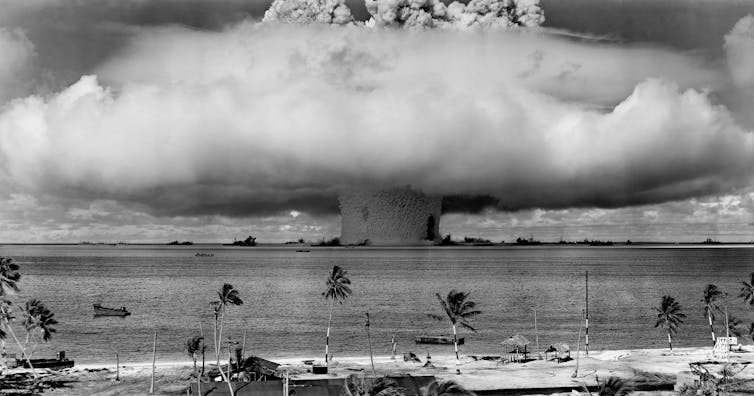
The ‘Baker’ Explosion, part of Operation Crossroads, a US Army nuclear test at Bikini Atoll, Micronesia, on July 25, 1946. Wikimedia Commons

Research Associate, Winton Centre for Risk and Evidence Communication, University of Cambridge and Research Associate, Centre for the Study of Existential Risk, University of Cambridg

There’s little that the left and the right agree on these days. But surely one thing is beyond question: that national governments must protect citizens from the gravest threats and risks they face. Although our government, wherever we are in the world, may not be able to save everyone from a pandemic or protect people and infrastructure from a devastating cyberattack, surely they have thought through these risks in advance and have well-funded, adequately practiced plans?

Unfortunately, the answer to this question is an emphatic no. Continue leyendo →

12 abril, 2020
por Felipe Sahagún
Sin comentarios

La sociedad de la desinformación (Real Instituto Elcano)


View image on TwitterView image on Twitter

María Lázaro Ávila@marialazaro