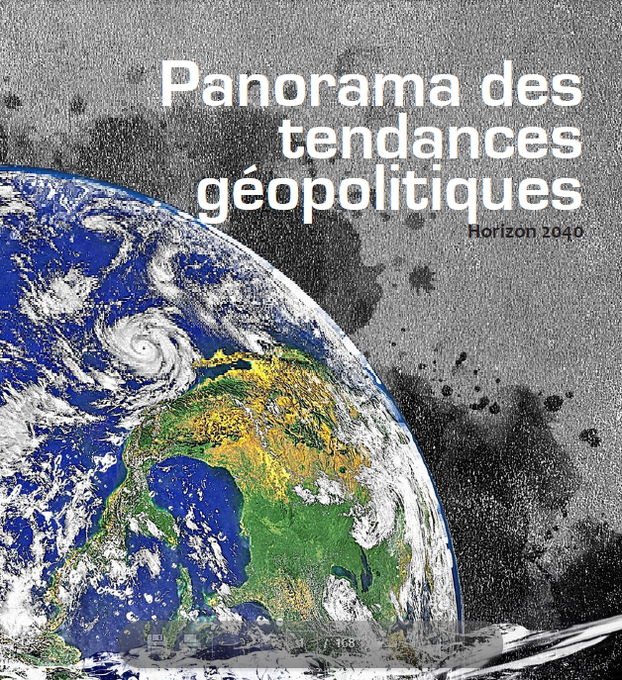

También en español: Panorama de tendencias geopolíticas: bit.ly/2H9RwmZ

22 octubre, 2019
por Felipe Sahagún
Sin comentarios
22 octubre, 2019
por Felipe Sahagún
Sin comentarios

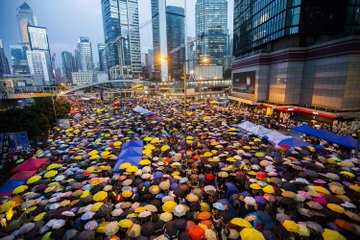
Massive protests:
IN THE LAST WEEK:
Lebanon
Chile
Spain/Catalonia
Hong Kong
Britain (Brexit)
IN THE LAST MONTH:
Iraq
Algeria
Egypt
Haiti
THIS YEAR:
Sudan
Russia
Uganda
Indonesia
Ukraine
Peru
Zimbabwe
Colombia
France
Venezuela
Ethiopia
Brazil
Algeria
Ecuador
Global (Climate)



22 octubre, 2019
por Felipe Sahagún
Sin comentarios

A public-private approach to preparing students for the jobs of tomorrow
See how IBM helps educators like Rashid Davis put smart to work →

21 octubre, 2019
por Felipe Sahagún
Sin comentarios
21 octubre, 2019
por Felipe Sahagún
Sin comentarios

Climate Change and the Global Order by Ronald Bee
Climate change has become one of the defining issues of our time. As much of the world bands together to come up with a plan, the U.S. remains the notable holdout. What is the rest of the world doing to combat climate change? What impact will the effects of climate change have on global geopolitics?
India and Pakistan by Barbara Crossette
India’s Prime Minister Narendra Modi rode a wave of Hindu nationalism to a historic reelection in 2019. His first order of business was to revoke the special status granted to the Kashmir region, inflaming the rivalry between India and Pakistan. How will the Kashmir situation affect the region, both economically and politically?
Red Sea Security by David Shinn
The Red Sea has remained vital for global trade since the time of ancient Egypt. Once home to the spice trade, the Red Sea now sees millions of barrels of oil a day transported across its waters. With major nations like China, France, Italy, and the U.S. building large ports and bases in the region, what does the future of the region look like? How important is Red Sea security for global security? Can the region be a place of global cooperation? Continue leyendo →
21 octubre, 2019
por Felipe Sahagún
Sin comentarios

Freedom in a borderless world – this was the hope thirty years ago, after the fall of the Berlin Wall. But instead of disappearing, more and more hard border fortifications arise in Europe.
After the end of the Cold War, borders were seen as a legacy of the past. The new freedom of movement inside the EU served as an attractive model for the former Communist bloc. Also, from a global perspective, borders were meant to be lifted as much as possible to fulfill the promise of globalization and liberal democracy.
However, this perspective changed with the terrorist attacks of September 11, 2001. Borders transformed from static lines to deterritorialized surveillance networks. The ambition was to combine international mobility with a new type of electronic controls, which involve both state actors and private companies. Any kind of transnational flow, be it goods, capital or persons, should be subject to seamless documentation, screening and authorization right from the source to its final destination.
Yet instead of reassuring liberal democracies in their way of life through new security technologies, the so-called War on Terrorism fueled a sense of paranoia and erosion of political freedoms. By the late 2000s, economic shocks, rising inequality and a growing political backlash against globalization led to a resurgence of nationalism in the West, while China and Russia became more vocal in their challenge of the established global order.
Worldwide spread of border installations
Nowadays, borders have come to highlight the crisis of liberal democracy and the growing divisions between cosmopolitan elites and „ordinary people“, which predominantly live in smaller towns or the country-side. The resurrection of physical borders has taken on an outsized symbolic importance. Already at the beginning of the 2010s, the number of international hard border fortifications had gone up from 15 at the end of the Cold War to over 70, comprising a total of more than 30.000 kilometers.
Since then, border installations have rapidly spread further around the world due to violent conflicts and population movements, among others, between Russia and Ukraine, Pakistan and Afghanistan, Bangladesh and India, Saudi Arabia and Iraq, Israel and Egypt or between Turkey and Syria as well as Iran.
And since the election of Donald Trump, his promise to build a beautiful wall towards Mexico polarized U.S. politics as well as relations with Central America. In this light, new border installations are either criticized as an outgrowth of senseless populism with inhuman consequences on vulnerable refugees or as the last line of defense against globalization, unchecked immigration and even moral decay.
