Relaciones Internacionales – Comunicación Internacional

16 noviembre, 2024
por Felipe Sahagún
Sin comentarios

Trump’s picks for the new US Gov (CNN)

Image

President-elect Donald Trump’s Cabinet selections continue to arrive—and to spark controversy.

Barring sharp turns or Senate-confirmation problems, Trump’s national-security team has taken its likely shape: Sen. Marco Rubio as secretary of state, veteran and Fox News host Pete Hegseth as secretary of defense, Rep. Mike Waltz as national security adviser, former Rep. Tulsi Gabbard as director of national intelligence, former congressman and director of national intelligence John Ratcliffe as CIA director, and Rep. Elise Stefanik as UN ambassador. A particularly controversial pick is only adjacent to foreign policy: Rep. Matt Gaetz as attorney general. Perhaps most controversial is the noted vaccine skeptic Robert F. Kennedy, Jr., whom Trump has tapped to run the Department of Health and Human Services. Continue leyendo →

15 noviembre, 2024
por Felipe Sahagún
Sin comentarios

Geopolitical risk in a Trump 2.0 (Ian Bremmer)

Geopolitical Risk in a Trump 2.0 World

Between conflicts, the climate crisis, and trade wars, the world was already in a state of turmoil. How will a second Trump term change the status quo? What countries and industries are in for the greatest shake-up? 

Join FP’s Ravi Agrawal in conversation with geopolitical risk expert Ian Bremmer, the founder and president of Eurasia Group.

LINK TO VIDEO


14 noviembre, 2024
por Felipe Sahagún
Sin comentarios

A new nuclear arms race is beginning (Guardian)

Imagen

With Putin’s threats in Ukraine, China’s accelerated weapons programme and the US’s desire for superiority, what will it take for leaders to step back from the brink?

By Jessica T Mathews
 
Like Toto in The Wizard of Oz, at their 1985 summit in Geneva President Ronald Reagan and the Soviet leader Mikhail Gorbachev pulled back the curtain to reveal the truth behind the terrifying spectre of nuclear war, which their countries were spending hundreds of billions of dollars to prepare for. “A nuclear war cannot be won,” they jointly stated, and “must never be fought.” They omitted the inescapable corollary of those first six words: a nuclear arms race also cannot be won.
 
Related

13 noviembre, 2024
por Felipe Sahagún
Sin comentarios

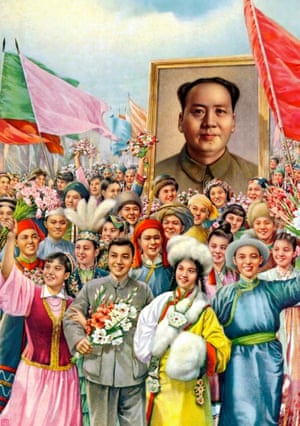
Propaganda: 100 years of fear, manipulation and persuasion – in pictures (The Guardian)

13 noviembre, 2024
por Felipe Sahagún
Sin comentarios

10 Countries Without an Army, Navy, or Air Force 

Business Elites Africa

Several countries around the world have opted to maintain national security without traditional military forces, Instead of using the military they mostly rely on diplomacy, strategic alliances, and unique treaties to safeguard their sovereignty and ensure national security.

This unconventional choice allows them to channel resources into social, educational, and economic developments, prioritising peace and stability over military power. 

Here are the 10 Countries Without Military Forces:

1. Costa Rica – After abolishing its army in 1948 following a civil war, Costa Rica redirected military funds to education and healthcare, relying on international alliances for defense.

2. Iceland – Iceland has no standing military and relies on NATO for defense, focusing instead on a well-equipped Coast Guard for national security and rescue operations.

3. Liechtenstein – Since disbanding its army in 1868 due to high costs, Liechtenstein has relied on neutrality and protection agreements with neighboring Switzerland and Austria.

4. Monaco – Protected under a treaty with France since 1918, Monaco focuses on luxury tourism and finance, maintaining a ceremonial police force for internal order.

5. Panama – Panama abolished its military in 1990, establishing the Panama Public Forces for internal security and entering into a defense treaty with the United States.

6. Vatican City – As the world’s smallest sovereign state, Vatican City relies on Italy for protection per the 1929 Lateran Treaty and is guarded by the ceremonial Swiss Guard.

7. Kiribati – With no standing military, this Pacific island nation depends on defense pacts with larger allies like Australia and New Zealand for its security needs.

8. Samoa – Since gaining independence and signing a treaty of friendship with New Zealand in 1962, Samoa has focused its resources on domestic priorities such as health and education.

9. Mauritius – After independence from Britain in 1968, Mauritius chose not to maintain a standing army, instead employing a paramilitary force and national police for security.

10. Palau – Since its independence in 1994, Palau has had no military, depending instead on a Compact of Free Association with the United States for defense.