Relaciones Internacionales – Comunicación Internacional

12 noviembre, 2024
por Felipe Sahagún
Sin comentarios

Oxford Climate Journalism Network

Reuters Logo

Overview

The Oxford Climate Journalism Network (OCJN) is a programme that supports a global community of reporters and editors across beats and platforms to improve the quality, understanding and impact of climate coverage around the world. We are a programme of the Reuters Institute for the Study of Journalism at the University of Oxford.

Since its launch in January 2022, the network has worked with 400 reporters and editors from over 100 countries, from editors-in-chief and business editors to photojournalists and climate specialists. Any person in the newsroom, from any desk, can join the network.

Our work on climate journalism 

Seven lessons about covering extreme heat

Key takeaways from the annual event of our climate network on how to report on this issue. 

14 things we’ve learnt from running our climate network

A piece by Diego Arguedas Ortiz and Katherine Dunn. 

Why we’ve created the Global South Climate Database

Diego Arguedas Ortiz and Ayesha Tandon on how this initiative can help journalists around the world.

….MORE


11 noviembre, 2024
por Felipe Sahagún
Sin comentarios

By The Numbers: Coups in Africa (VOA)

Imagen

The African continent saw a significant increase in coups in the last three years, with military figures carrying out takeovers in Gabon, Niger, Burkina Faso, Sudan, Guinea, Chad and Mali.

After Niger’s coup in July, the regional Economic Community of West African States (ECOWAS) said it would not tolerate another takeover, and implemented tough sanctions and threatened military action to restore that country’s democratically elected government.

“The decision is that the coup in Niger is one coup too many for the region, and we are putting a stop to it at this time. We are drawing the line in the sand,” said Abdel-Fatau Musah, the bloc’s commissioner for political affairs and security.

…MORE


11 noviembre, 2024
por Felipe Sahagún
Sin comentarios

New Climate Change Resources (CFR)

CFR Education

Dear Educator, 

It has been a momentous week for the U.S., and I hope you have been able to process the events of the past few days, both in and out of the classroom. CFR Education will continue to provide accurate, authoritative, and accessible resources and will update our content as policies and new issues emerge.

As part of this commitment, CFR Education is proud to announce the release of a new collection of expert-informed climate resources just in time for COP29, the convening of world leaders in Azerbaijan to discuss international solutions to climate change. 

This newsletter will cover three new sets of climate learning resources and their complementary teaching materials that can empower them to learn more about the issue and take action. 

We hope these trusted, accessible resources on climate change and its impact on foreign affairs will prove helpful as you integrate this topic into your teaching. 

Happy learning, 

Caroline Netchvolodoff
Vice President, Education
Council on Foreign Relations Continue leyendo →

10 noviembre, 2024
por Felipe Sahagún
Sin comentarios

The book that predicted the 2024 US election (NYT)

The G.O.P. pollster Patrick Ruffini’s book “Party of the People” outlined the realignments reflected in this year’s election results.

LINK TO AUDIO

You should be skeptical of anyone with a very detailed, confident take on the dynamics of the 2024 election right now. At the very least, you should be if they didn’t tell you before the election.

But Patrick Ruffini, a longtime Republican pollster who is a founding partner at Echelon Insights, did tell you before the election. In 2023, he published a book called “Party of the People: Inside the Multiracial Populist Coalition Remaking the GOP.”

What he argued in that book is really two things: First, the educational divide reshaping American politics would continue, with non-college voters swinging right and college-educated voters swinging yet further left. But second, he argued that the 2020 election results, weird as they seemed to many, weren’t a fluke.

…MORE


9 noviembre, 2024
por Felipe Sahagún
Sin comentarios

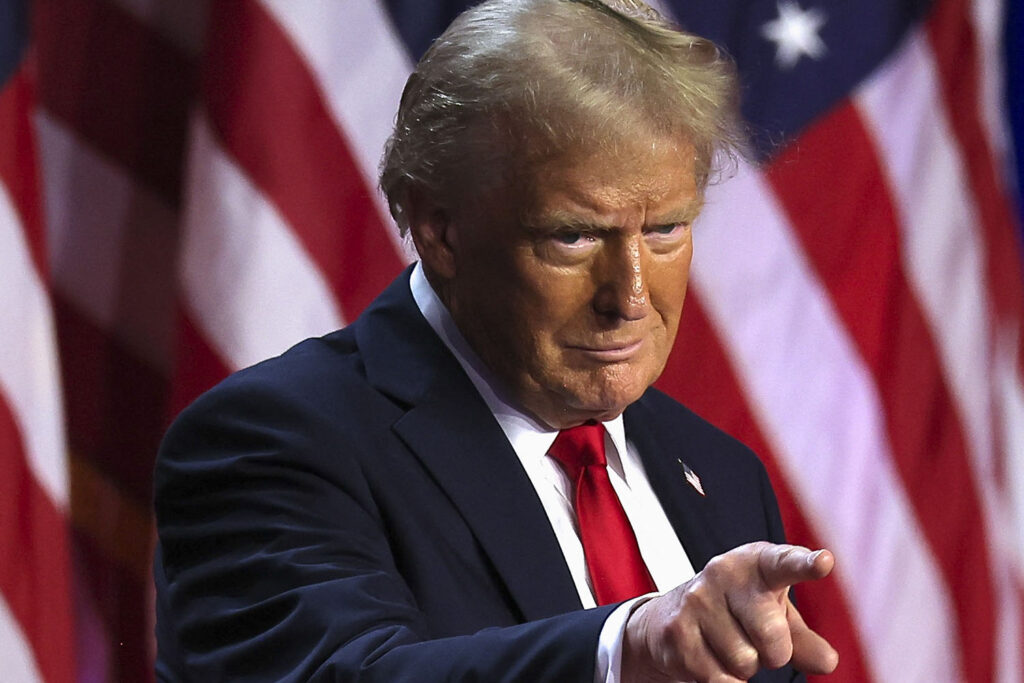
Trump and America’s role in the world (Atlantic Council)

Donald Trump just won the presidency. Our experts answer the big questions about what that means for America’s role in the world.

New Atlanticist

November 6, 2024

By Atlantic Council experts

Get ready for the sequel. On November 6, the Associated Press declared Donald Trump the winner of the 2024 US presidential election. A transition now kicks off as world events continue to churn. When he returns to the presidency on January 20, Trump’s inbox will be full of global challenges. How will he respond? And what will the consequences be? Below, our experts provide answers across twenty-four of the most significant policy matters awaiting the next administration.

The greatest national security threat to the United States, its fellow NATO members, and other US allies is the increasingly aggressive partnership of Russia, China, Iran, and North Korea. The focal point of this threat is Ukraine, where Russian President Vladimir Putin’s war of conquest is just a prelude to more provocations and, potentially even war further west, against NATO’s eastern states. A victory in Ukraine for Russia, which is now bolstered by North Korean troops soon to be fighting in Europe, will encourage a Chinese move on Taiwan.

It is not clear that Trump fully acknowledges this challenge. But whether he understands it or not, his administration will have to deal with it and its most dangerous point of confrontation: Ukraine. It is difficult to anticipate Trump’s policy on the war because his team contains personnel with very different views. One group advocates sharply reducing aid to Ukraine—a view many associate with Trump. This group is naive about the Kremlin’s policy toward the United States—Putin states plainly that the United States is adversary number one—and clueless about the danger of a Kremlin victory in Ukraine. The other camp recognizes the threat to US interests in Europe and elsewhere if Washington were to abandon Ukraine. This group would pursue a Reaganesque policy of peace through strength and, unlike the Biden team, not be intimidated by Putin’s nuclear bluster. The first clues about Trump’s policy will be the appointments he makes to senior national security positions.

—John E. Herbst is the senior director of the Atlantic Council’s Eurasia Center and a former US ambassador to Ukraine.

…MORE