Relaciones Internacionales – Comunicación Internacional

22 octubre, 2024
por Felipe Sahagún
Sin comentarios

News avoiders in the US


TUESDAY 22 OCTOBER 2024


Dear Felipe,
According to our own figures, millions of people in the United States haven’t consumed any news in the last month and many more avoid the news selectively, either reducing frequency or skipping stressful topics.
As someone who’s covered US politics for more than a decade, I wanted to know what these figures mean and how they might influence the upcoming election. So I spoke to my friend Benjamin Toff, who led our own Trust in News Project and is one of the authors of the best book on news avoiders. I hope our conversation will help you navigate the home stretch of the campaign and make you think about these elusive audiences, often forgotten by news organisations and media scholars.
This newsletter also includes a link to join our upcoming event on the US election, a new podcast episode on AI, a chart from our research and a call to join our next leadership programme.
Eduardo Suárez
Head of Editorial, Reuters Institute

Explore our Digital News Report 2024 here | Check out data from your country | Download a PDF version | Explore our interactive | Lee el informe en español 


A NEW PIECE
Why millions of Americans avoid the news – and what it means for this year’s election 

The issue. According to this year’s Digital News Report, 43% of Americans avoid the news in some form and only 32% trust it most of the time. How will these figures influence this year’s election? This is the question at the heart of a new interview with Benjamin Toff, who led our own Trust in News Project and co-authored this seminal book on news avoidance. Here are three quotes from the piece:

🙈 On US news avoiders. «They are more likely to be younger and working-class and less likely to be college-educated. They are also slightly more likely to be women than men. Lack of interest in politics is a huge predictor, so people who are consuming little to no news are less interested in politics and less likely to participate in political life.»

🙉 On why they don’t trust journalism. «If you don’t consume a lot of news, the sources you are more likely to be thinking about are not investigative journalism but clickbait, sensational headlines about celebrities, local news coverage of crime, and opinions on cable news. These are the forms of news that most people have at the top of their mind, and they don’t see it as relevant to the things they care about.»

🛠️ On what can be done. «A lot of the news avoiders we interviewed who were not voting would often point to this feeling that they just didn’t think they knew enough to vote. But you do see differences by country. Places that have a lot more investment in public service media have much higher rates of engagement with news and more political engagement.»

Read the piece
 
THE US PRESIDENTIAL ELECTION

🗳️ A special event. The US presidential election promises to be one of the closest on record. In this event that we are co-hosting with Oxford University’s Rothermere American Institute, we will look at the fallout from the election and discuss what it could mean in the near term and for the next four years. Our panel features academics and journalists working at the very top of US politics and news:

🧑🏽‍💻 Join us. The hybrid event takes place on Thursday 7 November, 17:00 UK / 12:00 ET at the Rothermere Ame


22 octubre, 2024
por Felipe Sahagún
Sin comentarios

Amenazas contra el periodismo latinoamericano

La amenaza que se avecina (y posibles soluciones) para el periodismo latinoamericano financiado por donantes extranjeros

21 octubre, 2024
por Felipe Sahagún
Sin comentarios

Víctor de la Serna, hasta pronto

 
Víctor de la Serna.
Víctor de la Serna, el periodista que valía por tres
Pedro G. Cuartango@PedroCuartango
Un gran obituario de Juan Carlos Laviana y un emotivo homenaje a Víctor de la Serna, el periodista que valía por tres.elespanol.com/sociedad/20241 vía @elespanolcom De elespanol.com
 
Related
 

21 octubre, 2024
por Felipe Sahagún
Sin comentarios

Foreign Policy on the US Ballot. Four Historical Case Studies

CFR Education

Dear Educator, 

Although the world is very different today than it was in the past, exploring historical U.S. elections can teach students valuable lessons about issues on the ballot this year. Finding nonpartisan educational content that does this, however, can be tricky. 

Good news! This newsletter covers a new historical learning resource that examines four previous U.S. elections and the foreign policy issues facing American voters at the time, all while connecting back to the 2024 election. 

Access the resource Continue leyendo →

20 octubre, 2024
por Felipe Sahagún
Sin comentarios

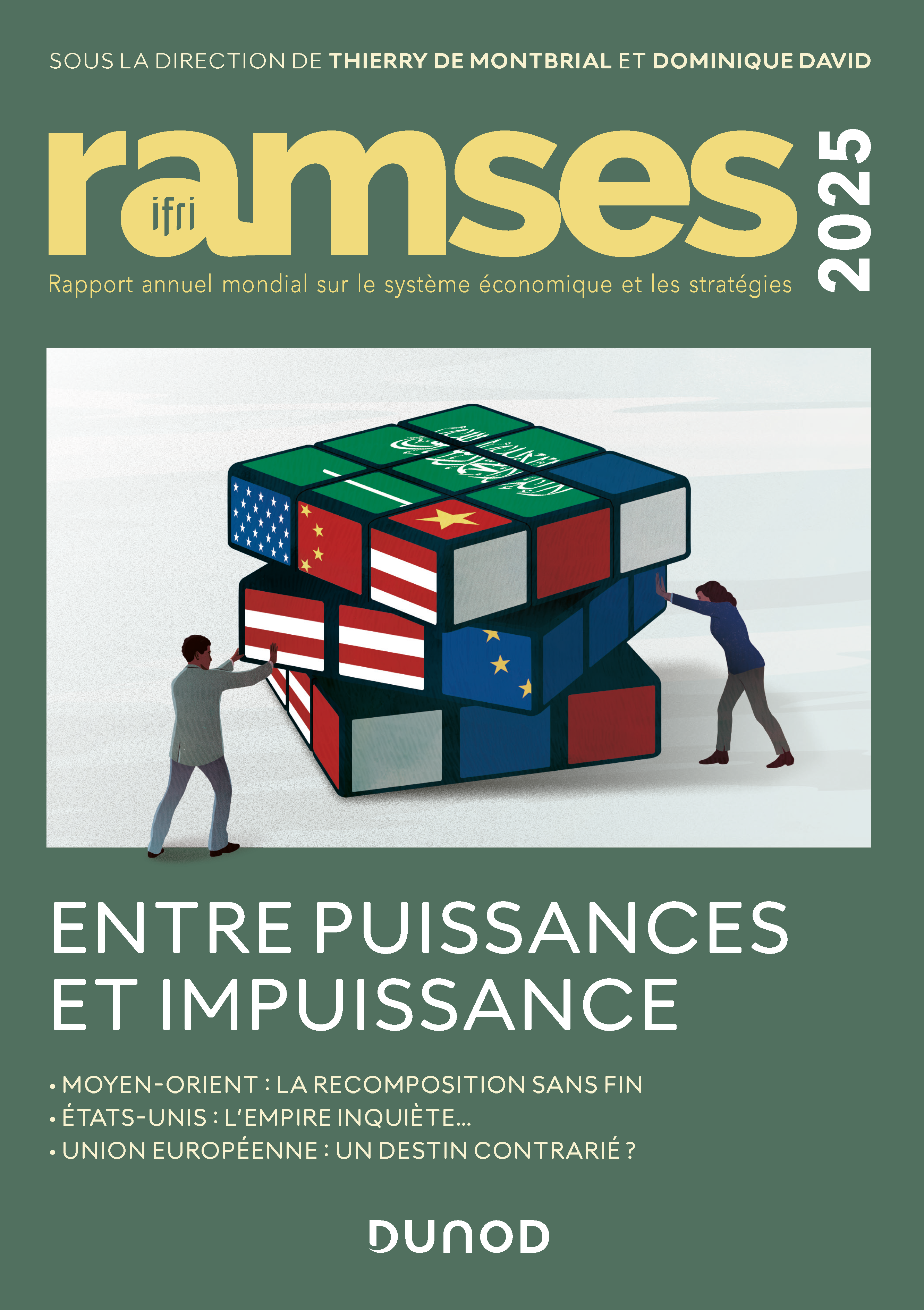
Ramses 2025. Entre puissances et impuissance

couv_essai_28juin.jpeg

Jamais on n’a décompté autant de puissances pouvant, dans leur espace de jeu, dérégler les équilibres internationaux ; jamais les puissances dominantes n’ont semblé aussi impuissantes à parer à la fragmentation du monde.

Au Moyen-Orient, la recomposition annoncée depuis des décennies paraît plus lointaine que jamais dans l’enchevêtrement des combats et des influences : États-Unis, Iran, Arabie saoudite, Égypte, Turquie, voire Russie, Chine ou Européens – qui pourrait peser assez pour aider à résoudre un problème israélo-palestinien de retour, dans le sang, au premier rang de l’actualité ? Qui pourrait aider à redessiner les équilibres pour une paix régionale ?

Les États-Unis ? Puissance dominante, sans conteste : mais comment s’exerce leur domination diplomatique, militaire, économique, culturelle ? Le désordre de la campagne présidentielle nous montre un pays en pleine interrogation sur son rôle dans le monde, hésitant sur les aires de son engagement, et surtout divisé, incertain de la stabilité, de la cohérence de sa propre société…

L’Union européenne tente, elle, de faire bonne figure, de se rassurer sur sa capacité à relever les défis qui s’accumulent : guerre d’Ukraine, ralentissement économique, compétition technologique, transition énergétique… Mais son unité et ses décisions sont-elles à la mesure de ce qui s’annonce : le débat sur l’élargissement, le relèvement de l’Ukraine, l’organisation de sécurité sur tout le continent… ?

Cette instabilité fondamentale du monde, cette fragmentation des espaces stratégiques, Ramses 2025 les caractérise à travers trois chapitres d’ouverture : Moyen-Orient : la recomposition sans fin ; États-Unis : l’empire inquiète… ; Union européenne : un destin contrarié ? ; et à travers un parcours planétaire des crises et événements à venir : Caucase, Amérique latine, Asie-Pacifique, Nouvelle-Calédonie, flux maritimes, questions alimentaires, migrations, Olympiades… Continue leyendo →