Search results for covering Iran’s war

29 marzo, 2026
por Felipe Sahagún
Sin comentarios
29 marzo, 2026
por Felipe Sahagún
Sin comentarios
The current Iran crisis is not a story that can be covered through a single lens. It is at once a military story, a diplomacy story, a nuclear story, a regional security story, and an energy market story. That complexity matters. One of the biggest mistakes in a fast-moving international crisis is to reduce it to one dramatic frame such as war, regime change, nuclear countdown, or regional collapse. Those labels may sound urgent, but they often flatten reality. Good foreign correspondence does the opposite. It helps the audience understand what is happening, why it matters, what is verified, and what remains uncertain.
Related
The Escalating Crisis in the Red Sea: What Foreign Correspondents Need to Understand
28 marzo, 2026
por Felipe Sahagún
Sin comentarios

Friday, March 27, 2026
Saturday will mark one month since the United States and Israel launched their military campaign against the Iranian regime. Each Friday since February 28, I’ve posed a pressing question about the Iran war in the opening of this newsletter. This week: What have we learned in the past month?
Top Atlantic Council experts share their answers in the first pick below. Nate Swanson, who leads our Iran Strategy Project and previously served as Iran director at the US National Security Council, says we’ve learned that the Iranian regime is “bruised, battered, and (perhaps irrationally) bullish about its future.” He explains: Continue leyendo →
27 marzo, 2026
por Felipe Sahagún
Sin comentarios

Biker gangs and hired hands: how Iran is increasingly outsourcing its terrorism campaigns
Experts see potential hallmarks of Iranian involvement in firebombing of four ambulances in Golders Green on Monday
To some it was the moment the mask slipped. Wearing an open-necked white shirt, Mohsen Rafighdoost, former minister of the Islamic Revolutionary Guard Corps (IRGC), was filmed last March fondly reminiscing with an interviewer from the Tehran-based Didban Iran news website about the assassinations he had organised around Europe.
There was Prince Shahriar Shafiq, the last Shah of Iran’s 34-year-old nephew, who was shot twice in the head outside his mother’s home in Paris in 1979.
Then there was the Shah’s final commander-in-chief, Gen Gholam Ali Oveissi, also shot dead in Paris, in 1984.
Rafighdoost explained with a chuckle that he had additionally ordered the murder of Shapour Bakhtiar, the final prime minister under the Shah, who was killed in his Parisian home in 1991; and the stabbing to death a year later of Fereydoun Farrokhzad, a dissident Iranian artist.
“Usually the Basque guys,” Rafighdoost said of the separatist terror group he commissioned to carry out the murders. “They were performing and no one was bothering them.”
25 marzo, 2026
por Felipe Sahagún
Sin comentarios

Iran Is Becoming America’s Ukraine
What Trump May Do if He Loses in Iran
There’s a Reason No President Before Trump Authorized War With Iran
Get Ready for a Weaker but Nastier Iran
The Israel Lobby’s Responsibility for the Iran War
Iran Can Afford America’s Economic Warfare
Iran’s Biggest Wartime Advantage Is Geography

25 marzo, 2026
por Felipe Sahagún
1 comentario
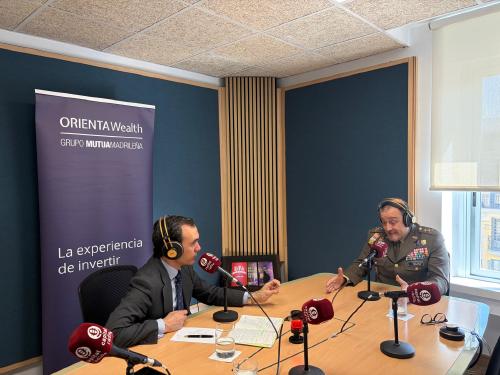
Entrevista del director del IEEE, General Víctor Bados, en Capital Radio. Examen del conflicto en Irán: “Vivimos un cambio de época”
Related
El «ethos» de la guerra de Trump y sus implicaciones en la seguridad internacional
The «Ethos» of Trump´s War and its implications for International Security
La derogación definitiva de la prohibición del uso de la fuerza en las relaciones internacionales
The definitive abolition of the prohibition on the use of force in international relations