Relaciones Internacionales – Comunicación Internacional

25 marzo, 2026
por Felipe Sahagún
Sin comentarios

War in Iran (Foreign Policy)

Iran Is Becoming America’s Ukraine

What Trump May Do if He Loses in Iran

There’s a Reason No President Before Trump Authorized War With Iran

Get Ready for a Weaker but Nastier Iran

The Israel Lobby’s Responsibility for the Iran War

Continuity Under Fire

Iran Can Afford America’s Economic Warfare

Iran’s Biggest Wartime Advantage Is Geography

New Issue Out Now!

We asked five prominent thinkers to take a step back from the news cycle and look ahead to what’s next. Subscribe now to access all of “The World After Trump” and save 50% on your first year of FP


25 marzo, 2026
por Felipe Sahagún
1 comentario

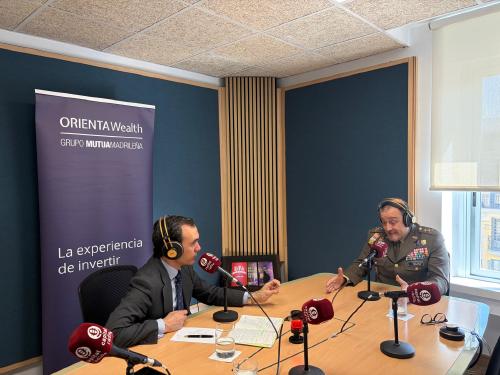
General Víctor Bados (IEEE): la guerra de Irán

WhatsApp Image 2026 03 19 at 18.11.05

Entrevista del director del IEEE, General Víctor Bados, en Capital Radio. Examen del conflicto en Irán: “Vivimos un cambio de época”

Related

El «ethos» de la guerra de Trump y sus implicaciones en la seguridad internacional

The «Ethos» of Trump´s War and its implications for International Security

La derogación definitiva de la prohibición del uso de la fuerza en las relaciones internacionales

The definitive abolition of the prohibition on the use of force in international relations

Consideraciones académicas al coste electoral de las guerras de elección en los EEUU. Los estudios de caso de Irán y la I Guerra del Golfo

Academic considerations regarding the electoral cost of election wars in the US: case studies of Iran and the First Gulf War


22 marzo, 2026
por Felipe Sahagún
Sin comentarios

El estado de la información con Martin Baron (SER)

A vista de Lobo

Martin Baron: «El gobierno de Trump está haciendo todo lo posible para minar la prensa libre»

Javier del Pino y Marc Bassets conversan sobre el estado de la información con Martin Baron, periodista y exdirector de medios como The Washignton Post, The Boston Globe o The Miami Herald, quien ha sido galardonado con el Premio Ortega y Gasset extraordinario en reconocimiento a su trayectoria.

21 marzo, 2026
por Felipe Sahagún
Sin comentarios

Trumps’s old and new lies

president trump denmark PM response press pool 082119

CNN

August 28, 2019

President Donald Trump made 48 false claims between Tuesday and Sunday last week as he used a barrage of dishonesty to try to sell his trade war against China.

Trump made 21 false claims about the economy, 12 about trade and 11 about China in particular. He also made five false claims about Democrats, three false claims about immigration. (These numbers do not add to 48 because some false claims are about multiple subjects.)

…MORE

The word “Lives” written mainly in white with a red letter v on a black background.

NYT Editorial Board

March 21, 2026

From his first announcement of the attack on Iran on Feb. 28, President Trump has issued a stream of falsehoods about the war. He has said Iran wants to engage in negotiations, though its government shows no sign of it. He has claimed that the United States “destroyed 100% of Iran’s Military capability” when Tehran continues to inflict damage throughout the region. He has said the war is almost complete even as he calls in reinforcements from around the globe.

Lying is standard behavior for Mr. Trump, of course. His political career began with a lie about Barack Obama’s birthplace, and he has lied about his business, his wealth, his inauguration crowd size, his defeat in the 2020 election and so much more. A CNN tally of Mr. Trump’s falsehoods during one part of his first term found that he averaged eight false claims per day. Many people are so accustomed to his lies that they hardly notice them anymore

…MORE


21 marzo, 2026
por Felipe Sahagún
Sin comentarios

Iraq then and now: Reflections from NBC’s Richard Engel

GZERO World Clips

As a young freelance journalist, Richard Engel was one of the only US TV journalists to broadcast from Baghdad throughout the US-led invasion of Iraq. On the 20th anniversary of the start of the Iraq War, Engel, NBC’s chief foreign correspondent, shares the story of how he ended up reporting on the ground and what he saw after troops arrived.

Despite limited access for journalists, Engel was able to get into Iraq by applying «human shield» visa and entered the country under the guise of a peace activist. What he found upon arrival was a population beaten down by years of dictatorship, and a choatic, disorganized government. As the invasion began, more and more people came out of the shadows, and expressed their joy that “ Americans were coming in and getting rid of Saddam,” according to Engel.

However, the aftermath of Saddam’s removal was a different story. «When Saddam was driven out of power, there was a wonderful reception for about a year. And then it got very, very ugly,» Engel says. He attributes the increasing animosity to mistakes made by the American administration and lingering resentment by the Sunni Muslim community. This led to a dangerous and hostile environment that «changed the dynamic» of the region.

Watch the GZERO World episode: Iraq War’s legacy: Loss of lives, rise of ISIS, & political turmoil

LINK TO VIDEO