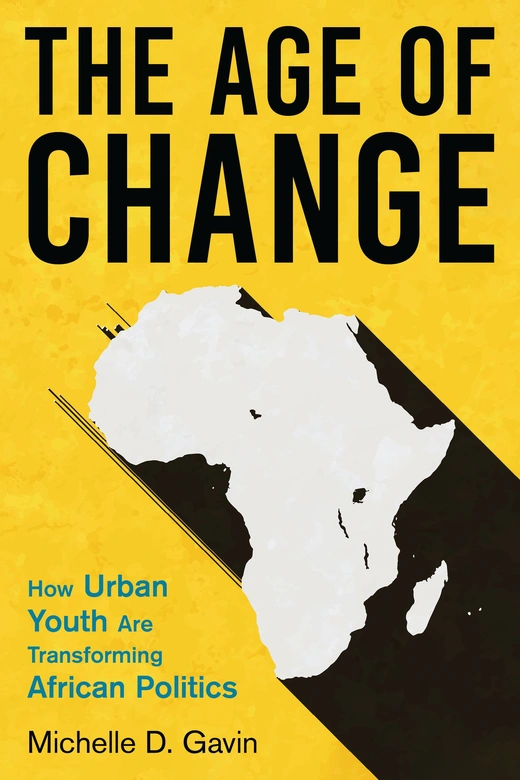
How Urban Youth Are Transforming African Politics
An approachable guide to the political, social, and demographic changes happening in Africa and why they matter for the rest of the world.

16 diciembre, 2025
por Felipe Sahagún
Sin comentarios
How Urban Youth Are Transforming African Politics
An approachable guide to the political, social, and demographic changes happening in Africa and why they matter for the rest of the world.
16 diciembre, 2025
por Felipe Sahagún
Sin comentarios

Are We Ready? | The U.S.-China Chip War, With Chris McGuire
Chris McGuire, senior fellow for China and emerging technologies at the Council, sits down with James M. Lindsay to discuss whether U.S. efforts to deny China advanced semiconductor chips will sustain the U.S. lead in artificial intelligence or unintentionally accelerate Chinese innovation.
16 diciembre, 2025
por Felipe Sahagún
Sin comentarios
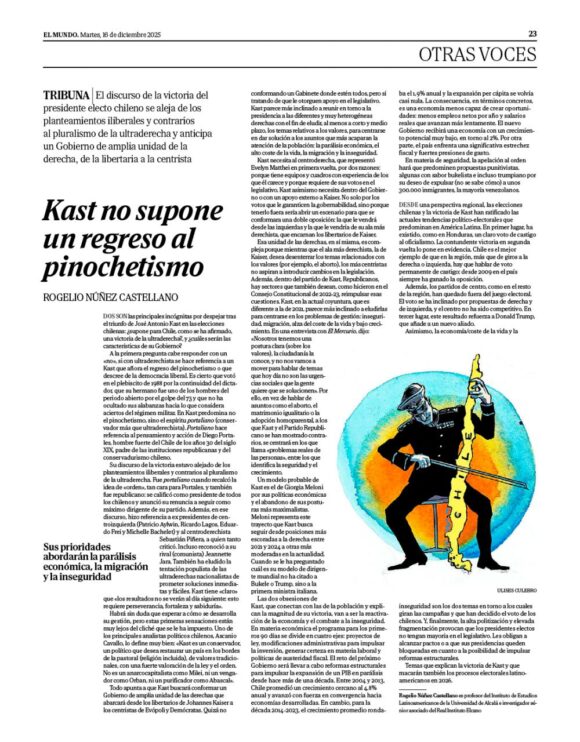
En la Tribuna del 16 de diciembre de 2025 en @elmundoes, @RogelioNuc arroja luz sobre lo que podemos esperar del nuevo presidente chileno, José Antonio Kast.
15 diciembre, 2025
por Felipe Sahagún
Sin comentarios
15 diciembre, 2025
por Felipe Sahagún
Sin comentarios

It has been a good year for China. The country is winning its trade war with America. China is mastering new technologies and becoming an even more fearsome competitor in global markets. But it faces problems, from youth unemployment and repeated purges at home, to growing resentment over its vast trade surplus abroad.
Zanny Minton Beddoes, The Economist’s editor-in-chief, and Edward Carr, our deputy editor, sit down with David Rennie, our geopolitics editor, and senior international correspondent Alice Su to assess China’s economic and geopolitical power, probing the country’s strengths and weaknesses.
48 min
15 diciembre, 2025
por Felipe Sahagún
Sin comentarios

Cette année, 67 journalistes ont été tués, non pas par accident, mais parce qu’ils exerçaient leur mission : informer. Comment accepter que tant d’hommes et de femmes connaissent un destin aussi tragique ?
Les États et les organisations internationales, pourtant garants du droit, échouent à assurer la sécurité de celles et ceux qui risquent leur vie pour nous permettre de comprendre le monde. La résolution 2222 de l’ONU devrait les protéger ; elle reste trop souvent lettre morte. À cet abandon s’ajoute une autre menace : les campagnes de discrédit. À chaque reporter emprisonné, blessé ou tué, des voix s’élèvent pour dire qu’il aurait « pris trop de risques », qu’il « l’a bien cherché », voire qu’il serait un « traître » ou un « complice ». Cette rhétorique mortifère transforme les journalistes en cibles, nourrit la haine et justifie l’injustifiable.
Cette année, 67 journalistes ont été tués, 503 sont détenus, 135 sont portés disparus et 20 sont retenus en otage. Ce qui est en jeu, ce n’est pas seulement la confiance dans l’information : c’est la vie même de celles et ceux qui garantissent notre droit fondamental à être informés.