Relaciones Internacionales – Comunicación Internacional

3 noviembre, 2018
por Felipe Sahagún
1 comentario

Books, articles and blogs about journalism – for journalists (Reuters)

Bookshelf

Our crowd-sourced list of resources for journalists contains some of the best books, articles, blogs about the biggest issues journalism has faced, and continues to face. It includes essential reading on the role of journalism in politics, its impact on society, pressures on journalism, and the future of the profession and industry. (The first items in each of the 17 categories are suggested starting points.) 1. Some classic big ideas on journalism,

1. Some classic big ideas on journalism, media, and ideas in public life

Lippmann, Walter. 1997. Public Opinion. New Brunswick, N.J., U.S.A: Transaction Publishers.*

Carey, James W. 1988. Communication as Culture : Essays on Media and Society. New York ; London: Routledge. (Especially the chapter “A Cultural Approach to Communication”)

Darnton, R. (1975). Writing news and telling stories. Daedalus, 104(2), 175-194.

Eisenstein, Elizabeth L. 1979. The Printing Press as an Agent of Change: Communications and Cultural Transformations in Early Modern Europe. Cambridge [Eng.]: Cambridge University Press.

Frankfurt, Harry G. 2005. On Bullshit. Princeton, NJ ; Oxford: Princeton University Press.

Zelizer, B. (1993). Journalists as interpretive communities. Critical Studies in Media Communication, 10(3), 219-237. Continue leyendo →

3 noviembre, 2018
por Felipe Sahagún
Sin comentarios

¿El mejor de los mundos posibles?

Ethic

Muchos defienden que, a pesar de los vaivenes que zarandean el mundo con especial incidencia en los últimos años, vivimos mejor que antes. ¿Tiene fundamento esta afirmación?

Por Andrés Ortega

«El mejor de los mundos posibles» es una expresión simplista del complejo Ensayo sobre la teodicea de 1710, del filósofo Leibniz. Voltaire se lanzó contra ella y la matizó en Candide, novela en la que le hace decir al personaje Pangloss que «todo va de la mejor manera, en el mejor de los mundos posibles». En la actualidad, se está produciendo un renovado esfuerzo por impulsar un nuevo optimismo, armado de datos, y también de una cierta filosofía.

Tras la Guerra Fría y en el auge de la globalización, los optimistas volvieron a aparecer. Pero el terrorismo yihadista que detonó el 11 de septiembre de 2001 y la crisis económica y financiera los barrieron: en 2015, según el Pew Research Center,el doble de gente en Europa pensaba que, en términos financieros, sus hijos vivirían peor que ellos. Porque, en la percepción para el optimismo o el pesimismo, cuentan, más incluso que los avances del pasado –hoy la gran mayoría de los españoles tiene una mejor vida, si bien no más poder, que Felipe II–, las expectativas de futuro. El ser humano está más programado neuronalmente para mirar hacia delante que hacia atrás.

Un referente de este nuevo rebrote de optimismo es el científico cognitivo Steven Pinker, que publicó en 2011 un libro muy documentado y de gran interés, Los ángeles que llevamos dentro: el declive de la violencia y sus implicaciones. Demostraba, con datos, que el mundo no había sido nunca menos violento.

…MORE


2 noviembre, 2018
por Felipe Sahagún
Sin comentarios

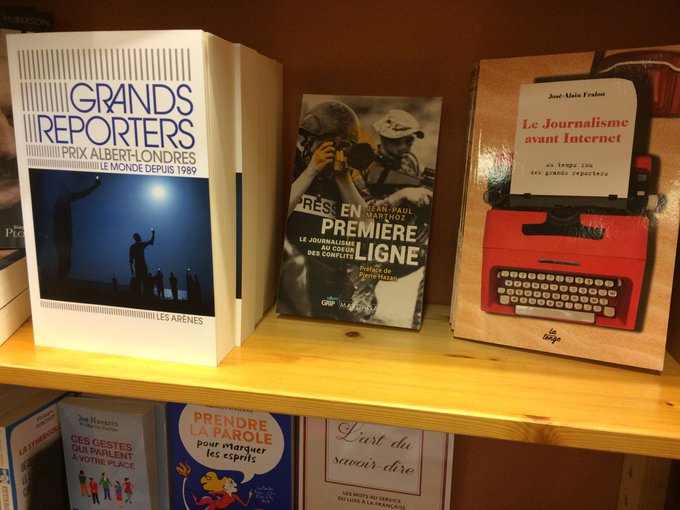
Grands reporters en premiére ligne et le journalisme avant Internet

Ver imagen en Twitter

jean-paul marthoz@jpmarthoz

Le Bar de l’Europe – Jean-Paul Marthoz

Invité : Jean-Paul Marthoz, journaliste et essayiste, chroniqueur au quotidien belge « Le Soir », militant des droits de l’homme. Jean-Paul Marthoz vient de publier « En première ligne, le journali… tv5monde.com

«En première ligne» au Bar de l’Europe @TV5MONDE avec @paulgermaintv5. Pour discuter, autour d’une boite de corned beef, de journalisme de guerre et des violences mafieuses contre la presse http://www.tv5monde.com/emissions/episode/le-bar-de-leurope-jean-paul-marthoz-2 … @cdeloire @ImpeAm @EditionsMardaga @grip_org 

2 noviembre, 2018
por Felipe Sahagún
Sin comentarios

Reporting on Yemen (The New York Times)

The New York Times

Robert F. Worth writes about the social network on the ground that helped him and Lynsey Addario safely report on the war in Yemen.

Nov 2, 2018

At War is a newsletter about the experiences and costs of war with stories from Times reporters and outside voices.

By Robert F. Worth

Getting back to Yemen was probably the hardest trip I’ve ever had to arrange. It took months of work, two separate visas, talks with three different governments and endless negotiations with Yemeni friends and helpers. We had to overcome the understandable doubts of The Times about the safety of our travel plan. But in the end, the 11-hour drive from Aden to northern Yemen — the most dangerous stretch — proved strangely anticlimactic. Every time we approached one of the checkpoints manned by young Yemeni gunmen, I’d slink lower in my seat and take off my shades, in hopes of looking a bit less like a Blackwater mercenary. (Lynsey Addario, in a full black niqab, was less conspicuous.) We were traveling through a lawless desert where all kinds of gangs and jihadists, including Al Qaeda, are active. But our 19 year-old driver just looked over at me and laughed. “You can keep them on,” he said.

The key to safety in Yemen is social networks. If you know a family with local and tribal connections, they can protect you in almost any situation. Our trip was made possible by a southern family I’ve been close to for more than a decade. Their knowledge of the terrain, and their ties to various factions across the south, were worth more than any number of bodyguards or cars. But their influence extended only to the south, the non-Houthi areas of Yemen. In the north, I depended on another old friend named Nasser, who has negotiated Yemen’s chaotic politics with unusual skill (and some luck). He always maintained a good relationship with Yemen’s longtime ruler, Ali Abdullah Saleh. After the Houthis captured Yemen’s capital, Sana, in 2014, he made sure to stay on their good side. He helped link me to the people I needed to meet, as did a couple of other old Yemeni friends.

…MORE


2 noviembre, 2018
por Felipe Sahagún
Sin comentarios

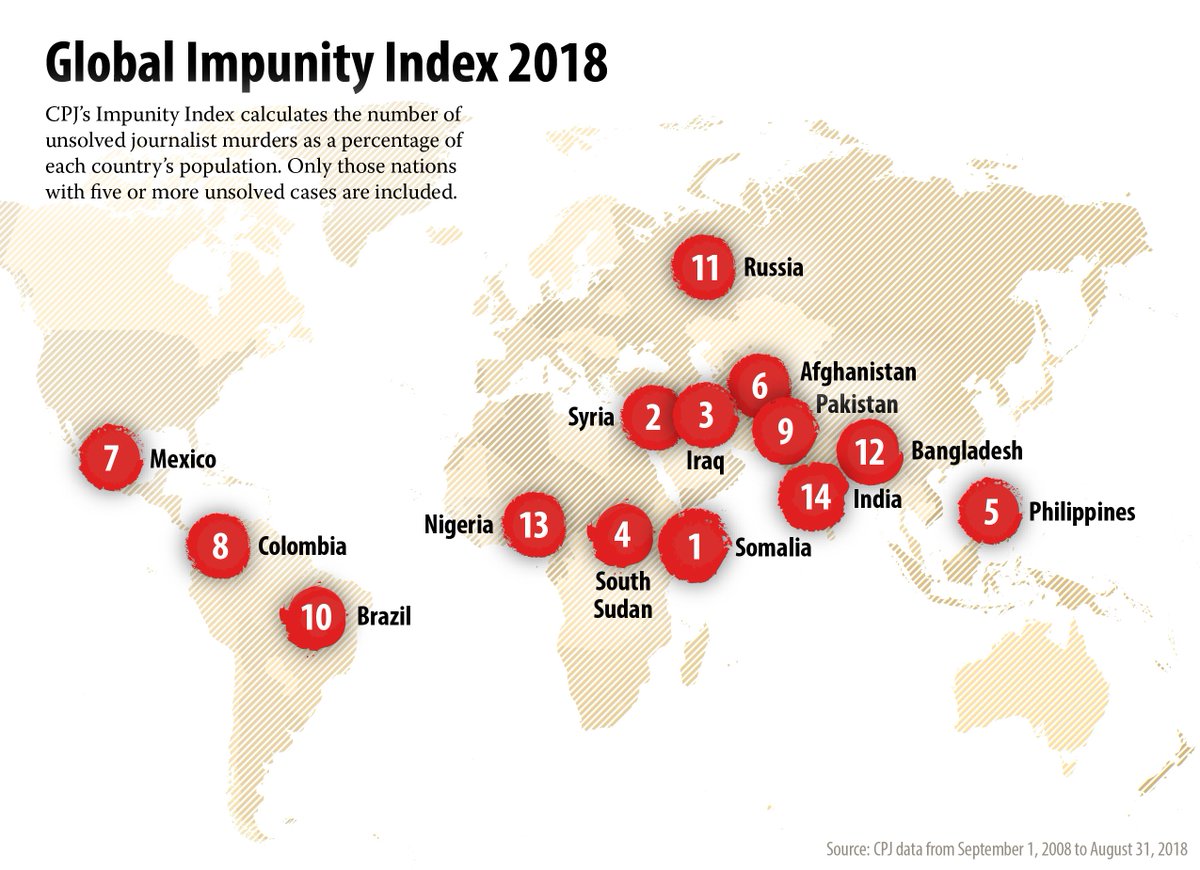
Por un periodismo más seguro, contra la impunidad

Continue leyendo →